

Claire opened her bank app and searched her favorite home goods store. The total number shocked her completely. Three years of small frequent impulse buys had secretly drained her bank account.
She was making severe home decor budget mistakes without even realizing it. She had nothing valuable to show for all that spending. Her apartment still lacked high quality long lasting furniture.
Here is the exact spending data Claire uncovered during her financial audit. She will show exactly where the money leaked and how she fixed it.
Decor Budget Blueprint
Calculate your dedicated sinking funds and generate your mandatory impulse wait time.
Use your Small Decor Fund for this purchase. It will take you exactly 2.4 Months to save for it.
The Micro Spending Trap And Home Decor Budget Mistakes

Claire stared at her credit card statement in total disbelief. She had spent $1,200 in a single year just at Target. None of those purchases were large pieces of furniture.
They were all small items she grabbed while walking down the clearance aisle. She bought brass candlesticks for $25 and throw pillows for $40. She picked up woven baskets for $35 each.
These small purchases felt completely harmless in the moment. But the strict mathematical reality proved otherwise. She discovered a terrifying truth about her daily spending habits.
Spending $50 a week adds up to over $2,600 a year. That money could have purchased the exact dream sofa she desperately wanted. Claire learned she had to stop wasting money on home decor immediately.
She read a Bureau of Labor Statistics report that changed her perspective completely. The report showed average consumers waste nearly twenty percent of discretionary income on impulse buys. Claire was officially part of that unfortunate statistic.
Her apartment was constantly cluttered with cheap seasonal decor. Meanwhile her living room still featured a sagging futon from college. The micro spending trap had kept her financially stuck for years.
A person cannot fill a bucket if water constantly leaks out the bottom. Claire had to plug those financial holes before she could save for quality pieces. She started tracking every single small purchase in a dedicated spreadsheet.
Ignoring Cost Per Use Destroys Furniture Goals
Claire had to ask herself a very difficult question. How many times did she actually sit on her sofa every week? The obvious answer was every single day.
Yet she had purchased the cheapest sofa she could find online. She spent $350 on a trendy velvet couch three years ago. Within six months the cushions had flattened completely.
The thin fabric started pilling after just one year of normal use. She realized she did not know how to budget for furniture properly. She only looked at the initial purchase price instead of the long term value.
Claire discovered this is a massive problem across the country. She found a terrifying statistic from the Environmental Protection Agency. Their waste reports show Americans throw away twelve million tons of furniture annually.
Most of this massive waste consists of cheap fast furniture. Claire decided to compare her cheap sofa to a quality furniture investment. She looked at mid tier quality brands like Article to understand real pricing.
| Item Category | Initial Purchase Price | Replacement Frequency | Total Ten Year Cost |
| Cheap Trendy Sofa | $350 | Every 3 years | $1,400 |
| Quality Classic Sofa | $1,500 | Lasts 10+ years | $1,500 |
| Cheap Area Rug | $120 | Every 2 years | $600 |
| Quality Wool Rug | $800 | Lasts 10+ years | $800 |
| Faux Wood Table | $250 | Every 4 years | $750 |
This comparison revealed a shocking truth about her finances. Buying cheap items repeatedly costs nearly the exact same as buying one perfect piece. But the cheap route means living with broken furniture half the time.
Claire vowed to stop buying disposable furniture immediately. She understood she needed to save longer to buy better pieces. The next step was figuring out exactly what her real life required.
Buying For A Fantasy Life Costs Real Money

Claire had always dreamed of hosting elegant dinner parties. She spent $800 on a formal dining set to match this fantasy. The table sat untouched in her apartment for three entire years.
She ate dinner on her living room couch every single night. The dining table just became an expensive dropping zone for mail and laundry. Decorating a house on a budget requires total honesty about daily habits.
Money spent on unused spaces is simply money wasted. Claire found a Houzz design trends report that validated her exact mistake. The report showed sixty percent of formal dining rooms are used less than once a month.
Claire had designed her home for a person who did not actually exist. She read an interview with interior designer Emily Henderson that shifted her entire mindset.
Emily Henderson notes that people must design for their current reality. Henderson states that a beautiful room fails completely if it ignores how the family truly lives every single day. Claire took those wise words deeply to heart.
She sold her unused dining set on a local marketplace app for $300. She used that money to fund spaces she actually occupied daily. She stopped browsing social media for unrealistic room inspiration.
Claire focused only on the specific corners of her apartment she used constantly. This shift in perspective stopped her from buying useless items. She realized she needed a better system for timing her purchases next.
Impatience Causes Massive Home Decor Budget Mistakes

Claire reviewed her bank statements and found another glaring error. She had wasted $450 on expedited shipping fees over three years. She always wanted her new items delivered as fast as possible.
She also realized she never waited for holiday sales. If Claire wanted a new lamp she bought it that exact same day. This chronic impatience led to massive home decor budget mistakes month after month.
She started researching the psychology of impulse buying to understand her behavior. Claire found incredible insights from financial expert Farnoosh Torabi.
Farnoosh Torabi explains that retailers use manufactured urgency to bypass logical thinking. Sales timers and limited stock warnings force consumers into immediate purchases. Claire recognized she fell for these tactics constantly.
She decided to study retail pricing data to see what rushing actually cost her. Claire learned that waiting just a few weeks can change the financial impact entirely. Retailers follow strict seasonal discount schedules every single year.
The Strategic Shopper
A calendar guide to timing your home purchases for maximum savings.
Buy indoor furniture in January or July to take advantage of heavy discounts when showrooms clear out their older floor models.
Buy mattresses in February or May. Retailers historically drop prices significantly during major holiday weekends.
Buy outdoor furniture in August when the summer inventory drops and stores rush to make room for fall/winter items.
Buy appliances in November during major retail events and Black Friday sales to secure the year’s lowest prices.
Buy decor accessories in December during aggressive post-holiday clearance events for the best styling deals.
Claire wanted to buy a lifetime investment piece from Room and Board. She waited six months for a specific floor model clearance event. That patience saved her $600 on a solid wood dresser.
Waiting for sales was only half the battle. Claire needed a strict banking structure to protect her money from herself.
Fixing Finances With The Three Account Budget System

Claire finally found the exact solution to fix her spending problem forever. She implemented a banking structure that completely saved her finances. The system used separate checking and savings accounts dedicated solely to home purchases.
She read standard financial planning data about saving money effectively. The data showed massive increases in savings success rates when using dedicated sinking funds. A sinking fund is just a separate account for a specific goal.
Claire opened two new free savings accounts at her local bank. She named the first account Big Furniture and the second account Small Decor. This simple change gave every dollar a very clear job.
The Sinking Fund Strategy
A disciplined budgeting framework for building your dream home.
Calculate Discretionary Funds
Start by calculating your total monthly income after accounting for all taxes and essential bills to find your baseline.
The Anchor Account
Transfer ten percent of the remaining money directly into a dedicated Big Furniture savings account.
The Styling Account
Transfer five percent of the remainder into a secondary Small Decor account for accessible aesthetic upgrades.
The Hard Limit
Stop buying anything related to home styling the moment your Small Decor account hits zero. No exceptions.
Protect the Anchor
Never touch the Big Furniture account for any small impulse purchases. Preserve this fund exclusively for major investments.
This system taught Claire how to budget for furniture without feeling completely deprived. She could still buy small items using her dedicated decor fund. But the large furniture fund stayed totally protected from impulse shopping.
To make the system bulletproof she added one final rule. Claire created a strict waiting period guide based on the item cost.
| Item Cost Range | Required Waiting Period | Account Used |
| $1–$50 | Wait 24 hours | Small Decor Fund |
| $51–$150 | Wait 7 days | Small Decor Fund |
| $151–$500 | Wait 14 days | Big Furniture Fund |
| $501–$1,000 | Wait 30 days | Big Furniture Fund |
| $1,001+ | Wait 60 days | Big Furniture Fund |
This waiting period rule eliminated eighty percent of her random purchases. The desire to buy a trendy vase usually faded after just three days. The money stayed safely in her account instead.
Claire finally felt in total control of her financial life. She was no longer a victim of targeted ads and clearance aisles. She encouraged all her friends to try this exact banking method.
Claire learned that a beautiful apartment does not require massive credit card debt. She completely stopped buying small junk and started investing in daily use items. She slowed down her purchasing timeline and saved thousands of dollars.
She realized that fixing spending habits requires facing total financial reality. Claire advises her friends to pull their bank statements immediately and calculate their totals. The final number might hurt but it provides necessary motivation.
Claire had to be honest about her own home decor budget mistakes to stop the cycle. Now she lives in a space she truly loves.
Falling For Micro Trends Over Classic Decor
Claire looked through her closet and found three boxes of outdated items. She had spent $200 on checkerboard patterned rugs and neon plastic signs. These pieces were incredibly popular on social media for exactly one summer.
She realized chasing internet trends is a very expensive game. Micro trends expire rapidly and leave homes feeling instantly dated. True style requires focusing on classic shapes and neutral base colors instead.
Claire stopped looking at viral videos for room inspiration entirely. She started studying older design books from the library to learn classic principles. This simple shift saved her from buying trendy items she would hate later.
Purchasing Matching Sets Destroys Room Character
Buying an entire matching bedroom set felt like the easiest design solution. Claire spent $1,200 on a bed frame with matching nightstands and a dresser. The room ended up looking exactly like a cheap corporate hotel.
Matching sets often lack personality and lock a room into one specific era. Claire felt completely trapped by the heavy dark wood pieces she bought together. She wanted to update her style but could not afford to replace everything.
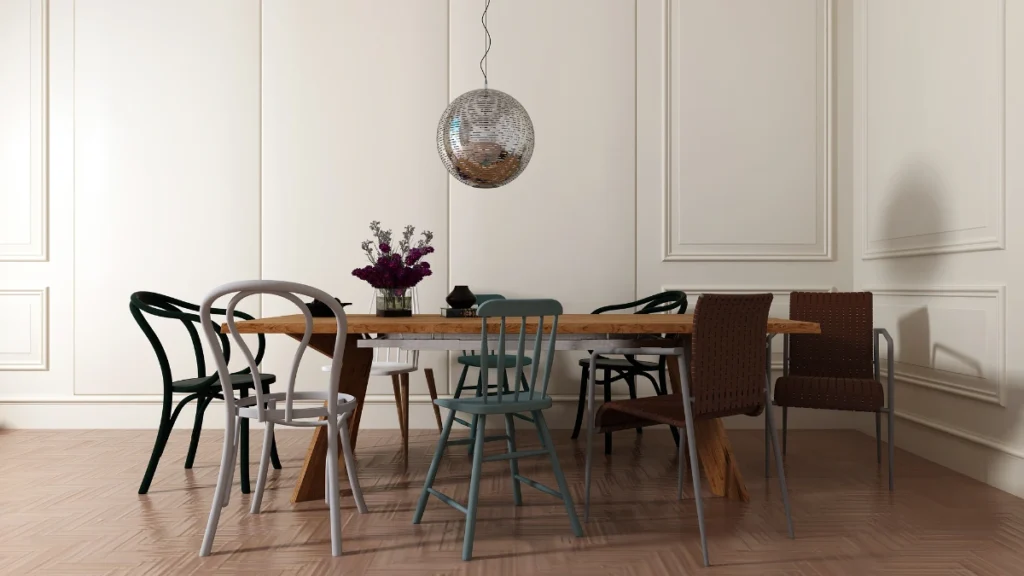
She learned that beautifully designed spaces evolve naturally over several years. Claire sold the matching nightstands for $150 and bought mismatched vintage tables instead. Breaking up the strict set finally gave her bedroom a collected and custom feel.