You keep bumping your shins into the coffee table every single morning. This constant physical barrier makes your space feel like a cramped storage unit instead of a relaxing sanctuary.
If you want to make living room look bigger, you need to trick the eye. You will discover eight specific visual tricks to maximize your square footage without tearing down any walls.
This guide delivers actionable, budget friendly design secrets to stretch your existing layout completely. Start applying these rules right now.
Choose Paint Colors That Reflect Light
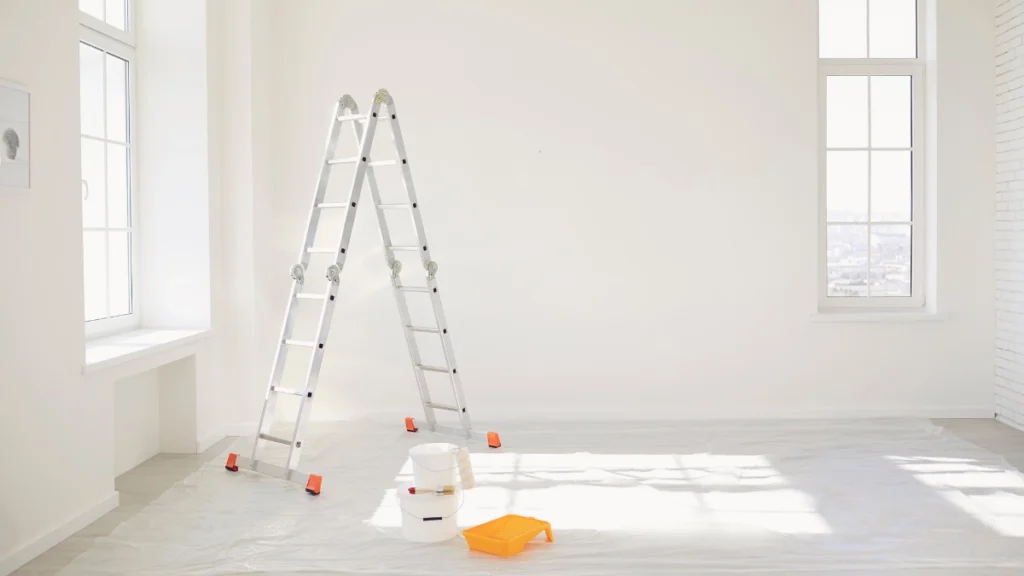
Look at your current wall color right now. Notice how the dark corners swallow up the daylight and create heavy shadows.
If you want a spacious feel, you must pick the right paint colors for small spaces. Every paint can has a specific number called a Light Reflectance Value.
This value measures the exact percentage of light a paint color reflects back into the room. Pale colors with a value over 60 bounce up to 70 percent of light back into your room.
According to standard paint industry data, this reflection instantly tricks your mind into seeing a more open area.
You can boost this effect by using a monochromatic color palette. Paint your walls, baseboards, and trim the exact same color.
This eliminates the harsh horizontal lines that standard white trim creates against darker walls. When your trim matches your walls, the boundaries of the room seem to disappear entirely.
The Vertical Illusion
Ceiling Dynamics by The Plan Decor
Flat White Finish
Always select a flat white paint for this top surface. Flat finishes absorb less light and mask structural imperfections exceptionally well.
Vertical Expansion
A bright white ceiling physically draws your gaze upward. This simple trick adds immediate vertical height to an otherwise cramped layout.
Reflectance Data
You can compare popular high reflection paint colors using the data below to ensure maximum light bounce without introducing unwanted sheen.
Your ceiling offers a massive opportunity to shift spatial perception even further. Always select a flat white paint for this top surface.
Flat finishes absorb less light and mask imperfections exceptionally well. A bright white ceiling draws your gaze upward.
This simple trick adds immediate vertical height to a cramped layout. You can compare popular high reflection paint colors using the data below.
| Paint Color Option | Brand | Light Reflectance Value | Best Room Vibe | Average Gallon Cost |
| Chantilly Lace | Benjamin Moore | 92 percent | Maximum light reflection | $65–$95 |
| Alabaster | Sherwin Williams | 82 percent | Warm cozy atmosphere | $60–$90 |
| Swiss Coffee | Benjamin Moore | 84 percent | Soft traditional spaces | $65–$95 |
| Extra White | Sherwin Williams | 86 percent | Modern crisp lines | $60–$90 |
| Pale Oak | Benjamin Moore | 70 percent | Subtle warm gray depth | $65–$95 |
Swap Heavy Furniture for Leggy Pieces
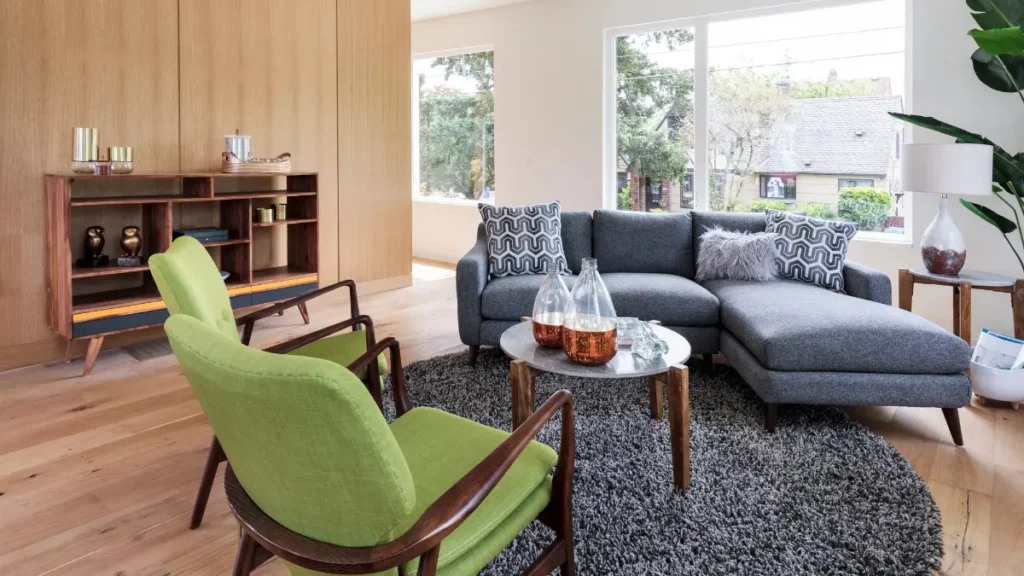
A bulky, overstuffed sofa sitting flat on the floor acts like a giant visual roadblock. It stops light and blocks your view of the floorboards.
Instead, look for space saving living room furniture with raised legs. Tapered wooden or metal legs lift the bulk of the piece off the floor.
Exposing the floor under your furniture increases the perceived size of your room by up to 20 percent. Interior design spatial studies consistently prove this visual phenomenon.
Every piece of furniture possesses a specific visual weight based on its material and design. Solid, dark, blocky items feel incredibly heavy and take up massive mental space.
Light colored items with clean silhouettes feel weightless. They allow your eyes to travel through the room effortlessly without getting stuck on dark shapes.
Consider adding clear pieces like the CB2 Peekaboo Acrylic Coffee Table for $329. Glass, lucite, and acrylic items provide excellent functionality without stealing any visual real estate.
Google Trends data reveals that searches for acrylic furniture spike significantly in early spring. This trend shows people actively seeking visual transparency for spring cleaning refreshes.
Avoid wide, rolled arms on your seating selections entirely. Choose a sofa like the West Elm Andes Sofa which ranges from $1,400–$2,100 depending on the fabric.
Its thin frame and high legs maximize your usable floor space perfectly.
Hang Curtains High and Wide
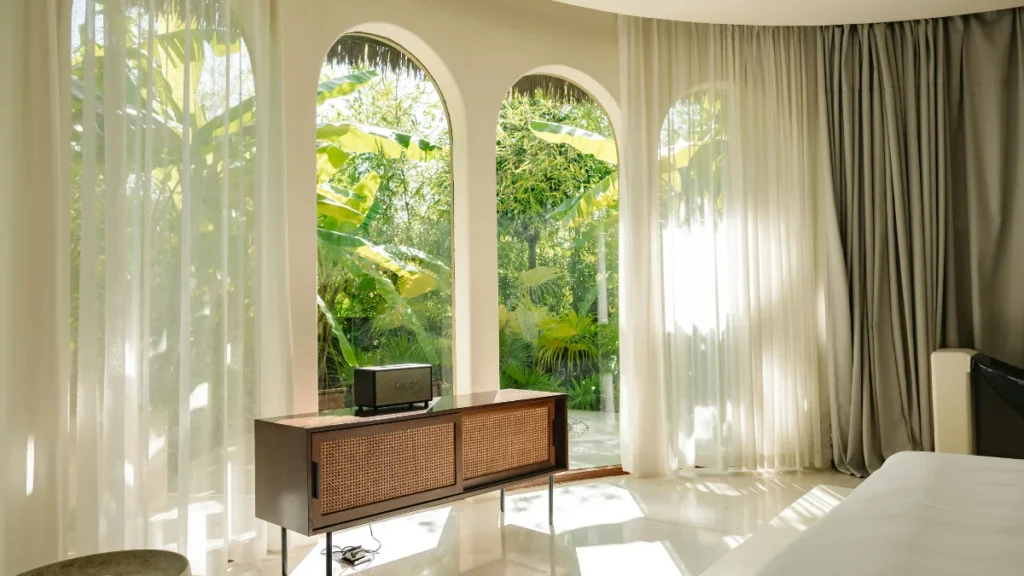
Standard builder grade design advice often tells people to mount curtain rods directly on top of the window trim. This common mistake chops your walls in half and lowers your ceilings.
You can create an amazing optical illusion by changing your rod placement entirely. Mount your curtain rod 4 to 6 inches above the window frame.
Hanging drapery this high makes ceilings appear up to a foot taller according to HGTV design standards. If your budget allows, mount the rod just two inches below your ceiling line.
Do not let your curtains block the actual window glass when they are fully open. Extend your curtain rod 6 to 12 inches past the sides of the window frame.
This setup allows the fabric to rest on the blank wall space when you pull the curtains back. Your windows will look twice as wide as they actually are.
It also allows the maximum amount of daylight to flood your interior space. Avoid heavy velvet or dark brocade drapery in small quarters.
Lightweight linen or cotton blends work best because they filter incoming light beautifully. Choose curtain colors that closely match your wall paint.
This consistency keeps your eyes moving smoothly across the space.
Anchor the Space With an Oversized Rug
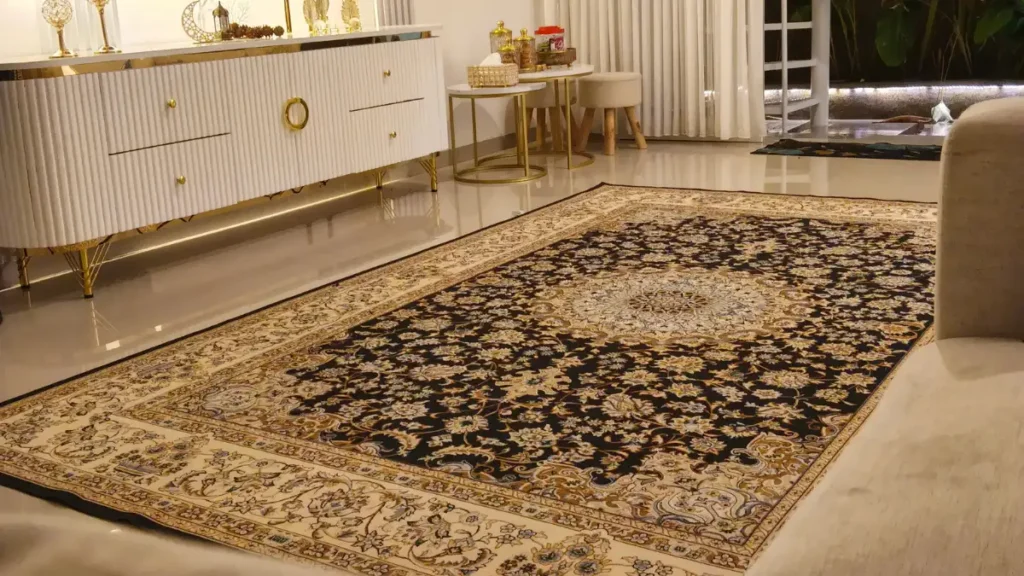
A tiny area rug acts like a postage stamp on your floor. It breaks the floor into small zones and makes your living room layout ideas feel disjointed.
Houzz data shows that 8×10 and 9×12 rugs are the most frequently returned home decor items. Buyers consistently underestimate their space needs and buy rugs that are far too small.
A small rug forces your eyes to focus downward on a narrow, restricted box. Your rug needs to be large enough to host the front legs of all your major seating options.
Renowned interior designer Emily Henderson states a strict rule for proper grounding. She explains that a proper area rug must extend at least 12 to 18 inches beyond the sides of your sofa.
This extension unifies your seating arrangement. It creates a cohesive zone that expands the boundaries of the room instantly.
Textural Grounding
Curated by Hazel Quinn | The Plan Decor
Visual Overload
Large, loud rugs with high contrast patterns overwhelm tight spaces very quickly. Select low contrast designs, subtle textures, or solid light tones instead.
Organic Grounding
A large jute or sisal rug adds wonderful organic texture to a space without creating any visual chaos, bridging the gap between natural and refined.
Flawless Function
Review the standard layout measurements below to ensure your furniture placement functions flawlessly on top of your new textural foundation.
Large, loud rugs with high contrast patterns overwhelm tight spaces very quickly. Select low contrast designs, subtle textures, or solid light tones instead.
A large jute or sisal rug adds wonderful organic texture without creating any visual chaos. Review the standard layout measurements below to ensure your furniture placement functions flawlessly.
| Clearance Category | Target Object Pair | Ideal Clearance Range | Main Purpose |
| Coffee Table Space | Sofa to Coffee Table | 14 to 18 inches | Comfortable legroom and easy reach |
| Main Walkways | Furniture to Walls | 30 to 36 inches | Smooth movement through the room |
| Side Table Access | Armchair to Side Table | 2 to 4 inches | Easy placement of drinks and lighting |
| Seating Distance | Face to Face Seating | 48 to 120 inches | Natural conversation without shouting |
Use Large Scale Mirrors Strategically
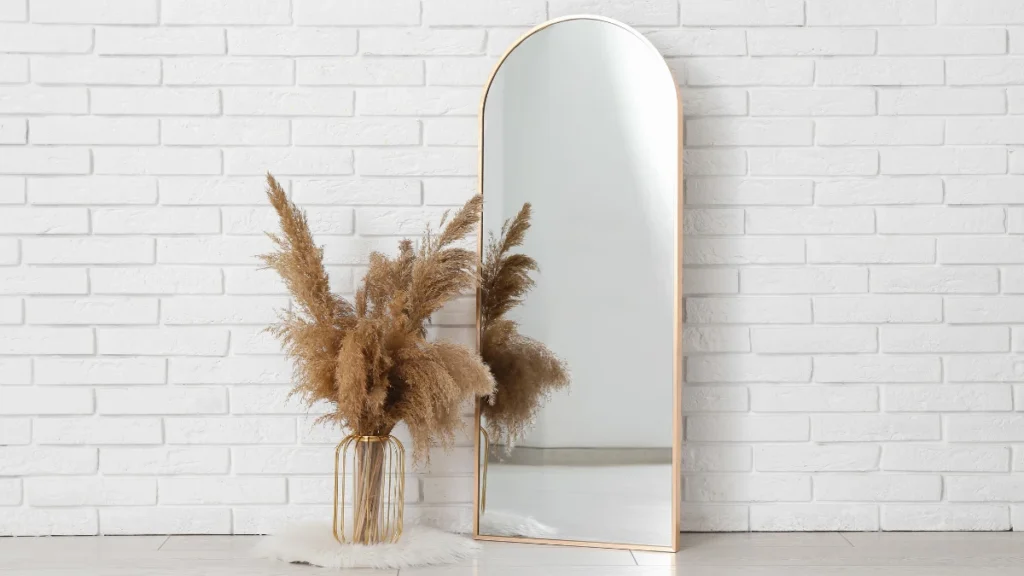
Decorating with mirrors is the oldest and most effective trick in the interior design playbook. A mirror acts like an extra window that tricks your brain into seeing deeper depth.
Apartment Therapy lighting guides show a massive benefit to proper mirror placement. A large mirror placed directly opposite a window can double your natural daylight.
The mirror catches incoming light rays and bounces them deep into dark corners. Small mirrors grouped together in a gallery wall create an unpredictable, cluttered appearance.
Invest in one large, statement mirror instead to keep the space visually calm. A floor length mirror leaning against a main wall works wonderfully.
You can also hang a substantial round mirror directly above your fireplace mantel. Pay close attention to what your mirror will actually reflect before you drive a nail into the wall.
Position it so it captures an open doorway, a beautiful piece of art, or outdoor greenery. Avoid placing it directly across from a cluttered shelf or a messy television setup.
Clear the Visual Clutter
Physical items create a heavy psychological weight that shrinks your environment. Having too many small trinkets on display fragments your sightlines constantly.
The National Association of Home Builders reports a startling statistic regarding home organization. They note that 54 percent of Americans feel completely overwhelmed by clutter in their homes.
This clutter elevates stress levels and prevents true relaxation in your primary living space. Famous designers utilize the cantaloupe rule to edit small spaces efficiently.
This rule dictates that any decorative object in your room must be larger than a cantaloupe. Smaller accessories create visual static that distracts the eye.
Replace ten small knickknacks with three substantial, high quality decor pieces. Keep your daily items out of sight by utilizing clever hidden storage furniture pieces.
The IKEA Besta system provides exceptional modular storage cabinets starting around $150–$400. Use these specific units to conceal gaming consoles, messy charging cords, and kids toys instantly.
Ensure your main pathways remain entirely clear of obstacles. Leave ample breathing room between your furniture items to allow natural movement.
Install Floating Shelving Units Upward
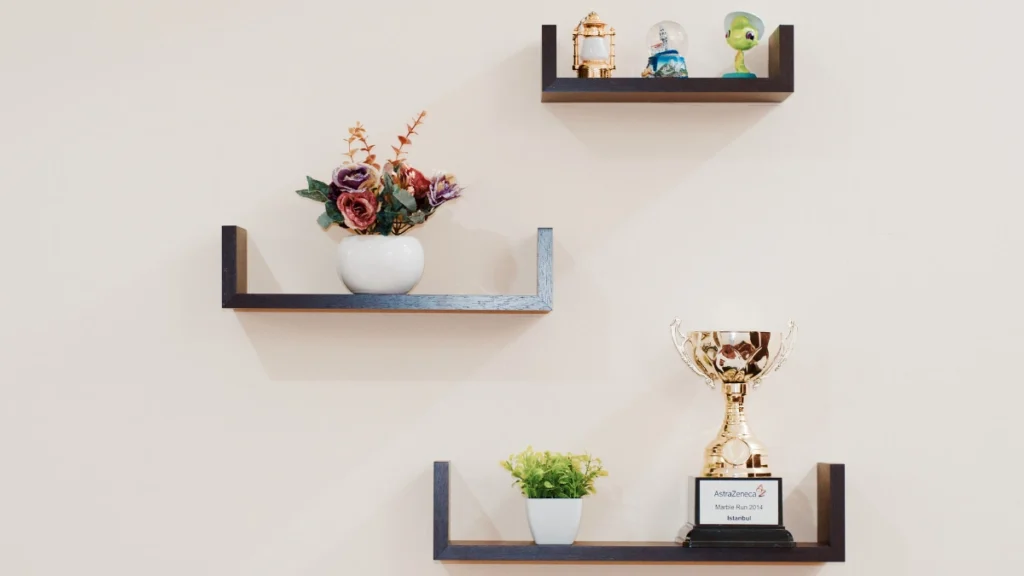
Bookcases that sit firmly on the floor eat up valuable square footage. Heavy wooden shelving units drag the energy of the room downward.
You can recover this lost floor space by installing floating shelves instead. Floating shelves attach directly to the wall without any visible brackets or bulky bases.
This setup keeps your floor entirely clear for furniture or walking paths. Mount your lowest floating shelf at least three feet off the ground.
Continue stacking the shelves evenly all the way up to your ceiling line. This vertical arrangement forces the eyes to look completely up.
Your walls will feel significantly taller when decorated with vertical lines. Keep the items on these shelves rigorously organized and sparse.
Do not pack every single inch with books or heavy decorations. Leave plenty of negative space between your items so the wall color shows through.
Layer Your Lighting for Hidden Depth
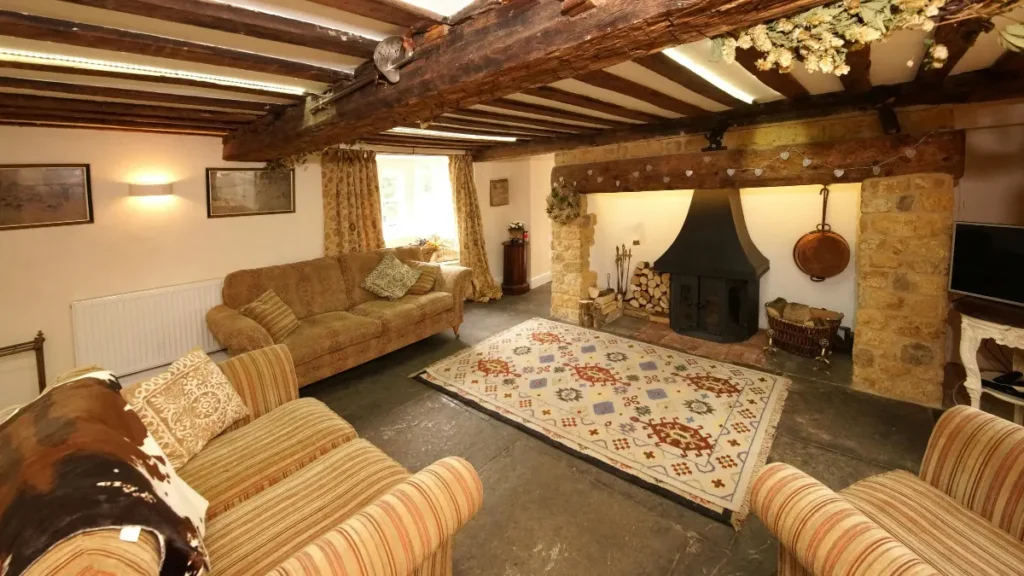
A single overhead light fixture flattens your room completely. Harsh downward lighting casts aggressive shadows into the corners of your space.
These dark shadows act like visual walls that shrink your layout drastically. You must layer your lighting sources to create a sense of expansive volume.
Place a tall floor lamp in the darkest corner of your living room. The upward glow pushes the shadows away and expands the corner outward.
Add a small table lamp next to your primary reading chair. This creates a warm, inviting zone without lighting up the entire house.
Use smart bulbs to control the brightness levels of every single lamp. Dimming your lights slightly creates a blur at the edges of the room.
This blur prevents your eyes from seeing exactly where the walls end. It is a brilliant way to make a small footprint feel endless at night.
You now possess eight powerful tools to completely transform your environment. Moving walls is an expensive, messy headache that requires massive construction budgets. According to the annual Houzz report, the average living room remodel cost sits around $8,000–$15,000.
You do not need contractors to make living room look bigger this weekend. Focus your energy on maximizing light reflection, choosing leggy furniture silhouettes, and anchoring your layout with the proper rug size.
Take out your tape measure right now and check your current rug dimensions against the 12 inch extension rule to start your transformation.