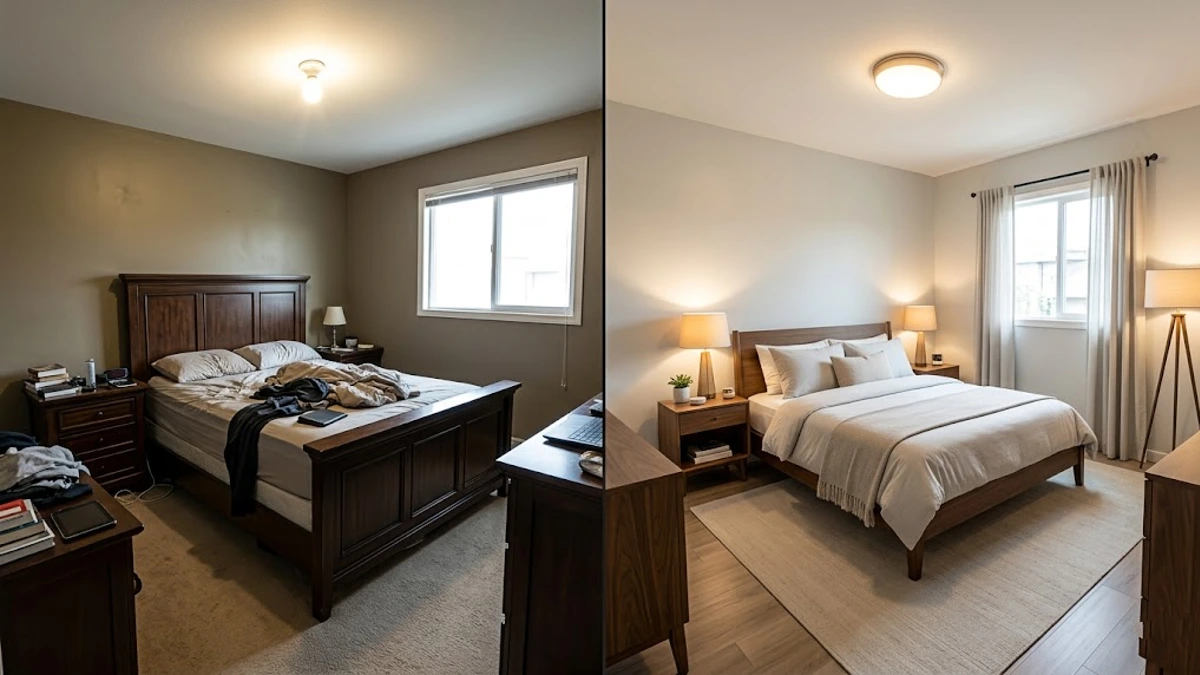
You want your bedroom to be a relaxing sanctuary. But maybe you still wake up tired and stressed every single morning.
Your decor might be the actual problem. Bad furniture layouts and harsh colors disrupt your natural sleep rhythms. A 2026 ResMed survey shows 53 percent of people sleep poorly most of the week.
People desperately buy sleep trackers looking for answers. But the real issue is often the room itself. You spend a third of your life in this space, and bad design completely ruins your rest.
This guide breaks down the most common bedroom decorating mistakes you might be making right now. We will show you exactly how to fix these interior design mistakes for a better night of sleep.
2026 Sanctuary Calibrator
Diagnose and fix the 6 design mistakes ruining your sleep.
1. Oversized Bed Syndrome (Ignoring Scale and Proportion)
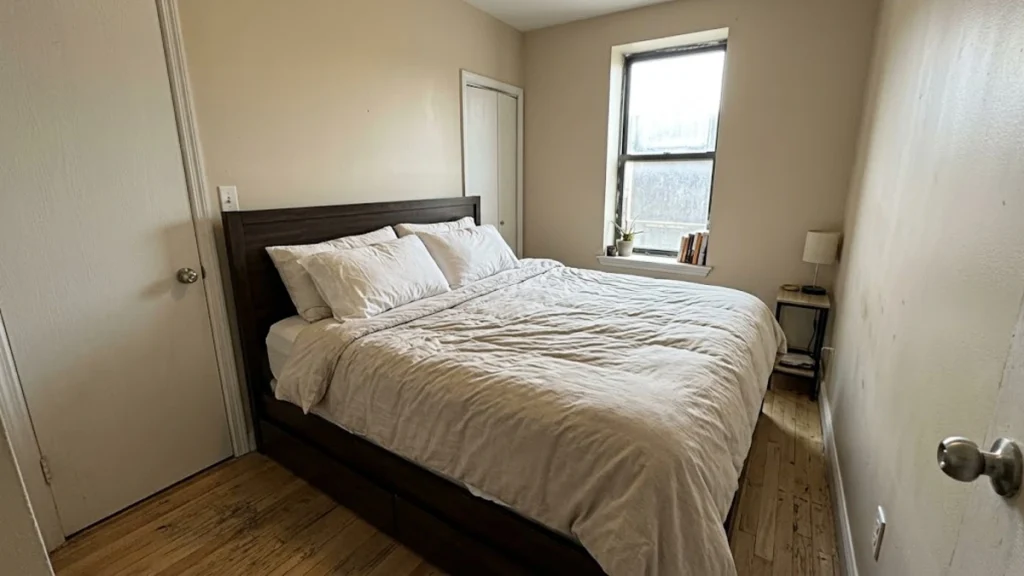
You bought the biggest bed that could physically fit through the door. Shoving a massive king size bed into a tiny 10x10 foot room is a classic error. People often pair these massive beds with tiny bedside tables.
This creates the Arnold Schwarzenegger and Danny DeVito effect in your room. It looks completely out of proportion. More importantly, this eliminates your essential walking space.
You end up shuffling sideways just to get to your closet. This makes your space feel cramped and stressful instead of relaxing.
Proper scale is crucial for a calming environment. Once your layout is properly scaled, you have to look at how these pieces function daily.
Thinking about how to arrange a bedroom properly changes everything. A good small bedroom layout prioritizes function over pure furniture size.
The Fix:
- Maintain at least 2 to 3 feet of clear walking space around all three sides of your bed.
- Choose nightstands that align directly with the top of your mattress.
- Downsize to a queen bed if your room cannot handle the clearances for a larger frame.
2. Neglecting the Sleep Ecosystem (Air Quality and Light)
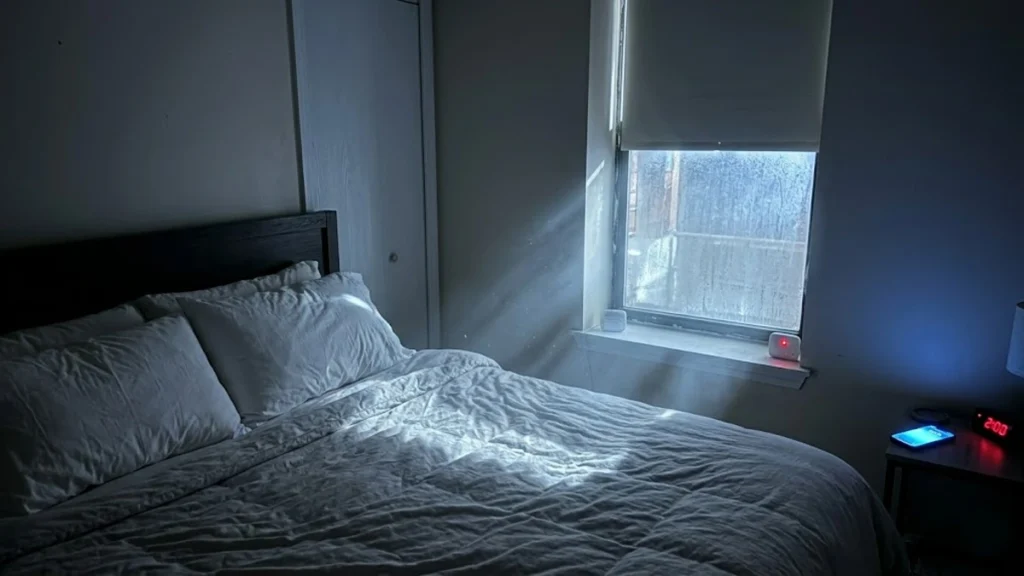
You designed your room purely for looks and completely ignored how it functions for sleep. A beautiful room is useless if it lacks proper air circulation or blackout capabilities. You also need to manage your tech and control your climate.
The Global Wellness Institute recently released their 2026 Sleep Initiative Trends. They clearly state we must move past basic behavioral habits.
We must optimize the physical sleep environment setup. This means actively controlling temperature, light, and air quality.
A recent 2026 PMC study proved this point exactly. Poor bedroom air quality significantly reduces your deep sleep.
High levels of CO2 and PM2.5 trap you in lighter sleep cycles. You wake up exhausted even after eight hours in bed.
These 2026 bedroom trends show that health is the ultimate luxury. Once you breathe easier, you need to look at where your furniture actually sits.
The Fix:
Sleep Sanctuary
Bedroom Optimization
Air Quality
Add a high quality HEPA air purifier to your room to clear out PM2.5 particles overnight and improve respiration.
Light & Temp Control
Install thermal blackout curtains to block streetlights and actively insulate against disruptive temperature changes.
Digital Detox
Remove all blue light emitting devices from your nightstand before going to sleep to protect your natural circadian rhythm.
3. The Dead Space Trap (Poor Furniture Placement)
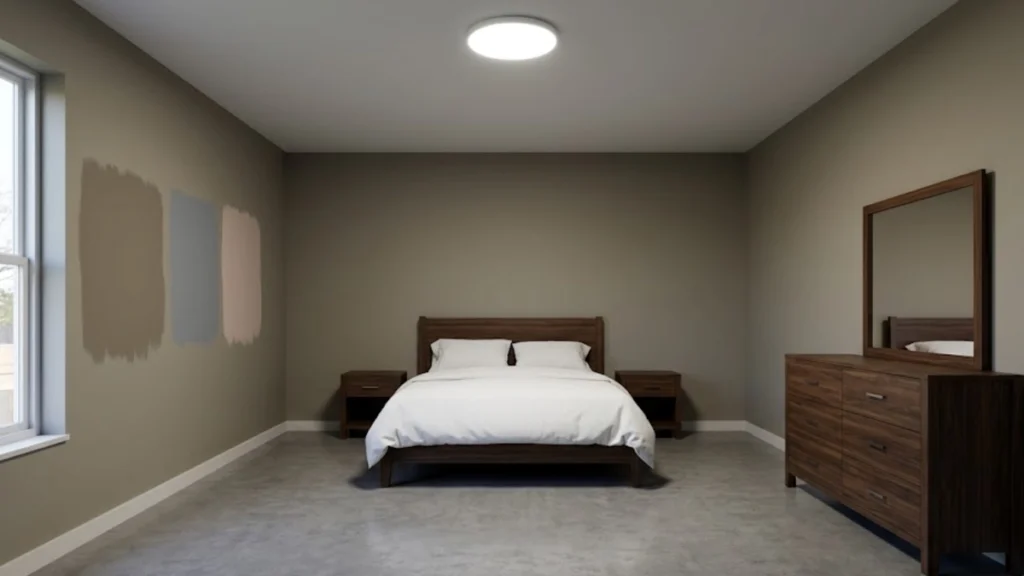
You shoved all your furniture tightly against the walls. Placing a heavy wardrobe directly opposite the entryway is a massive error. It blocks your line of sight. It creates an immediate visual barrier when you walk in.
Another common problem is blocking your only windows with the bed frame. These interior design mistakes make your room feel like a crowded storage unit.
Some people even suffer from seating overload. They jam ottomans, benches, and accent chairs into one corner.
This visual chaos ruins your bedroom layout. Your brain cannot relax in a cluttered space. Pushing everything to the edges leaves an awkward dead space in the middle of the room.
You need to give your pieces room to breathe. Once you fix the flow, you must consider the colors on your walls.
The Fix:
- Leave 6 to 12 inches of breathing room beside heavy furniture to open up the entrance.
- Move tall wardrobes to the same wall as the door or a side wall so they do not loom over you.
- Remove extra seating that just collects dirty laundry.
4. Swatching Paint Without Checking the Light
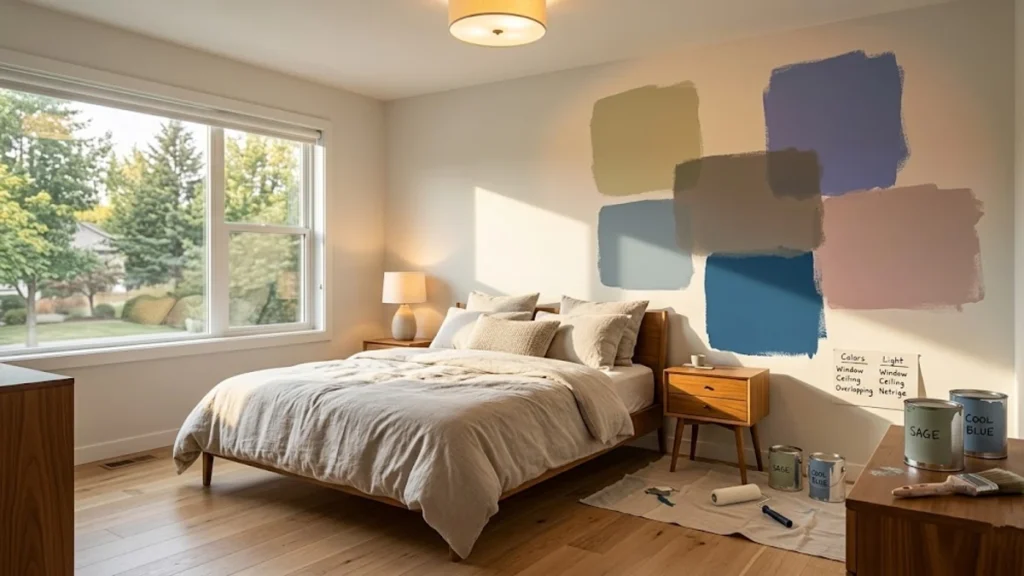
You picked a wall color based on a tiny store swatch or a random online photo. You paint the whole room. Suddenly it looks vastly different in your home.
Light bulb warmth changes paint hues drastically. A beautiful cool gray can turn into a muddy pink under the wrong bulbs.
Rachel Cannon of Rachel Cannon Limited Interiors warns against this exact habit. She says you must test your bedroom paint colors across multiple lighting scenarios.
Natural light changes completely from dawn to dusk. Your chosen shade will look different at 8 AM than it does at 8 PM.
These interior design mistakes cost valuable time and money to fix. You do not want to repaint a room twice. Once you nail the color, you must light the space correctly.
The Fix:
The Swatch Test
Mastering Color & Light
Scale & Context
Paint a large square of your top three color choices directly onto multiple walls to see how they interact with the room's scale.
Lighting Observation
Observe the paint patches dynamically in morning sunlight, afternoon shadows, and evening artificial light.
The 24-Hour Rule
Choose your final color only after seeing exactly how it reacts to your specific lighting over a full 24 hours.
5. Relying Solely on Overhead Lighting
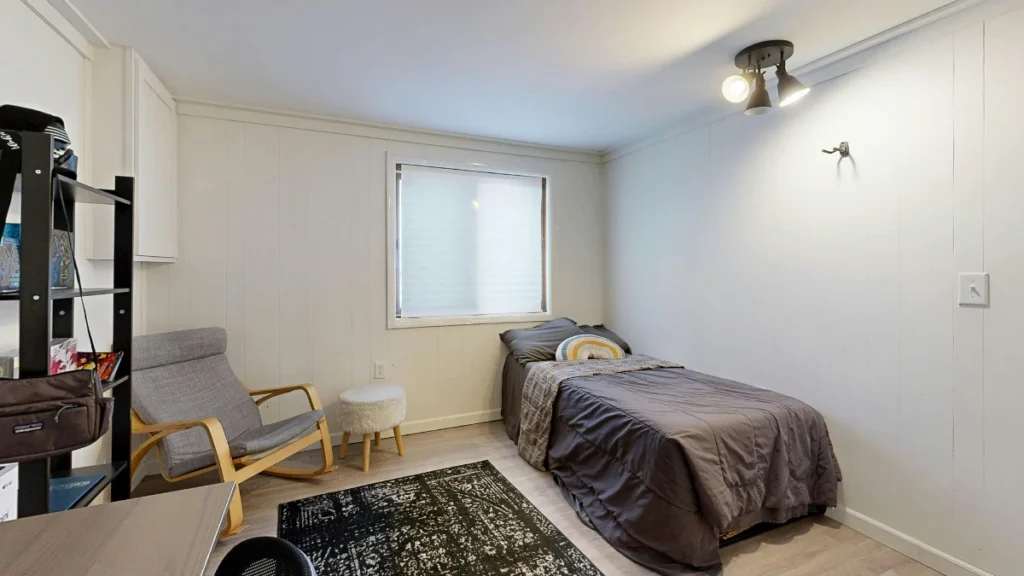
You turn on a harsh central fixture and call it a day. Using only a central drop down fixture washes out your room. It creates harsh shadows. It makes the space feel like a stark doctor clinic.
You are ignoring the absolute necessity of layered lighting. A good bedroom lighting design requires ambient light, task light, and accent light. Using the wrong bulb temperatures also ruins the mood completely.
Cool white bulbs belong in a garage. They do not belong where you sleep. You need warm light to signal to your brain that it is time to rest.
Smart home lighting systems can even align with your natural circadian rhythm. They slowly dim and warm up as the sun sets. When your lighting is perfect, you need to focus on what you actually touch.
The Fix:
- Use a minimum of three light sources to create a balanced glow around the room.
- Add bedside lamps or wall sconces specifically for evening reading.
- Place a floor lamp or an LED strip in a dark corner to add warmth.
6. Missing the Textural Mix (The Flat Room)
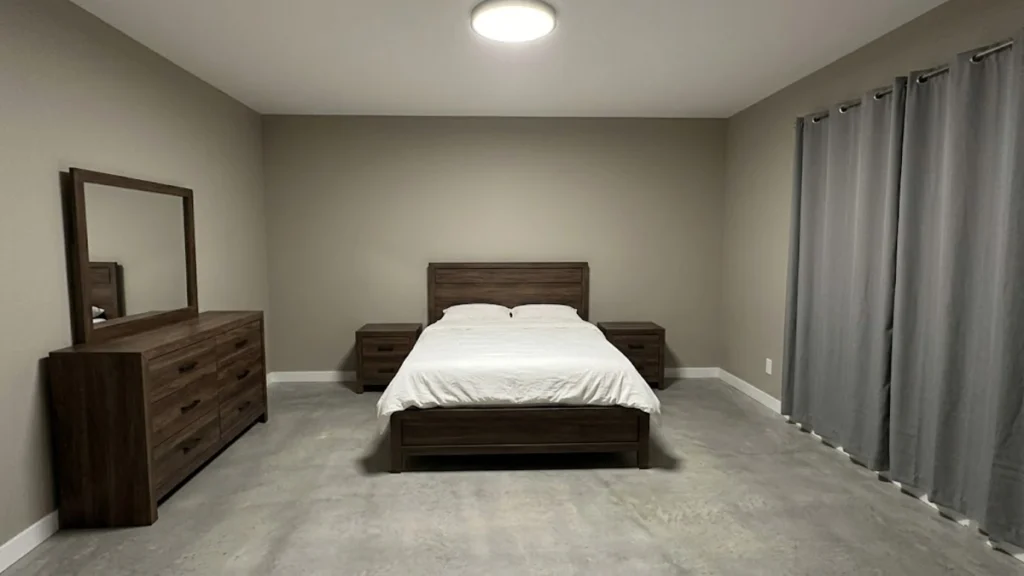
You bought a matching five piece furniture set from a big box store. This makes your room look like a cheap showroom catalog. A room falls completely flat when everything matches perfectly.
Sticking to only one fabric type or wood tone strips your personality away. Another huge issue is leaving hard floors completely bare. Hard floors without area rugs make the space echo. They make the room feel physically cold.
These bedroom decorating mistakes leave your sanctuary feeling generic. You need mixed textures to make a room feel cozy and inviting.
Mixing materials creates instant visual interest. Thinking about how to arrange a bedroom includes planning for soft surfaces.
The Fix:
Bedroom Harmony
Contrast & Proportion
Mixed Materials
Break up matching furniture sets by mixing your wood tones with metal or upholstered pieces.
Warm Foundations
Ground your bed with a properly sized area rug to add immediate warmth and visual anchor to the room.
The 8x10 Rule
Use an 8x10 foot rug under a standard queen bed so it extends nicely on the sides and bottom.
The 6-Minute Bedroom Rescue Plan
| The Decorating Mistake | Why It Hurts Your Space | The Quick Fix |
| Oversized Furniture | Blocks walking paths and makes the room feel cramped. | Leave 2 to 3 feet of clear space around your bed. |
| Poor Air Quality | Traps CO2 and severely ruins your deep sleep cycles. | Run a HEPA air purifier while you sleep. |
| Wall-Hugging Furniture | Creates a dead zone in the middle of the room. | Pull heavy pieces 6 to 12 inches away from the walls. |
| Blind Paint Choices | Light bulbs completely change how the color looks at night. | Test large paint patches in morning and evening light. |
| Only Overhead Lights | Casts harsh shadows and feels like a doctor clinic. | Add a bedside lamp and a floor lamp to warm the room. |
| Matching Sets | Makes your sanctuary feel like a cheap store catalog. | Mix different wood tones and add a large, soft rug. |
Conclusion
A beautifully designed bedroom requires a balance of proper scale and layered lighting. You also need an environment optimized for deep rest. You deserve a space that actually helps you recharge.
Your decor choices directly impact your daily energy levels and your overall mood. Small changes make a massive difference in how your room feels.