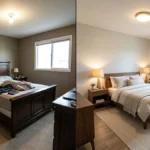
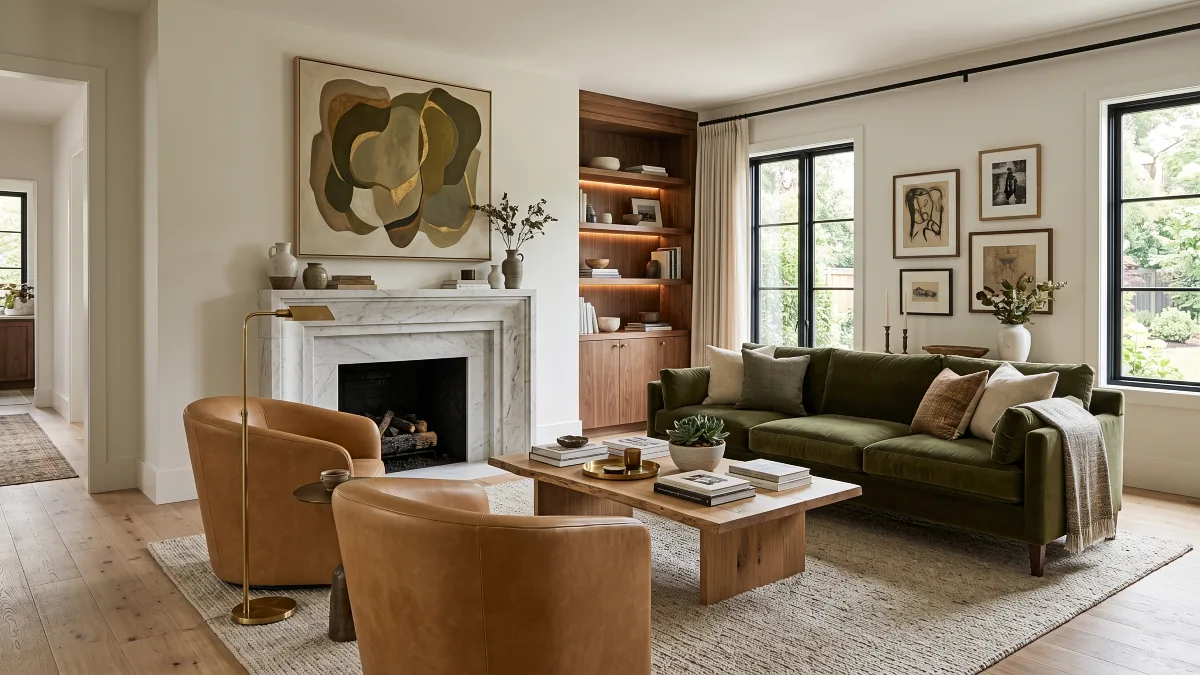
The era of cold and perfectly sterile living rooms is officially over. 2026 is all about lived in luxury. You bought the furniture. You painted the walls. You even rolled out a new rug.
Yet your room still feels disconnected, cluttered, or completely uninviting. This is a common frustration. But you can fix it today. You will learn the exact spatial, textual, and psychological guidelines that top designers use.
We will break down the living room decorating rules you need. These rules help build a room that looks ready for a magazine cover but feels like a true sanctuary. Knowing modern living room trends 2026 gives you a clear path forward.
2026 Room Calibrator
Input your dimensions. Pass the rules. Generate your 2D Sanctuary.
1. Room Dimensions
2. Aesthetic & Zones
3. Mandatory Layers
Rule 1: Master Proportion with Fat Furniture and Proper Scale
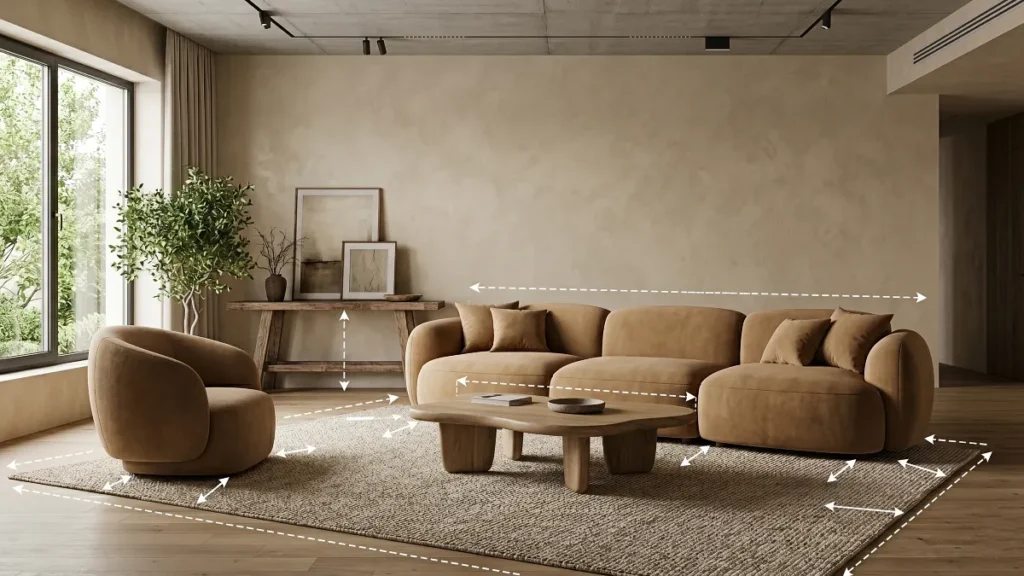
The biggest mistake most people make is buying pieces that are completely the wrong size for their space. You end up with a tiny rug or a massive sofa that chokes the room. Mastering proportion rules changes everything.
How to Fix Your Furniture Sizes
First, use the two thirds rule. Your sofa should be two thirds the length of your wall. Your coffee table should be half to two thirds the length of your sofa. This creates visual balance. 2026 brings a major shift to fat furniture.
We are seeing deep and tub shaped seating with curved organic lines. Pieces like the Hem Boa pouf or rounded architectural sofas fill a space dynamically. They look substantial but inviting.
The Rug Sizing Formula
Your rug needs to anchor the entire seating area. Ensure the rug extends at least 18 to 24 inches past the sofa legs. This makes the room feel much larger.
Knowing how to layout a living room means getting these measurements right before you buy anything.
Rule 2: Anchor the Space in Warm Minimalism
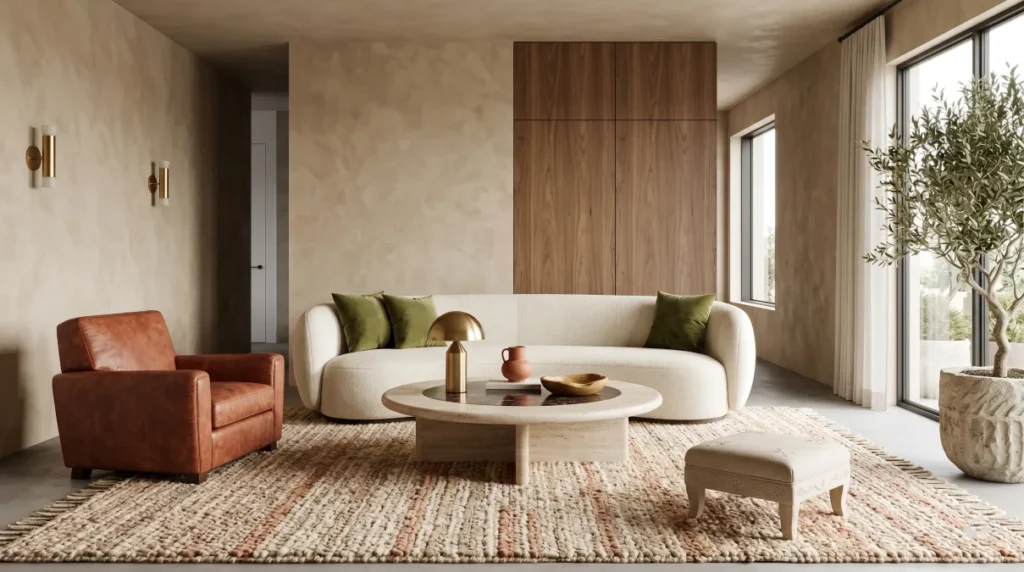
Once your layout is scaled correctly, you need to stop painting everything stark gray. Cool tones make a house feel like a clinic. You need to anchor those pieces with the right color palette.
Why Brown is the New Beige
Warm minimalism interior design is taking over. Designers agree that brown is the primary color choice for 2026. Transition away from stark white into earthy browns, olive greens, and terracotta.
This approach merges the clean lines of Scandinavian minimalism with tactile and organic materials. The result feels incredibly grounded.
The 60 30 10 Color Rule
Balance your colors using a simple ratio. Use 60 percent for your dominant warm neutral. Use 30 percent for your secondary texture.
Keep 10 percent for a bold accent color. You can use tools like RoomSketcher or Pinterest to visualize this mix before buying paint.
Rule 3: Design for Multifunctional Zoning
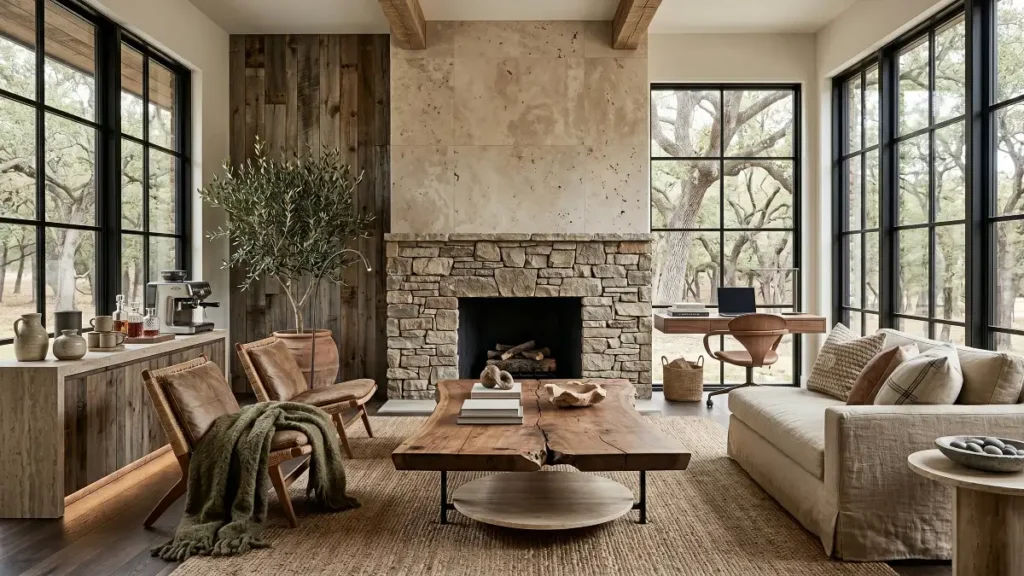
Pushing all your furniture against the walls is a terrible idea. It creates a dead space in the middle of the room. A beautiful living room layout must support dynamic daily routines.
3 Ways to Create Distinct Zones
Living rooms are no longer just for watching television. You need strategic furniture placement to build zones. Try floating your sofa in the middle of the room. This creates a natural walkway behind it.
You can also seamlessly blend productivity into your aesthetic. Try adding a stylish cloffice nook hidden behind folding architectural doors. If you love a farmhouse transformation, use reclaimed wood room dividers.
These dividers perfectly separate a cozy reading nook from the main media area. A multifunctional space makes your home work harder for you.
Rule 4: Mix and Match Stone and Natural Textures
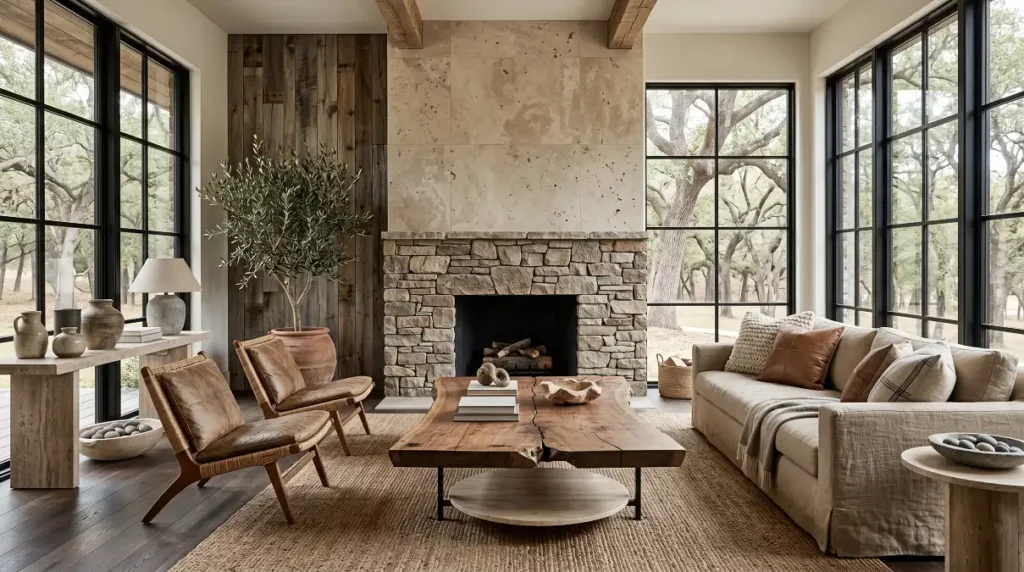
Buying a matching furniture set is the fastest way to make your house look like a cheap catalog. Matchy matchy is out. Curated contrast is in.
The 5 Minute Solution for Flat Decor
You need to layer different materials to build visual interest. 2026 living room trends focus heavily on traditionalist elements. High gloss finishes are gone. Instead, mix unlacquered metals with warm woods and varied stones.
Blend limewashed walls with a Spanish Dark Emperador marble coffee table for grounded luxury. Then add soft embroidered details.
A textured artisan footstool easily breaks up heavy leather or velvet surfaces. Mixing natural textures makes the room feel collected over time.
Rule 5: Implement Biophilic Design for Nervous System Regulation
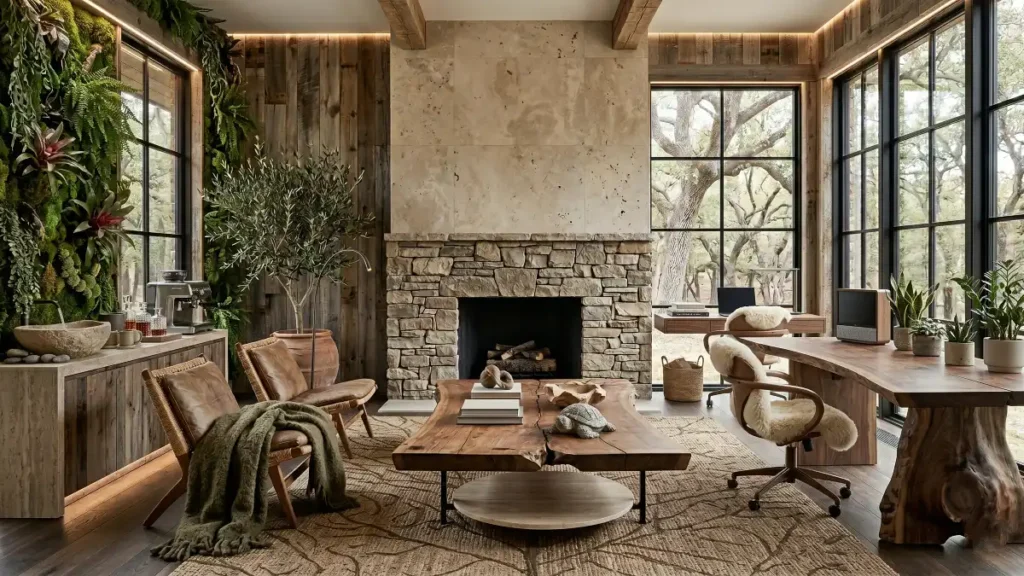
Placing one sad plastic plant in the corner does nothing for your space or your health. Design directly impacts your cortisol levels. You need a calming living room to thrive.
How to Fix Your Indoor Environment
Biophilic interior design frames aesthetic choices around biological health and mental well being. Move beyond basic houseplants. Prioritize natural daylight optimization. Use nature mimicking textures across your fabrics.
If your room lacks natural light, introduce tech driven greenery. We are seeing a massive rise in AI powered indoor gardens and hydroponic walls.
These serve as living art while actively purifying the air. Your space should lower your stress the moment you walk inside.
Rule 6: Establish the Lighting Triangle
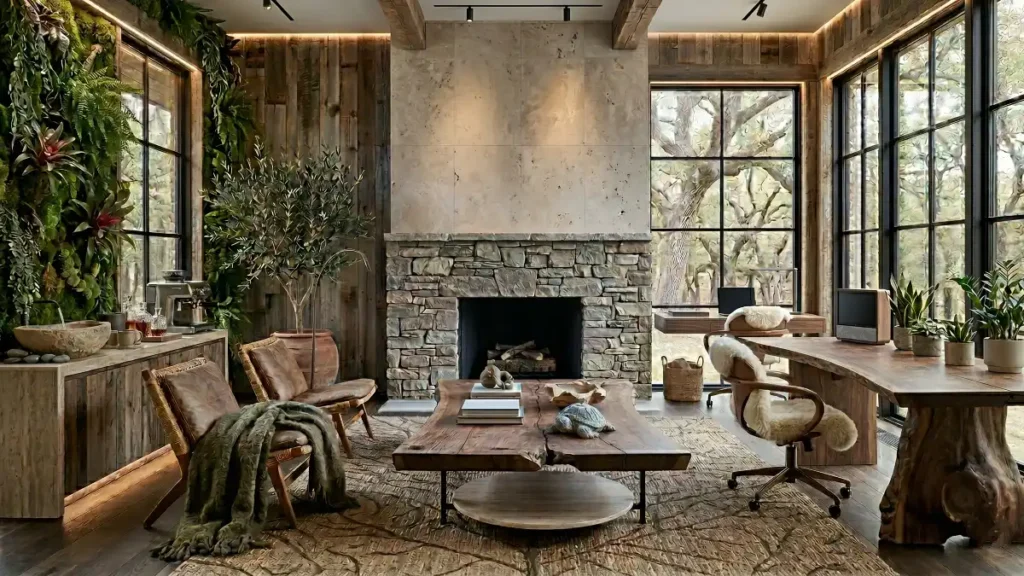
Relying solely on overhead recessed lighting is a huge mistake. This creates a harsh interrogation room effect. Great layout and color mean nothing if your lighting is bad.
3 Ways to Layer Your Lights
Following proper living room lighting rules changes the entire mood of your home. You must layer lighting at three specific heights.
Layered Lighting Strategy
General Visibility
Implement ceiling and architectural lights to establish a foundational layer of broad, ambient visibility across the entire room.
Eye-Level Warmth
Incorporate eye-level sconces or floor lamps to diffuse harsh overheads and introduce an inviting, atmospheric warmth to the space.
Focused Task Lighting
Add specific task lighting like small table lamps to provide concentrated, crisp clarity for reading, working, or detailed hobbies.
Embrace modular and hybrid lighting that easily adapts to the mood. Always use warm bulbs between 2700K and 3000K to complement your warm minimalism design.
Rule 7: Demand Lived In Functionality
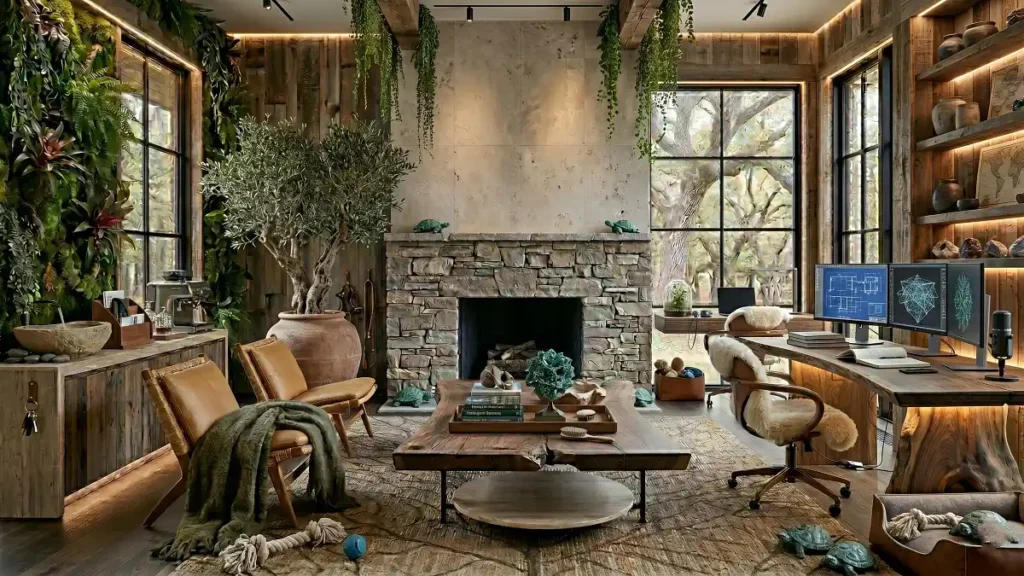
Buying delicate fabrics for a busy home is a disaster waiting to happen. Aesthetics should never override daily reality.
| The Rule | What to Do | What to Avoid |
|---|---|---|
| 1. Master Proportion | Sofa is 2/3 wall length. Rug goes 18 inches past sofa. | Wrong sized pieces |
| 2. Warm Minimalism | Use 60 percent warm neutral and 30 percent texture. | Stark white or gray rooms |
| 3. Multifunctional Zoning | Float your sofa. Make specific areas. | Pushing furniture to the walls |
| 4. Mix Textures | Combine wood, stone, metal, and soft fabrics. | Buying a matching set |
| 5. Biophilic Design | Maximize natural light and add real plants. | Using fake plastic plants |
| 6. Lighting Triangle | Layer ceiling, floor, and table lamps. | Relying on overhead lights |
| 7. Lived In Functionality | Pick durable and pet friendly fabrics. | Buying cheap fragile furniture |
Why You Need Durable Living Room Furniture
You need furniture that actually supports your life. Invest in sustainable and high quality performance fabrics. These materials age beautifully. They are much better than disposable fast furniture.
Interior expert Brad Ramsey explains the 2026 trend. He says we will see a strong shift to deeply personal and layered spaces.
Design will be less about chasing a specific look and more about reflecting the people who inhabit the space.
It includes factoring in heavy use and pets. If you share the space with a Golden Retriever like Cooper, you need pet friendly decor. Choose tight weave textiles that resist trapping hair and dirt.