
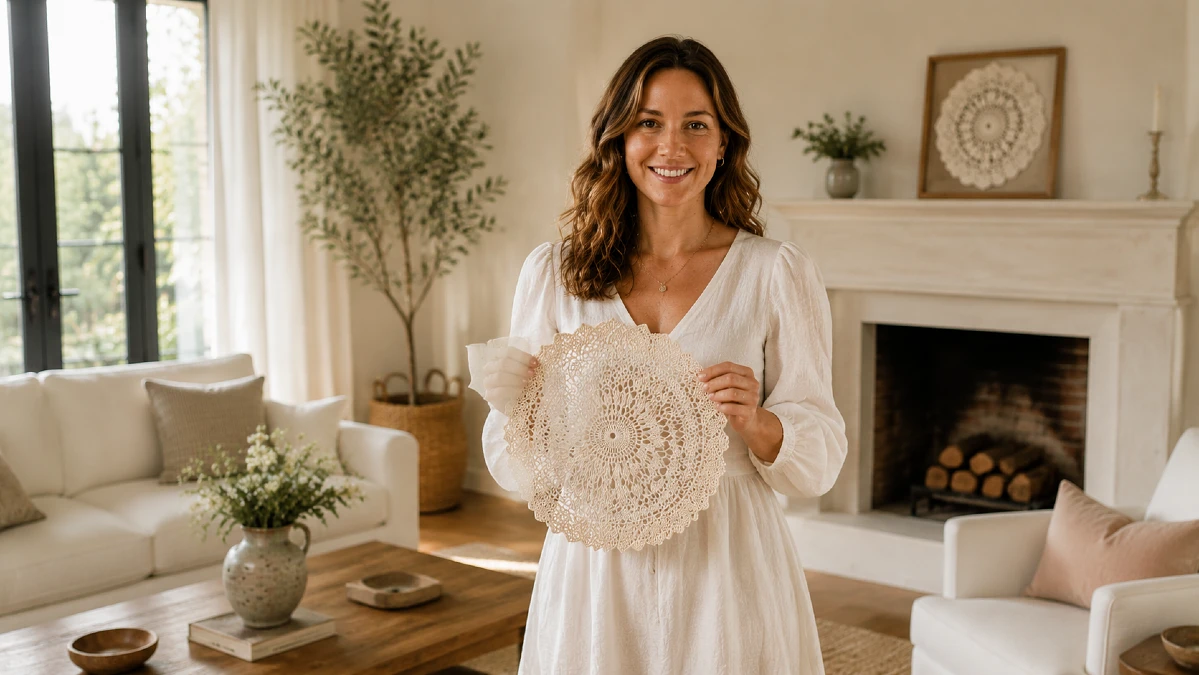
You just found a stack of handmade lace doilies at an estate sale. They sit in a bag because you fear displaying them will make your living room look like a dusty antique shop.
Mastering modern doily decor is easier than you think. You will learn exactly how to pull these intricate textiles into the present decade.
We cover framing techniques, fabric dyeing methods, and layered table settings that feel entirely fresh. Treat that vintage lace as intentional art and completely transform your space.
The Vintage Lace Revival
Turn dusty estate-sale doilies into intentional modern art.
Step 1: The Space
Which room are you styling today?
Step 2: Core Aesthetic
What is the overarching style of your home?
Step 3: DIY Comfort
How hands-on do you want to get with this textile?
Step 4: The Stash
What exactly are you working with?
What is the Modern Doily Decor Trend?
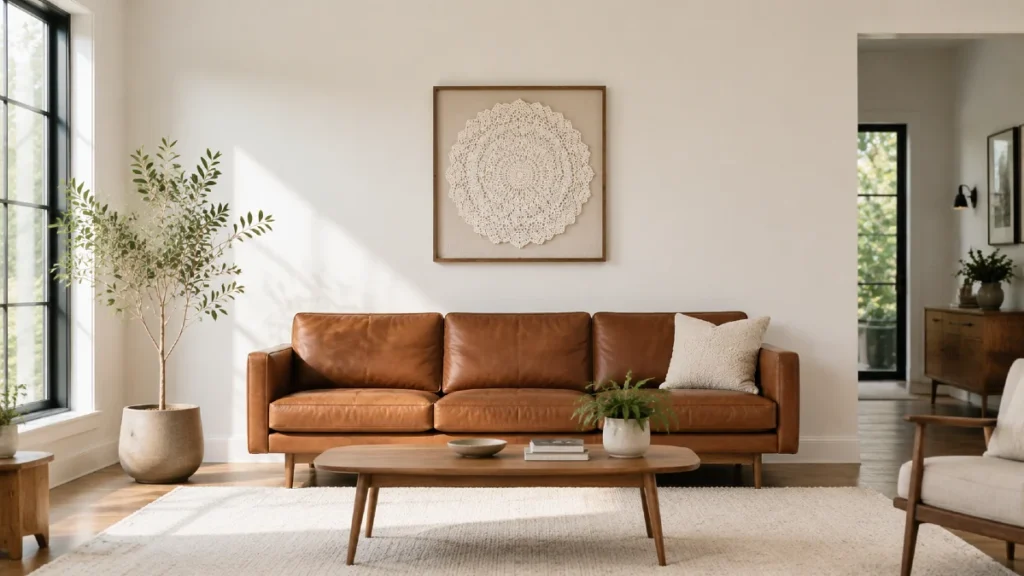
You have probably seen it all over your feed. Vintage lace is finally back in style. Grandmillennial style and cottagecore aesthetics made handmade textiles popular again.
Pinterest search volume for grandmillennial decor grew 300 percent over the last two years. People want rooms that feel collected, personal, and full of history. We are moving away from sterile rooms and embracing cozy, layered looks.
But buying the lace is only half the battle. Sticking a delicate white circle under a heavy lamp instantly dates your room. The secret to pulling this off is treating the textile as intentional art.
Design writer Emma Bazilian notes that grandmillennial style embraces nostalgia without feeling stuffy. She says the key is mixing inherited pieces with crisp modern lines. Modern styling requires intense, deliberate contrast.
You cannot match lace with more lace. You must pair it with sleek wood, matte metal, or dark paint. Negative space is your absolute best friend when working with intricate patterns.
Leave plenty of breathing room around your vintage pieces. This makes them look like prized gallery items instead of random clutter. Your bedroom or living room will feel fresh and highly curated.
Let the lace stand out by keeping the surrounding decor incredibly simple.
Framed Doily Wall Art: The Ultimate Gallery Wall Update
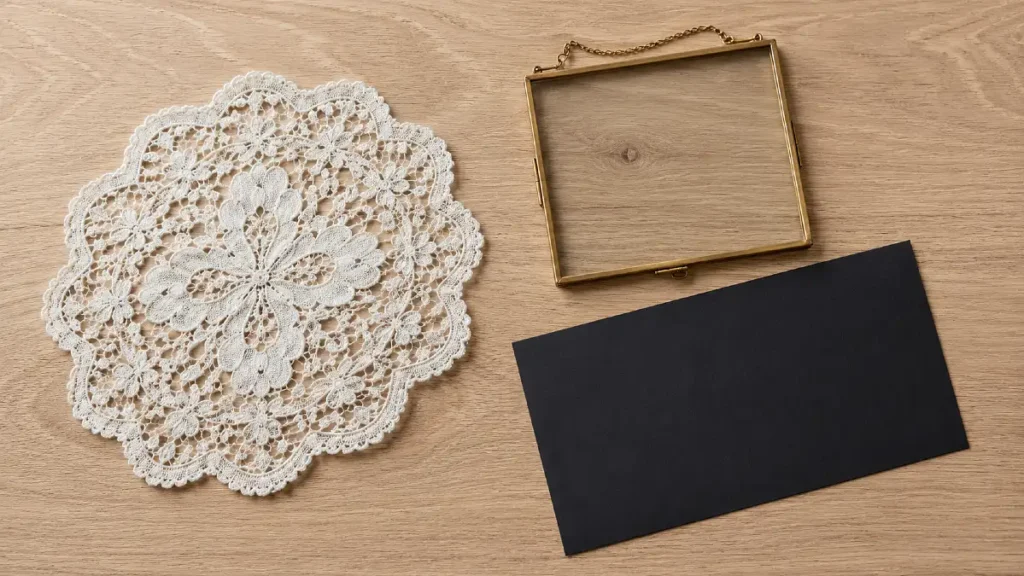
Framing is the absolute fastest way to modernize an antique. A crisp metal edge instantly tells the eye this piece is intentional.
Custom framing industry data notes a 40 percent increase in framing textiles over the past five years. People realize that three dimensional objects bring incredible life to flat gallery walls.
Framed lace decor adds rich texture that flat prints simply cannot provide. Floating glass frames are perfect for a clean, minimalist bedroom look. The wall color shows right through the glass.
This beautifully highlights the intricate lacework and makes the textile appear to float in midair. You can buy a beautiful brass floating frame from West Elm for $45–$90.
If you prefer a bold contrast, mount your doily on solid colored cardstock. Black or dark navy paper makes the white threads pop brilliantly. Use tiny dabs of fabric glue or small sewing pins to secure the lace to the paper backing.
Ensure the doily is pulled perfectly taut before sealing the frame. Mix your doily wall art with modern typography prints. Place a delicate lace piece next to a bold black and white quote.
This high contrast pairing prevents the gallery wall from feeling too sweet or delicate. The mix of hard letters and soft fabric creates beautiful balance.
Once your walls are sorted, look to your flat surfaces.
| Decor Style | Best Doily Color | Display Method | Pairing Material |
| Minimalist | Crisp White | Floating glass frame | Concrete or raw oak |
| Grandmillennial | Soft Ivory | Mounted on pastel paper | Scalloped wood frames |
| Dark Academia | Matte Black | Framed in brass | Dark mahogany wood |
| Boho Eclectic | Terracotta | Stretched in a hoop | Woven rattan or linen |
Dyeing Vintage Lace: Giving Doilies a Moody Makeover
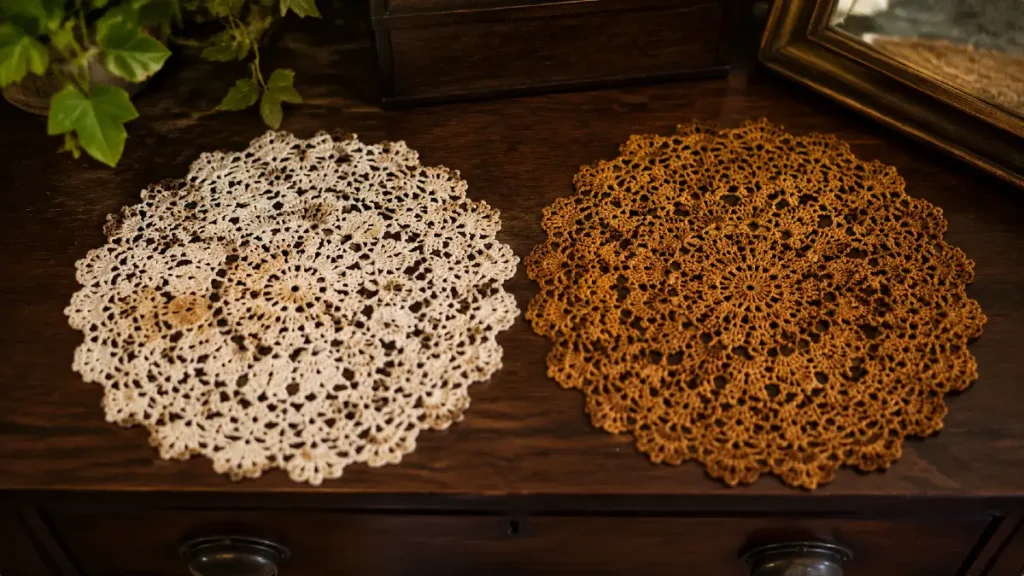
White lace feels highly traditional and sometimes overly formal. Black or rust lace feels entirely new and completely unexpected. Changing the color completely updates the aesthetic of the vintage piece.
Thrift flipping hashtags on TikTok have billions of views. Textile dyeing sees major seasonal spikes every single fall. People love giving old fabrics a moody makeover for their cozy homes.
Dyeing vintage lace is surprisingly simple and highly rewarding. You can use standard fabric dye to create rich colors like terracotta, mustard, or olive green. A bottle of Rit Liquid Dye costs around $5–$8 at most local craft stores.
Black lace fits perfectly into dark academia or gothic bedroom styles. It looks incredible resting on a dark walnut dresser or framed against dark walls.
Always identify the fiber content before you start the dyeing process. Cotton takes color beautifully and results in deep, vibrant tones. Polyester blends often resist dye and come out looking muted or washed out.
If you are unsure of the material, test a tiny edge first. Vintage thread takes color unpredictably. You boil water, add a cup of salt, and stir the liquid dye thoroughly.
Submerge the lace and stir it constantly for about twenty minutes. Rinse the textile in cold water until the water runs completely clear. Lay the dyed piece flat on an old towel to dry completely before styling it.
| Fiber Type | Recommended Dye Type | Water Temperature | Estimated Cost |
| 100% Cotton | Liquid reactive dye | Hot | $5–$8 |
| Silk Blends | Acid fabric dye | Warm | $7–$10 |
| Polyester | Synthetic specific dye | Boiling | $6–$9 |
If you prefer to keep the original white color, you can change the context instead.
Layered Table Settings: Beyond the Centerpiece
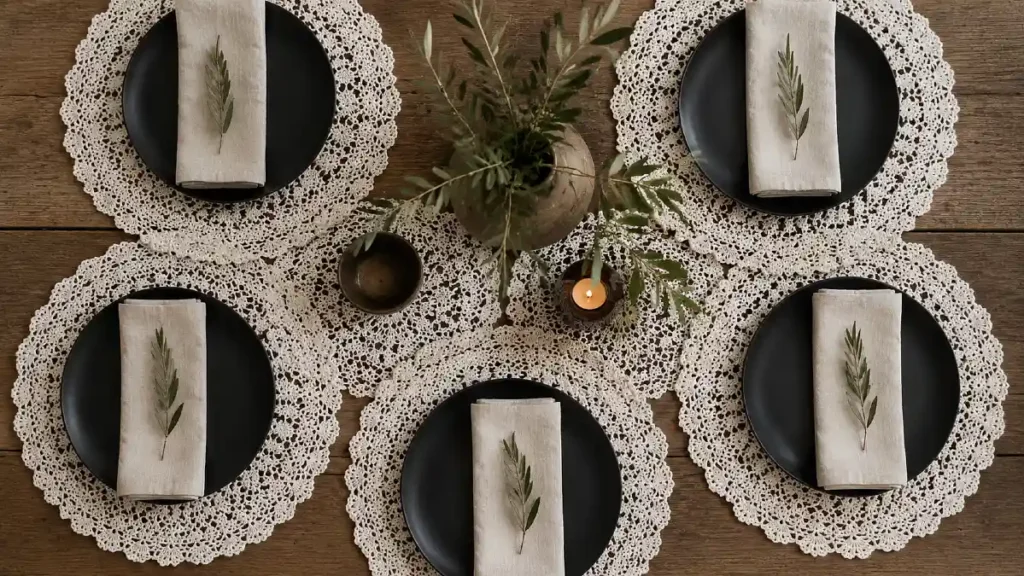
A single doily sitting alone under a vase looks completely dated. Five overlapping doilies look like a highly intentional designer tablescape.
Creating a vintage lace table runner changes the entire feel of your dining room. Place multiple small pieces overlapping down the center of a long table. This arrangement feels casual, artistic, and beautifully unstudied.
The Knot reports a significant rise in couples requesting vintage mismatched textiles for weddings. This layered aesthetic directly translates to cozy home dining rooms. People want tables that feel uniquely gathered over time rather than perfectly matched.
Always wash and iron your pieces flat before layering them on the table. Wrinkled lace looks messy instead of artistic. Mix different shapes like small round circles with large oval pieces.
Pair the delicate, sheer lace with heavy, chunky materials. Place the textiles under matte black ceramics or a large, raw wooden dough bowl. The friction between the soft lace and the hard materials creates design magic.
Do not place a doily under every single glass or dinner plate. That traps the table in a rigid, old fashioned look. Use them loosely in the center to ground the larger serving pieces and candle holders.
Table settings are temporary, but you can create permanent statements too.
Upcycled Doily Crafts: Dreamcatchers and Pendant Lights
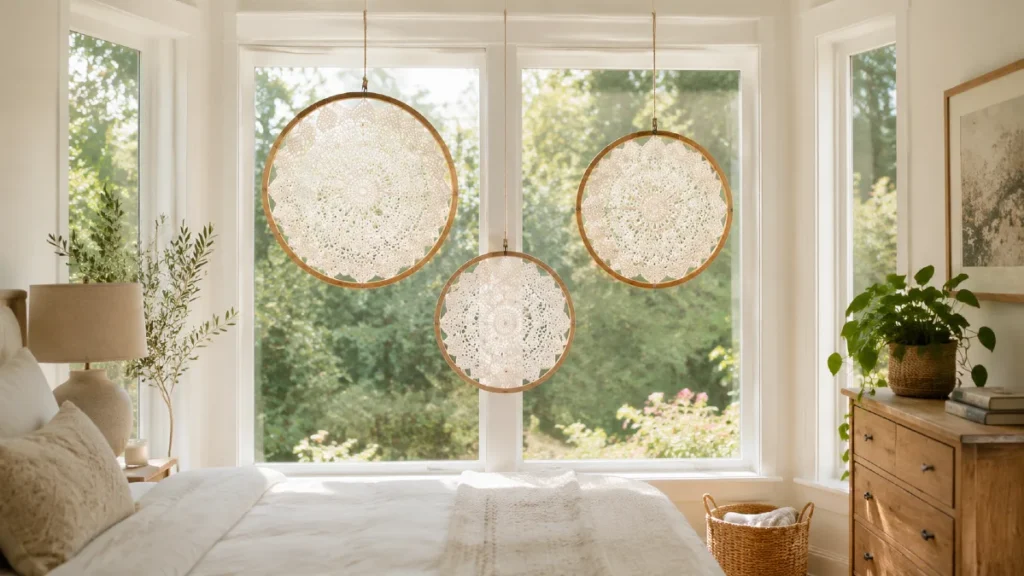
Wooden embroidery hoops offer a cheap, brilliant way to display lace in windows. You stretch the fabric tightly across the wooden hoop and trim the edges.
Etsy trend reports frequently highlight boho wall hangings as top selling bedroom decor. Stretched lace hoops serve as a clean alternative to heavy, dusty macrame. You can buy plain wooden hoops at any craft store for $3–$6 each.
Secure the fabric between the two wooden rings and tighten the top metal screw. Hang these at varying heights to fill a large bedroom window beautifully.
Sunlight filters through the stretched lace patterns. This casts beautiful, intricate shadows onto your bedroom floor every afternoon. You can also try the viral DIY pendant light trick for a bigger impact.
You soak the lace in fabric stiffener and drape it carefully over an inflated balloon. Once the fabric is completely dry and hard, you pop the balloon. You are left with a stunning, hollow lace globe that covers a simple light bulb.
Interior designer Leanne Ford is famous for mixing worn vintage textures with crisp modern whites. She often uses unexpected textile shapes to soften stark, modern rooms. These DIY lighting fixtures achieve that exact balance of old and new.
While these crafts add charm, too much lace quickly ruins a room.
What to Avoid: Keeping Lace from Looking Cluttered
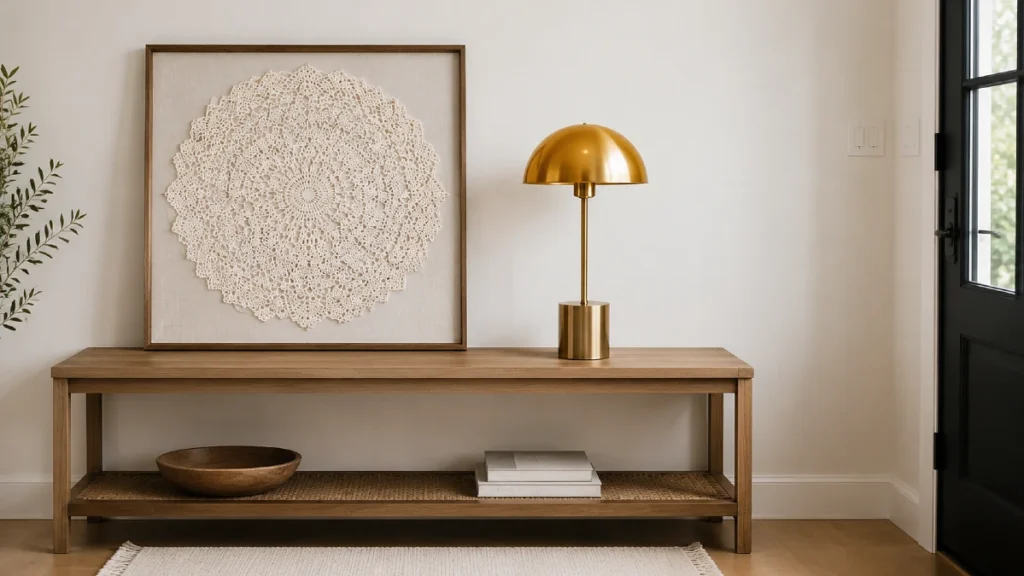
We need to talk about restraint when decorating with inherited textiles. Interior design surveys consistently rank visual clutter as the number one cause of room related stress.
When modernizing vintage decor, you must know exactly what to skip. Outdated placements will drag down the look of your entire home. Keep these important rules in mind as you decorate your space.
Avoid the common mistakes that make rooms look accidental.
Lace Decor Rules
Stop putting doilies under table lamps in the living room.
Never drape lace over the arms or back of your modern sofa.
Avoid matching lace window curtains with lace throw pillows.
Do not use delicate lace coasters for hot, everyday coffee mugs.
Never place lace directly under a large television set or monitor.
Skip placing small lace pieces on bathroom counters near water.
Preach the rule of one in every single room. You only need one lace statement piece per room to make an impact. If you have a framed lace gallery wall, keep the throw pillows simple and solid.
If you have a layered lace table runner, use plain linen napkins. Stick to one statement piece and let the beautiful lacework shine without any competition.