
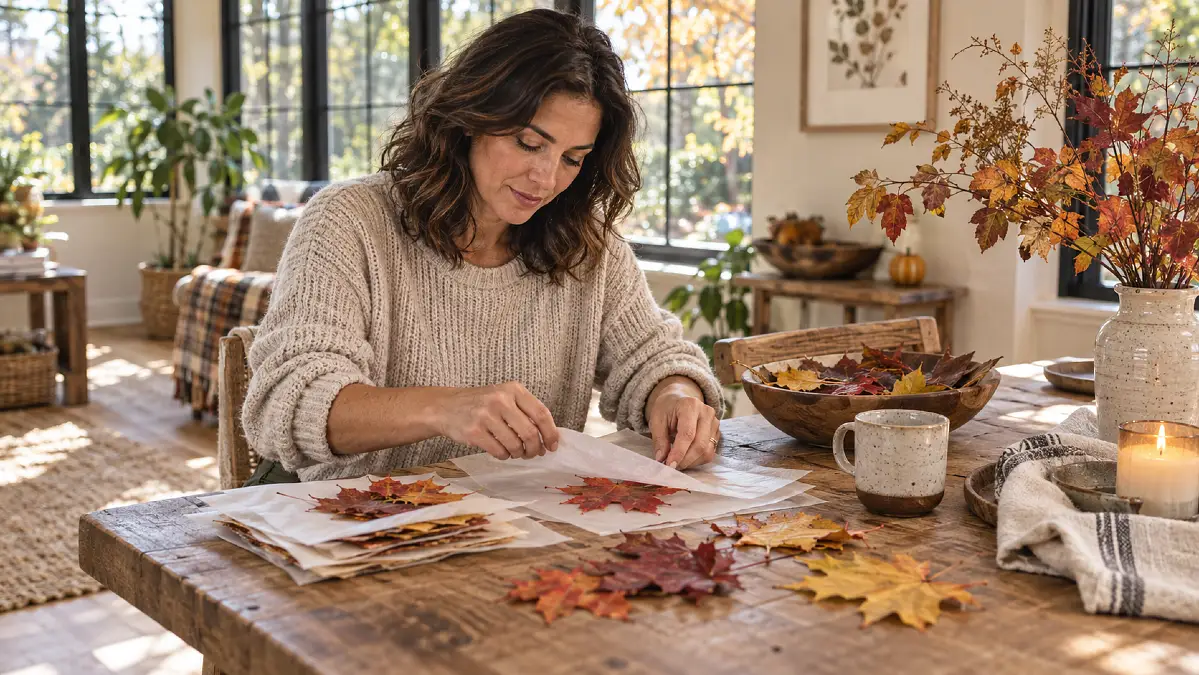
Fresh fall leaves can look beautiful on the day you bring them inside, then turn curled, brittle, and disappointing before your October decorating is even finished.
The problem is not your styling. Leaves naturally lose moisture after they fall, so simply placing them in a bowl, wreath, or garland gives them very little protection from drying and breaking.
For DIY home decor, the better approach is to preserve the leaves while they are still flexible and rich in color. You do not need expensive craft supplies or a complicated process.
The trick is choosing leaves at the right stage, matching the preservation method to your decor, and protecting the finished leaves from heat, strong sun, and rough handling.
Preserve the Leaf Before It Starts Feeling Crisp
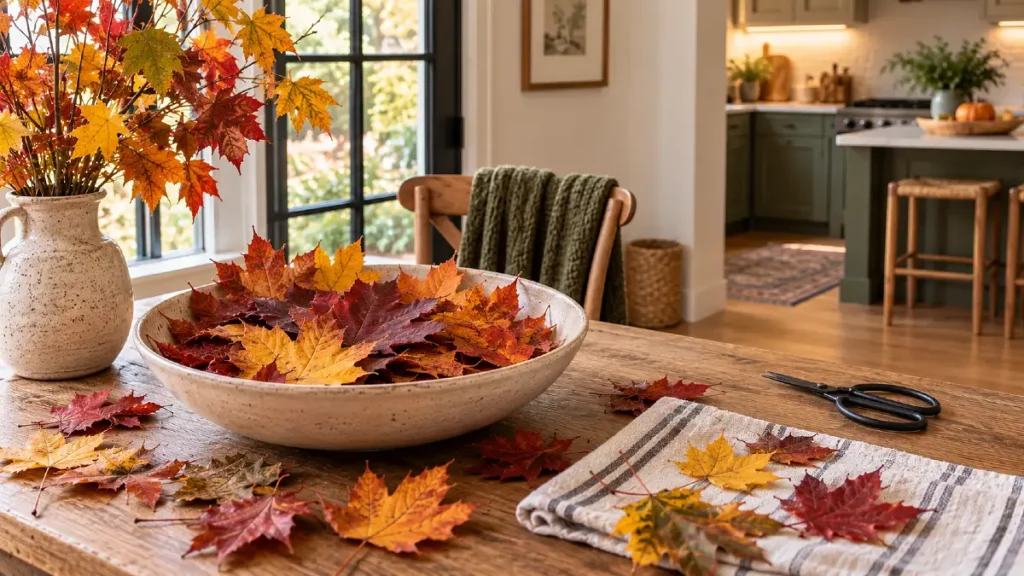
The best-looking leaf is not always the best leaf to preserve. A deep red maple leaf may have beautiful color, but if its edges already crack when touched, preservation will not restore that lost flexibility.
Collect leaves that have developed good fall color but still feel smooth and slightly supple. Skip leaves with large brown patches, torn edges, insect damage, or very dry veins.
Surface moisture matters too. Leaves should be dry before you begin, especially if you plan to press or coat them.
Try this: Hold a leaf gently by the stem and bend one corner slightly. If it flexes instead of snapping, you have a much better starting point.
Scale matters when gathering leaves for decor as well. Large leaves make strong focal points in bowls and frames, while smaller leaves are easier to layer through wreaths, branches, and table arrangements.
Match the Preservation Method to Your Fall Decor
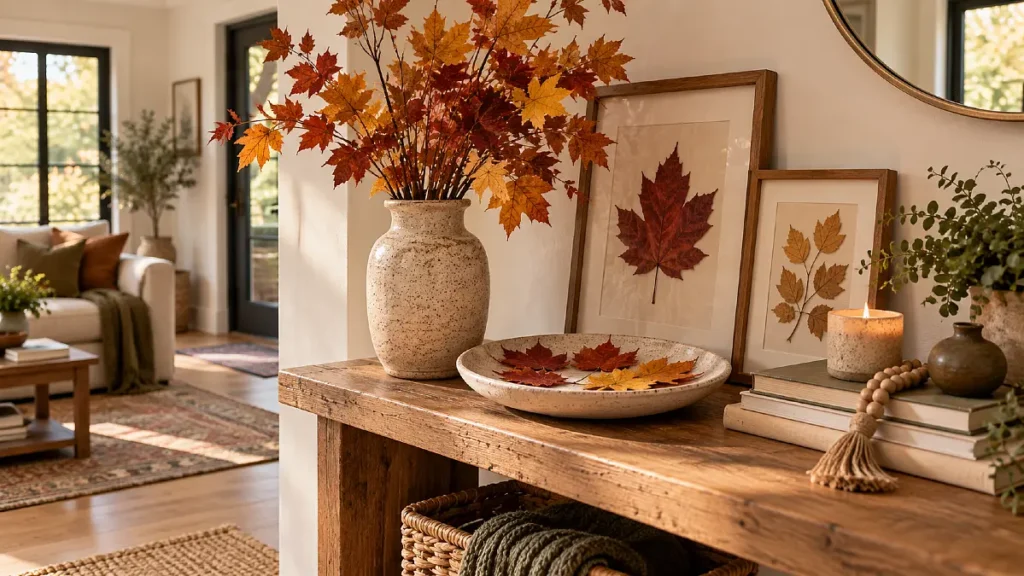
There is no single preservation method that works best for every project. A flat leaf going into a frame needs something different from a leafy branch that has to curve around a wreath.
Think about the final shape before choosing your supplies. That small decision can prevent you from spending time preserving leaves that will not behave the way your arrangement needs them to.
Here is the easiest way to compare the main approaches.
| Preservation Method | Best For | What to Expect |
|---|---|---|
| Glycerin and water | Leafy stems, branches, wreaths, garlands | Softer, more flexible foliage; some color change is possible |
| Waxed-paper pressing | Flat leaves, table decor, window projects | Flatter leaves with better protection from brittleness |
| Traditional pressing | Framed art, scrapbooks, protected displays | Very flat finish, but leaves can remain delicate when handled |
| Natural drying | Bowls or short-term displays | Easiest method, but leaves are most likely to curl and crumble |
Waxed-paper heat pressing is a recognized method for helping preserve fall color and flexibility, while glycerin treatment is especially useful when flexibility matters.
That is why the intended use should lead the process. Preserve for the shape you need instead of trying to force every leaf into the same method.
Glycerin Helps Leafy Branches Bend Instead of Break
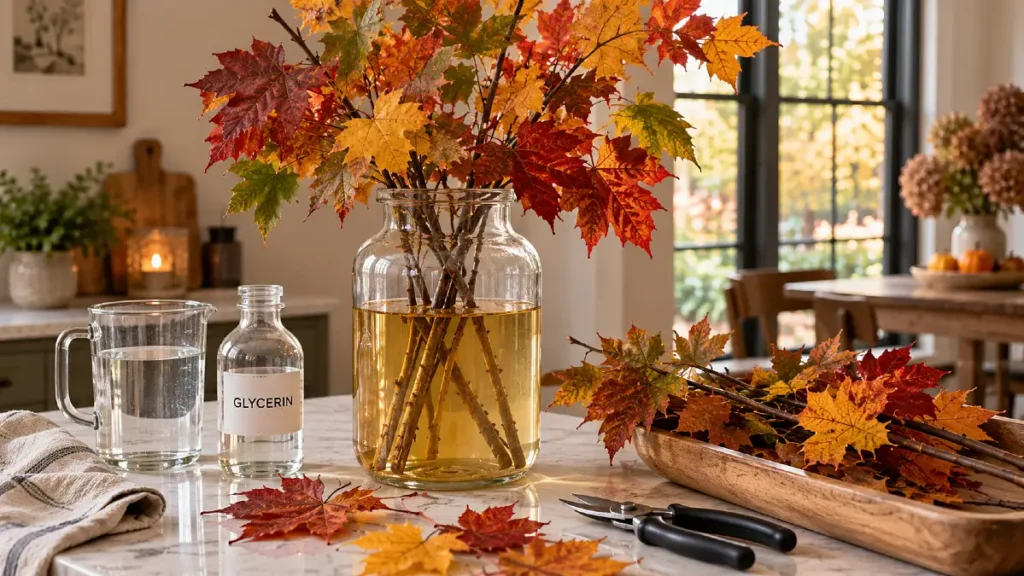
If your goal is a wreath, mantel arrangement, tall vase, or loose garland, consider gathering small branches while the leaves are still attached.
Glycerin works differently from simple drying. The stems take up a glycerin-and-water mixture, helping the foliage stay thicker and more flexible rather than becoming crisp.
Penn State recommends combining one part glycerin with two parts water, lightly crushing the cut end of the branch, then placing the stem in the mixture. Its guidance allows about two weeks for the foliage to take up the solution.
A simple process looks like this:
- Choose short branches with mature, healthy leaves that are still flexible.
- Remove any damaged leaves that would make the arrangement look messy later.
- Lightly crush or split the bottom of the woody stem so it can take up the mixture more easily.
- Combine one part glycerin with two parts water in a stable container.
- Place only the stem ends in the solution and leave the container somewhere protected.
- Check the foliage as it changes from fresh and thin to softer and slightly heavier.
Do not expect glycerin-treated leaves to look frozen at the exact color you collected them. The shade may deepen or shift as the treatment works.
That tradeoff can actually suit cozy home decor. Softer rust, brown, burgundy, and olive tones tend to mix naturally with wood, linen, ceramic, woven baskets, and other textural fall pieces.
Color note: If keeping a bright yellow or vivid red is more important than flexibility, waxed-paper pressing may be the better choice.
Waxed Paper Works Better for Flat Leaves
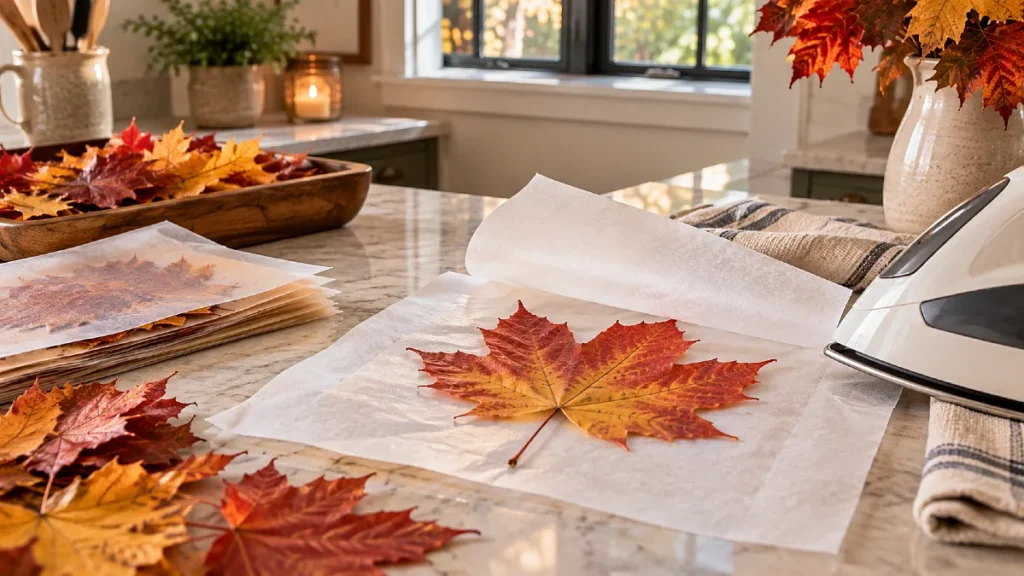
Loose leaves are easier to preserve when you let them stay flat rather than asking them to curve around a wreath.
Start with clean, dry leaves that still have some flexibility. Place them between sheets of plain paper under a heavy book for a short period if they need flattening first.
Once flat, sandwich the leaves between fresh sheets of waxed paper. Cover the top with an old cloth or towel, then use a warm iron briefly so the waxed surfaces bond around the leaf.
University of New Hampshire guidance recommends working gently and quickly when pressing fall leaves between waxed paper, while Clemson Extension notes that warm heat pressing can help preserve both flexibility and fall color.
Avoid steam. Excess moisture works against the goal here, and too much heat can darken delicate leaves.
Once completely cool, use the preserved leaves in a shallow bowl, framed arrangement, place setting, glass-front cabinet, or other DIY home decor where they will not be bent repeatedly.
Keep Sun, Heat, and Moisture From Undoing Your Work
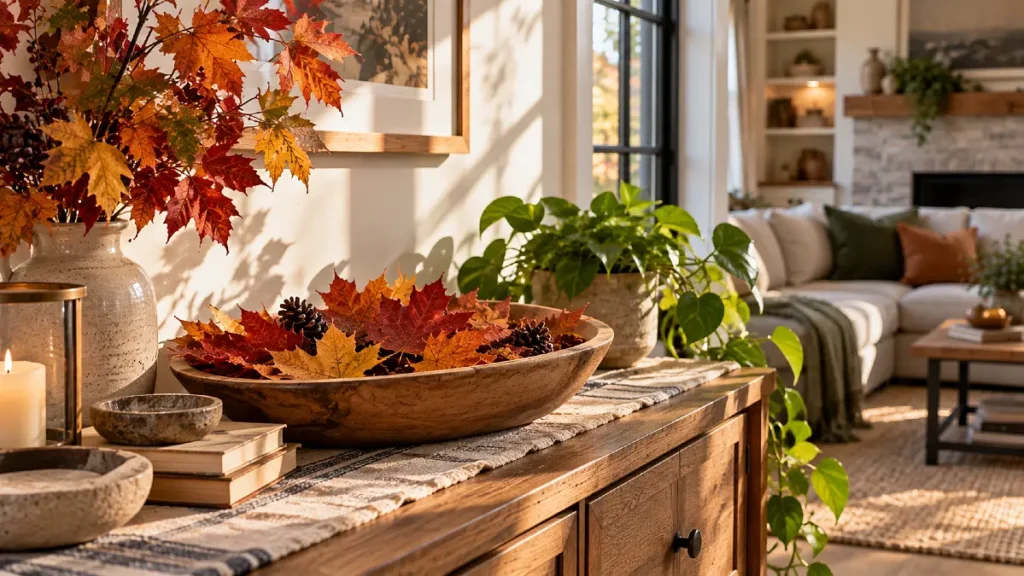
Preservation makes leaves more durable, but it does not turn them into permanent plastic decorations.
Strong window light can dull natural pigments over time. Damp spaces can also make organic decorations behave unpredictably, while constant handling can crack even well-preserved edges.
A few placement changes usually make more difference than adding another heavy coating.
| Instead of This | Try This |
|---|---|
| Setting preserved leaves on a sunny windowsill | Place them on a console, shelf, or table away from direct sun |
| Bending flat pressed leaves around a wreath | Use flexible glycerin-treated branches for curved forms |
| Preserving leaves that already feel crispy | Collect flexible leaves earlier in the color change |
| Layering damp leaves into a bowl | Let surface moisture dry before preservation |
| Handling the arrangement every few days | Style it once, then leave delicate leaves mostly undisturbed |
The same logic applies to most natural budget home decor. Organic materials look best when their natural limits become part of the styling plan.
A preserved leaf does not need to last for years to be useful. If it stays attractive through the main fall decorating season, the method has already done its job.
Style Preserved Leaves Without Making the Room Feel Crafty
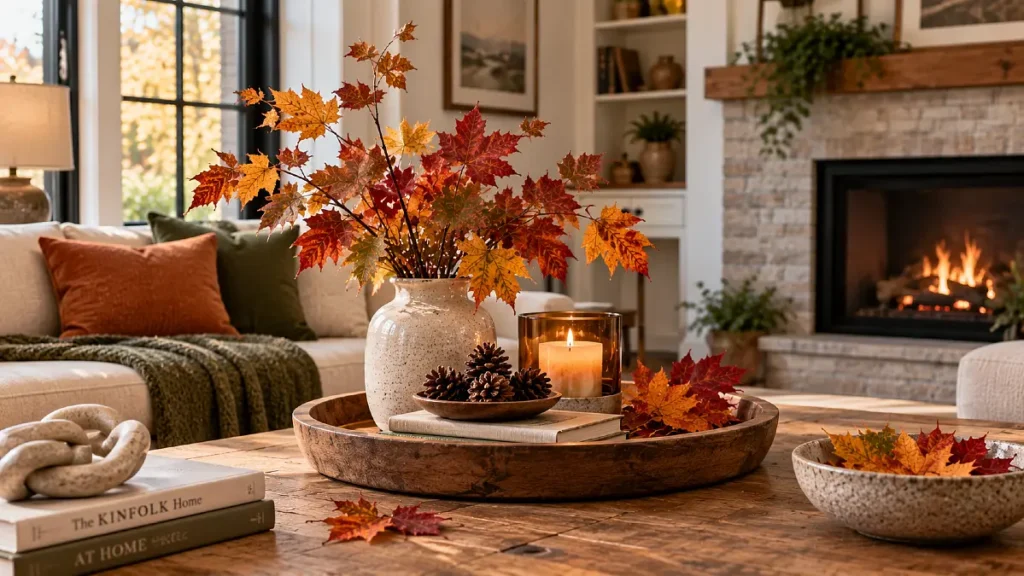
Natural leaves are strongest when they act as one textural layer rather than taking over the entire room.
For example, a ceramic bowl filled completely with bright leaves may feel busy. Three or four preserved leaves placed beside pinecones, an aged wood object, or a small neutral vase usually feel more grounded.
The same balance helps on a mantel. Let the leaves bring color, then let calmer materials provide breathing room.
Here are a few repeatable combinations.
| Decor Area | Simple Formula | Why It Works |
|---|---|---|
| Entry console | Amber vase + glycerin branches + small ceramic bowl | Height from the branches balances lower solid objects |
| Coffee table | Shallow wood bowl + pressed leaves + two pinecones | Similar natural textures create a layered look without clutter |
| Mantel | Leafy branch + candleholders + framed art | One organic shape softens the harder straight lines |
| Dining table | Linen runner + scattered preserved leaves + simple pottery | Soft fabric keeps the leaves from looking like loose craft pieces |
Texture note: Fall color gets stronger when the surrounding materials are quieter. Linen, unfinished wood, matte ceramics, woven fibers, and aged metal give orange and red foliage something calm to sit against.
You also do not need leaves on every surface. Repeating one preserved-leaf arrangement in the main living area is often enough to connect the room to the season.
Use This Fall Leaf Formula Every Year
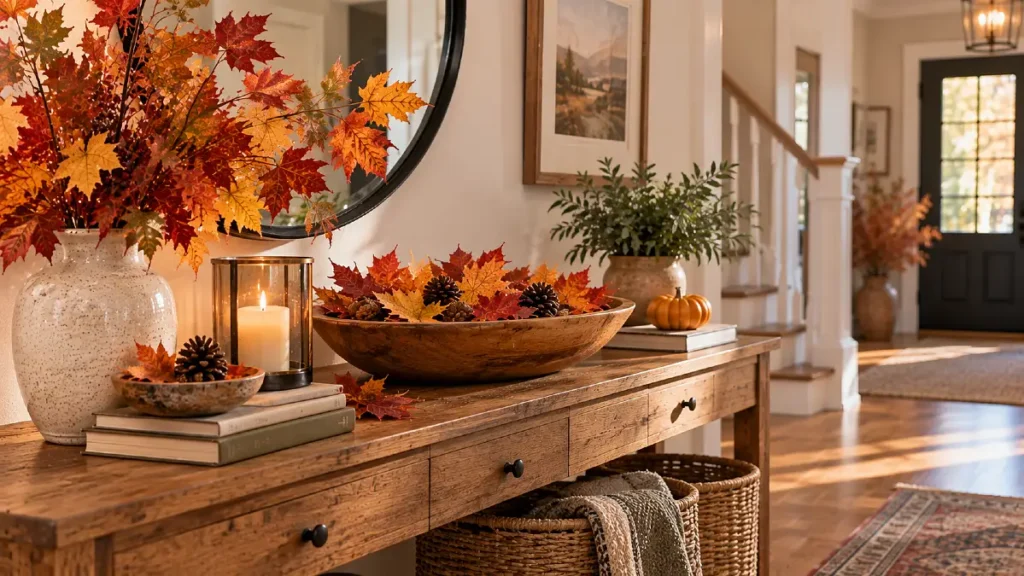
The easiest system to remember is not a complicated preservation recipe.
Formula: flexible fresh leaves + preservation method matched to the decor + low-stress display location.
Choose glycerin when the foliage needs to bend. Choose waxed-paper pressing when the leaves need to stay flat.
Then place the finished decor somewhere it will not be baked by direct sun, exposed to moisture, or handled constantly.
This is also a useful styling formula for home decor for beginners because it separates the project into three decisions instead of turning fall decorating into another shopping trip.
Use what nature gives you, preserve only the best pieces, and let a few carefully placed leaves provide the seasonal color.
Frequently Asked Questions
How do you keep fall leaves from becoming brittle?
Preserve them while they still feel flexible rather than waiting until the edges have dried. Glycerin works well for leafy stems that need softness, while waxed-paper heat pressing can help protect individual flat leaves from becoming as brittle.
Does pressing fall leaves stop them from crumbling?
Pressing flattens leaves and can make them easier to frame or store, but traditionally pressed leaves may still be delicate. Adding wax through a waxed-paper pressing method provides more protection if the leaves will be handled or displayed openly.
Will glycerin keep fall leaves their original color?
Not always. Glycerin can change or deepen the color as it works through the foliage, so use it when flexibility matters more than keeping an exact bright shade.
For vivid individual leaves, a waxed-paper method may suit the project better.
Can preserved fall leaves be used in a wreath?
Yes, but flexible foliage is easier to work with than crisp pressed leaves. Small branches treated with glycerin are a better match for curved wreath forms because they can bend more naturally.
How early should I collect fall leaves for decorating?
Collect them once the color looks good but before the leaf becomes dry and crunchy. A leaf that still bends gently without cracking gives you more options for preserving and styling it.