
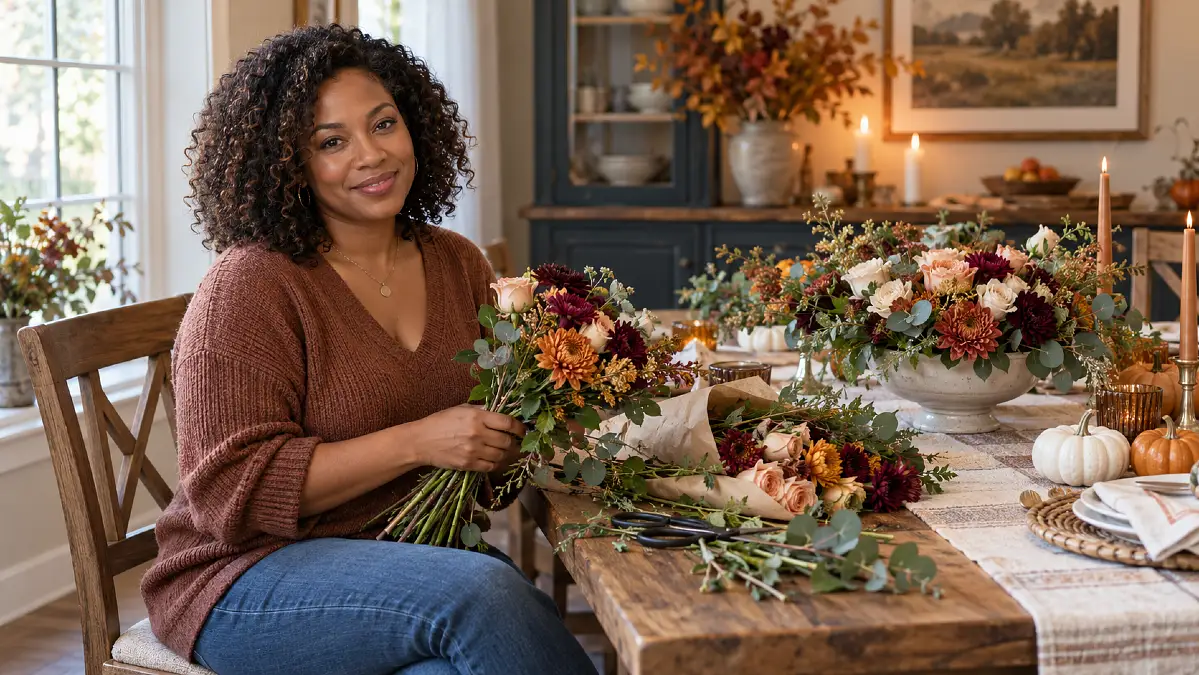
A Thanksgiving table can feel strangely unfinished even after the plates, napkins, and serving dishes are in place.
The centerpiece is often the missing layer, but florist arrangements can feel expensive, oversized, or far too formal for a relaxed family dinner. If you are planning the full place settings too, follow our guide to setting a Thanksgiving table for fourteen guests.
Grocery store flowers solve the budget problem, but arranging them straight from the plastic sleeve rarely gives you that warm, collected look you had in mind.
The difference usually comes down to flower choice, proportion, color, and how the stems are grouped.
The Plan Decor • Thanksgiving Styling Guide
Grocery Store Flowers to Thanksgiving Centerpiece
You do not need florist-level flowers to make the Thanksgiving table feel special. Use this simple six-step formula to turn an ordinary grocery store bouquet into a warm, low centerpiece.
Choose One Color Story
Start with two or three related shades such as burgundy, rust, cream, peach, or muted orange. A limited palette helps inexpensive flowers look more intentional.
Pick a Low Vessel
Use a short ceramic bowl, small pitcher, compote, or low vase. Keeping the arrangement low makes conversation across the dinner table easier.
Prep Every Stem
Remove leaves below the waterline and trim stems at an angle. Leave some stems longer than others so the final arrangement has natural variation.
Build the Greenery Base
Angle greenery around the outer edge first. This establishes the width of the centerpiece and creates a loose framework for the flowers.
Add the Main Blooms
Place mums, roses, carnations, or other larger flowers at slightly different heights. Group a few matching blooms rather than evenly alternating every color.
Finish the Table Around It
Add candles, linen napkins, pears, mini pumpkins, or a few natural accents beside the vase. Let the table styling complete the centerpiece instead of adding more flowers.
If the arrangement looks stiff, do not automatically add more flowers. Pull a few stems outward, vary their heights, and leave a little open space between the blooms.
Start With Flowers That Already Share a Thanksgiving Color Story
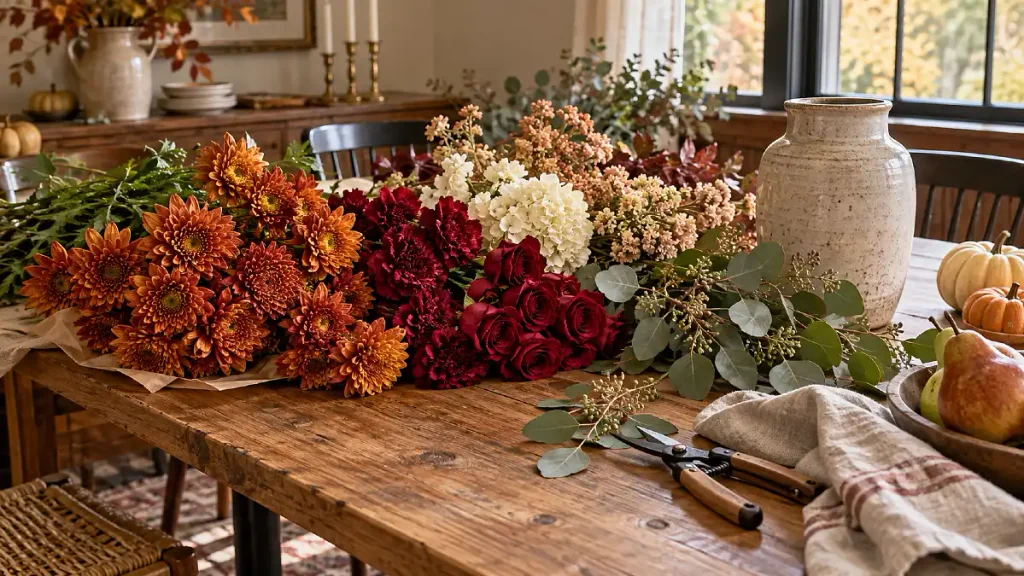
The easiest centerpiece starts before you ever trim a stem. Instead of choosing the biggest bouquet in the floral section, look for flowers that can work together as one color story.
For Thanksgiving, warm shades usually feel natural against wood tables, cream dishes, brass candleholders, and autumn linens. Rust, burgundy, caramel, muted orange, dusty pink, cream, and deep red can all work beautifully.
You do not need every traditional fall color in one vase. In fact, limiting the arrangement to two or three main colors often makes inexpensive flowers look more polished.
A cream-and-burgundy arrangement can feel rich and classic. Rust with pale peach feels softer, while white flowers mixed with eucalyptus or other grocery-store greenery create a cleaner look.
Choose Different Flower Shapes, Not Just Different Colors
A centerpiece looks fuller when the flowers play different visual roles.
Try to find:
- One larger bloom for the focal flower, such as mums, roses, carnations, or sunflowers.
- One smaller flower to fill spaces and soften the arrangement.
- One greenery or airy stem to create movement around the edges.
You can often build an entire centerpiece from two mixed bouquets rather than buying several specialty bunches.
This quick flower guide can make the grocery-store cooler much easier to shop.
| Flower or Greenery | What It Adds | Best Thanksgiving Use |
|---|---|---|
| Mums | Full, rounded shape | Main flower in warm fall arrangements |
| Roses | Softer, more refined shape | Burgundy, cream, peach, or dusty pink palettes |
| Carnations | Volume and texture | Budget-friendly filler that lasts well |
| Alstroemeria | Smaller clustered blooms | Filling gaps without making the centerpiece heavy |
| Eucalyptus or leafy greens | Movement and contrast | Softening the edge of the arrangement |
| Sunflowers | Strong focal shape | Rustic tables when used in small numbers |
Budget swap: If the prettiest bouquet is mostly filler flowers, use it anyway. A tightly grouped bunch of inexpensive blooms often looks richer than a vase containing six unrelated flower varieties.
Pick a Vase That Keeps the Arrangement Low Enough for Dinner
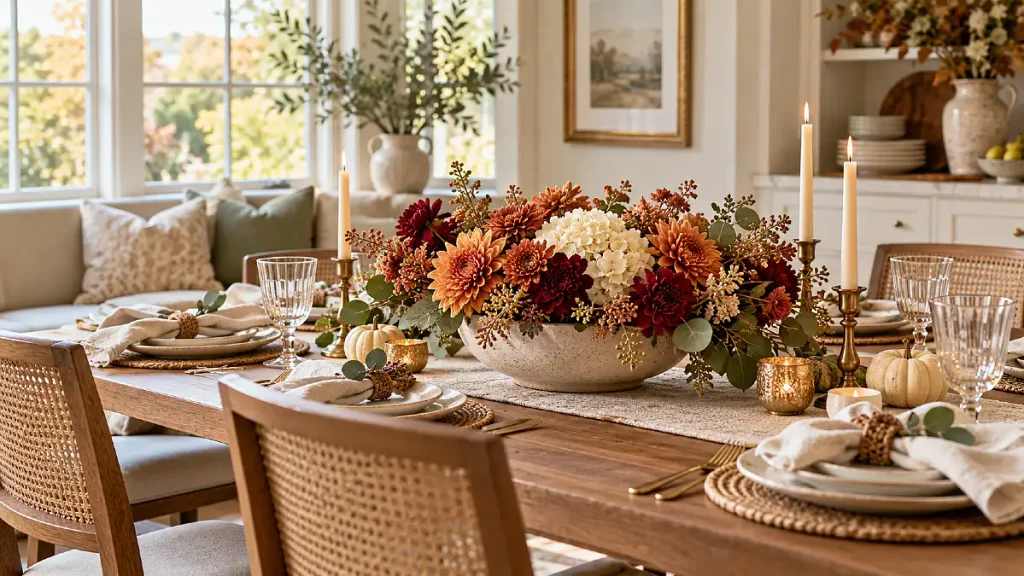
The vase matters almost as much as the flowers.
A tall cylinder may look lovely on a console table, but it can become frustrating at Thanksgiving when guests have to lean around the arrangement to speak to each other.
For a dining table, a shorter vessel usually works better. Think ceramic bowls, low glass vases, small pitchers, compotes, or even a wide drinking glass hidden inside a decorative container.
Aim for an arrangement that feels substantial without creating a wall between opposite sides of the table.
Match the Vase to the Table, Not the Bouquet
A large dining table can carry a wider centerpiece because there is enough visual space around it. A small apartment table usually needs something tighter so dinner plates and serving bowls still have room.
This is where scale and proportion matter.
If the vase takes up almost all the open space in the center of the table before flowers are even added, it is probably too large. If it disappears completely between serving dishes, it may be too small.
Try this simple guide:
| Table Situation | Better Vessel Choice | Why It Works |
|---|---|---|
| Small round table | Short 4–6 inch vase | Leaves room for plates and serving dishes |
| Standard rectangular table | Low medium-width vase | Creates presence without blocking conversation |
| Long dining table | One low arrangement or three small vessels | Spreads color across the table |
| Busy buffet-style dinner | Compact vase or bowl | Keeps flowers away from serving space |
A thrifted pitcher or bowl can work just as well as a floral vase. That makes this an easy option when you are decorating on a budget and do not want to buy something you will use once a year.
Prep Every Stem Before You Begin Arranging
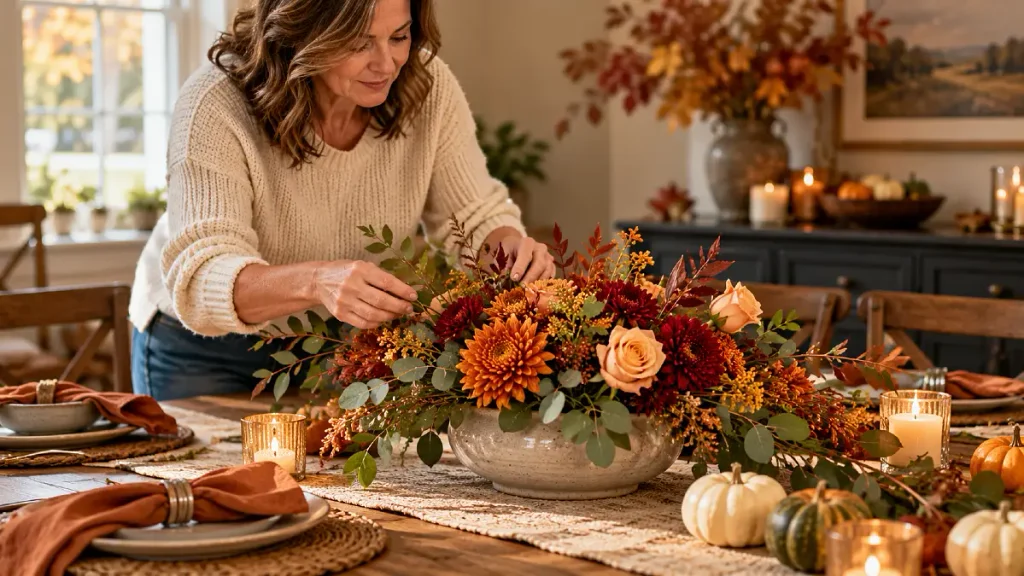
One of the biggest differences between a grocery-store bouquet and a styled centerpiece happens before the flowers go into the vase.
Remove the plastic sleeve and lay everything out on the counter. Separate the larger blooms, smaller fillers, and greenery so you can see what you actually have.
Then remove leaves that would sit below the waterline. Leaves left underwater can make the water dirty faster and create a crowded look inside a clear vase.
Cut each stem at an angle using clean floral snips or sharp scissors. Start longer than you think you need because you can always trim more.
Add fresh water to the vase before arranging. If the bouquet came with flower food, follow the packet instructions rather than adding more than recommended.
Do Not Cut Every Stem to the Same Height
Equal stem lengths can make an arrangement look stiff and dome-shaped.
Instead, think in gentle layers. Keep a few flowers slightly taller near the center, place medium stems around them, and let a few greenery pieces or smaller flowers sit lower toward the rim.
That variation gives the centerpiece movement while keeping it controlled.
Build the Centerpiece From the Outside In
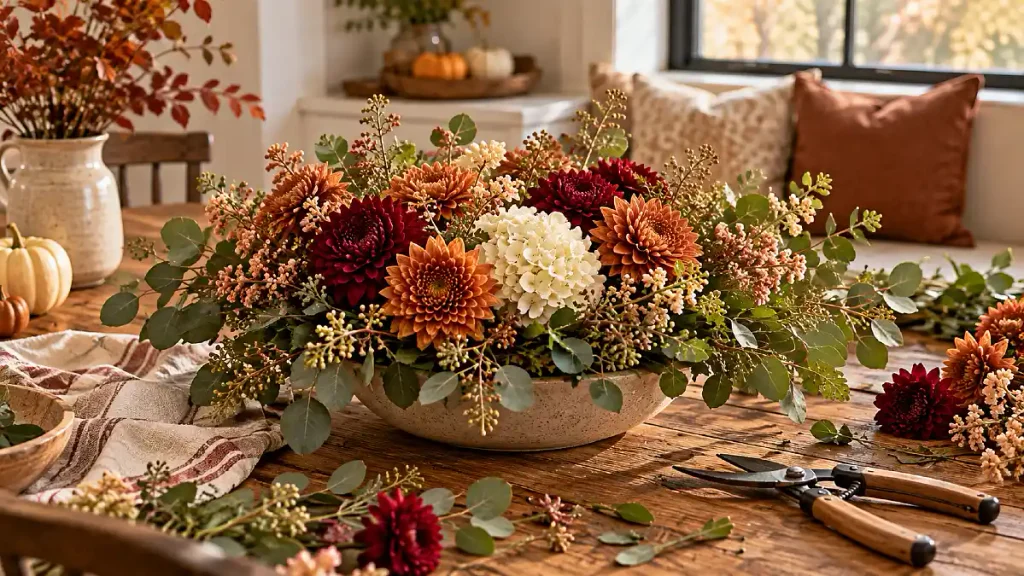
Many people start by placing their prettiest flowers in the vase first. That can make the remaining stems harder to position.
Start with greenery instead.
Use three to five pieces around the rim to establish the width and shape of the arrangement. Let some stems angle outward rather than standing vertically.
Next, add your largest blooms. Place them at slightly different heights and turn the vase as you work so one side does not become much fuller than the other.
Then bring in smaller flowers to fill the visible openings.
You are not trying to hide every gap. A little breathing room between blooms makes the flowers easier to see and keeps the arrangement from becoming one dense ball.
Use Small Groups Instead of Spreading Every Color Evenly
A common instinct is to distribute every flower color equally around the vase.
Grouping two or three matching flowers together often looks more natural. Your eye sees small pockets of burgundy, cream, rust, or green instead of a perfectly alternating pattern.
That small change can make basic supermarket flowers look much more curated.
Color note: If the bouquet contains one very bright color that feels disconnected from your table, you do not have to use every stem. Save those flowers for a smaller vase elsewhere in the house.
Let the Thanksgiving Table Finish the Arrangement
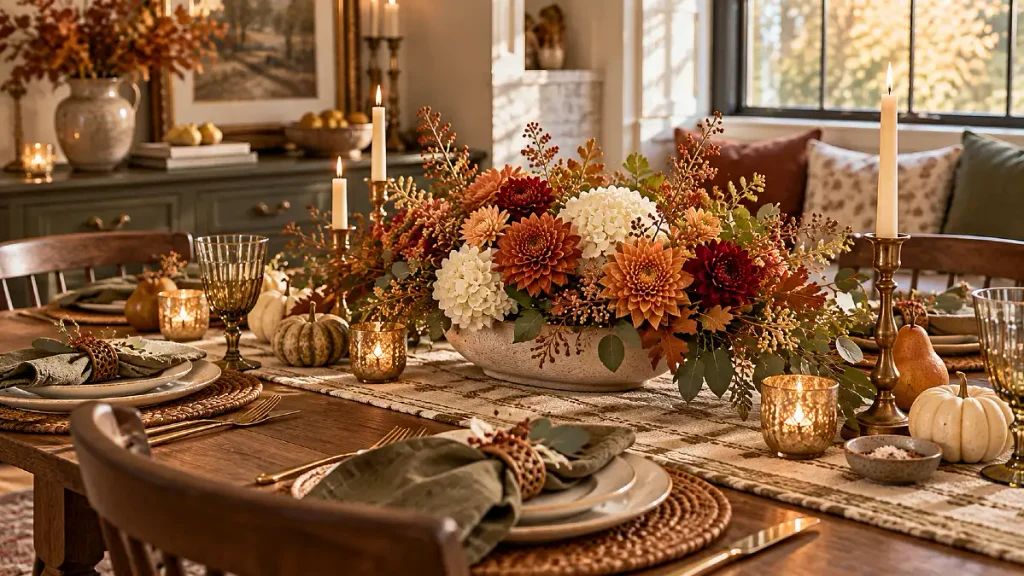
The centerpiece does not need to carry the entire Thanksgiving look by itself.
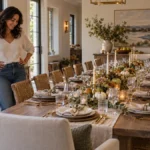
Once the flowers are in place, look at them alongside the table linens, dishes, candles, and serving pieces. Those surrounding elements help the flowers feel connected to the room.
For example, burgundy roses can feel richer beside cream napkins and brass candlesticks. Rust-colored mums feel softer when paired with beige linen rather than several other orange decorations.
Texture matters here too. Flowers already provide softness and movement, so combining them with natural wood, linen, ceramic, or woven pieces usually gives the table enough variation.
If you want an extra seasonal detail, tuck a few miniature pumpkins, pears, or small gourds around the vase instead of stuffing them into the arrangement.
The centerpiece stays easier to arrange, while the table still gets that Thanksgiving feeling.
Here is an easy way to coordinate the whole setup without buying a matching decor collection.
| Centerpiece Palette | Table Pairing | Overall Feel |
|---|---|---|
| Burgundy + cream | Ivory linens + brass candles | Rich and classic |
| Rust + peach | Beige linen + wood accents | Warm and relaxed |
| White + greenery | Stoneware + natural linen | Simple and fresh |
| Deep red + blush | Cream dishes + amber glass | Soft and festive |
This kind of high-low mix is especially useful for budget home decor. Grocery-store flowers can provide the fresh element while pieces you already own provide the rest of the styling.
Fix the Little Things That Can Make Grocery Store Flowers Look Awkward
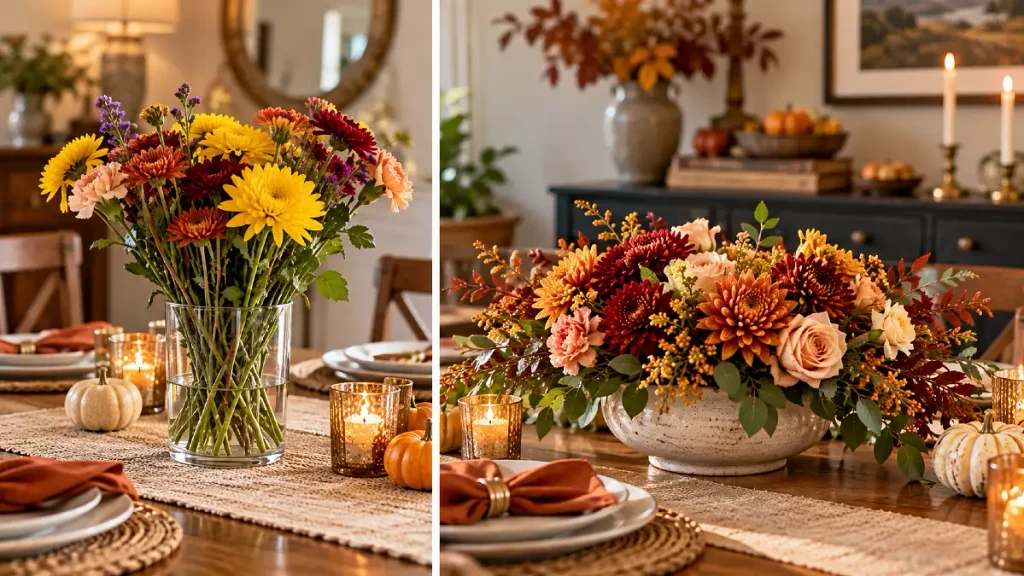
There is no single correct way to arrange flowers, but a few small adjustments can make the centerpiece sit more naturally on a Thanksgiving table.
If your arrangement feels off, check the proportion before buying more flowers.
| If This Feels Off | Try This Instead |
|---|---|
| Flowers look tall and formal | Trim stems gradually and widen the arrangement |
| Arrangement looks like one solid ball | Pull several blooms outward and vary the height |
| Too many colors compete | Remove one color and repeat two main shades |
| Greenery sticks straight upward | Angle several stems outward near the rim |
| Vase looks too empty | Shorten stems so flowers sit closer together |
| Centerpiece overwhelms the table | Divide flowers between two or three smaller vessels |
Another common issue is trying to use every single stem because you paid for the whole bouquet.
You do not have to.
If one flower is fighting the color palette or making the arrangement too tall, move it to another room. A leftover stem in a bud vase beside the kitchen sink can feel intentional rather than wasteful.
Use This Simple Grocery Store Flower Formula Every Thanksgiving
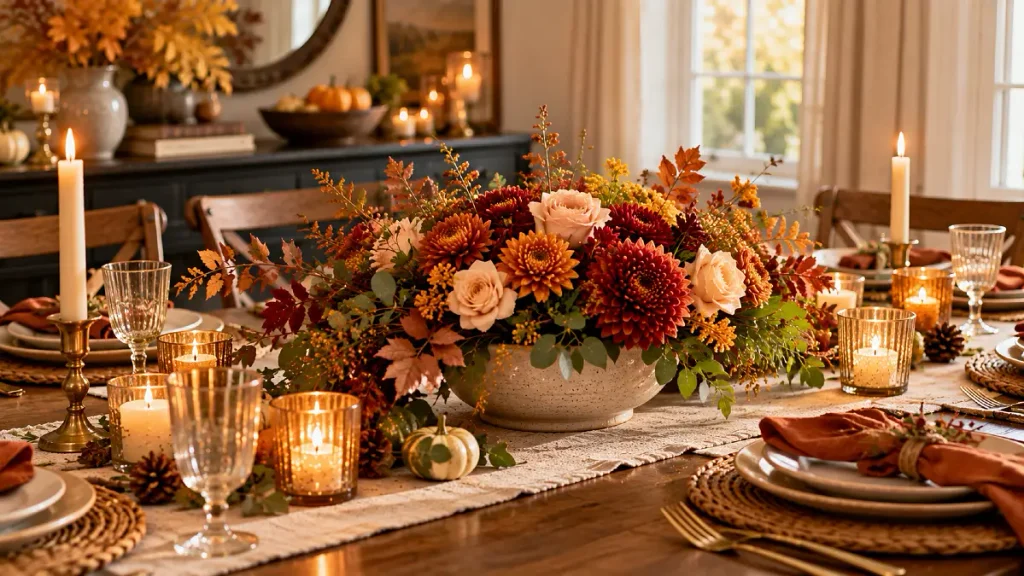
You do not need to memorize flower-arranging rules.
Use one repeatable formula:
Formula: low vessel + greenery base + focal flowers + smaller filler blooms + one tabletop accent
Start with a low vase that fits the scale of your table. Add a loose ring of greenery, then place your largest flowers at varied heights before filling gaps with smaller blooms.
Finish the table with something that connects the centerpiece to the rest of the setting, such as linen napkins, brass candles, pears, mini pumpkins, or small votives.
For a smaller table, reduce the number of flowers rather than shrinking every stem into a tight bundle. For a longer table, split one large bouquet into three small vases and repeat the same colors down the center.
That repeatable formula gives you plenty of room to change the flowers from year to year while keeping the arrangement balanced.
Frequently Asked Questions
How many grocery store bouquets do I need for a Thanksgiving centerpiece?
For an average dining table, one full mixed bouquet plus a small bunch of greenery may be enough. If the grocery-store bouquets are small or you want a fuller centerpiece, two bouquets give you more variety.
The size of the vase matters too. A small vessel can look full with surprisingly few flowers.
How tall should a Thanksgiving centerpiece be?
A dining-table arrangement usually feels most comfortable when guests can easily see across it.
Rather than focusing on an exact measurement, sit in a dining chair and check the sightline. If the flowers block the face of someone sitting opposite you, trim the arrangement lower or move the tallest stems outward.
Can I arrange grocery store flowers the day before Thanksgiving?
Yes. Making the centerpiece a day ahead can actually make Thanksgiving morning easier.
Keep it somewhere cool and away from direct heat or strong sunlight. Check the water level before guests arrive and remove any flowers that have started to droop.
What can I use if I do not own a flower vase?
A pitcher, ceramic bowl, glass jar, small crock, or drinking glass can all work.
If the decorative container cannot safely hold water, hide a smaller waterproof glass or jar inside it.
How can I make inexpensive flowers look more expensive?
Use fewer colors, vary the flower heights, and group similar blooms rather than scattering every type evenly.
A simple vessel and thoughtful proportion often do more for an arrangement than adding expensive flowers.
A Thanksgiving Centerpiece Does Not Need to Be Complicated
A beautiful Thanksgiving table does not require florist-level flowers or a cart full of new seasonal decorations. A few grocery-store blooms can feel warm and pulled together when the colors relate, the vase fits the table, and the flowers are arranged with a little breathing room. If you want options beyond fresh flowers, browse these 17 Thanksgiving centerpiece ideas for simple morning-of arrangements.
Think about scale, layers, and texture rather than trying to make every stem look perfect.
Start with one bouquet this year and use the simple formula above. Your table can still feel special, personal, and ready for company without stretching the decorating budget.
2 thoughts on “How to Make a Thanksgiving Centerpiece From Grocery Store Flowers”