
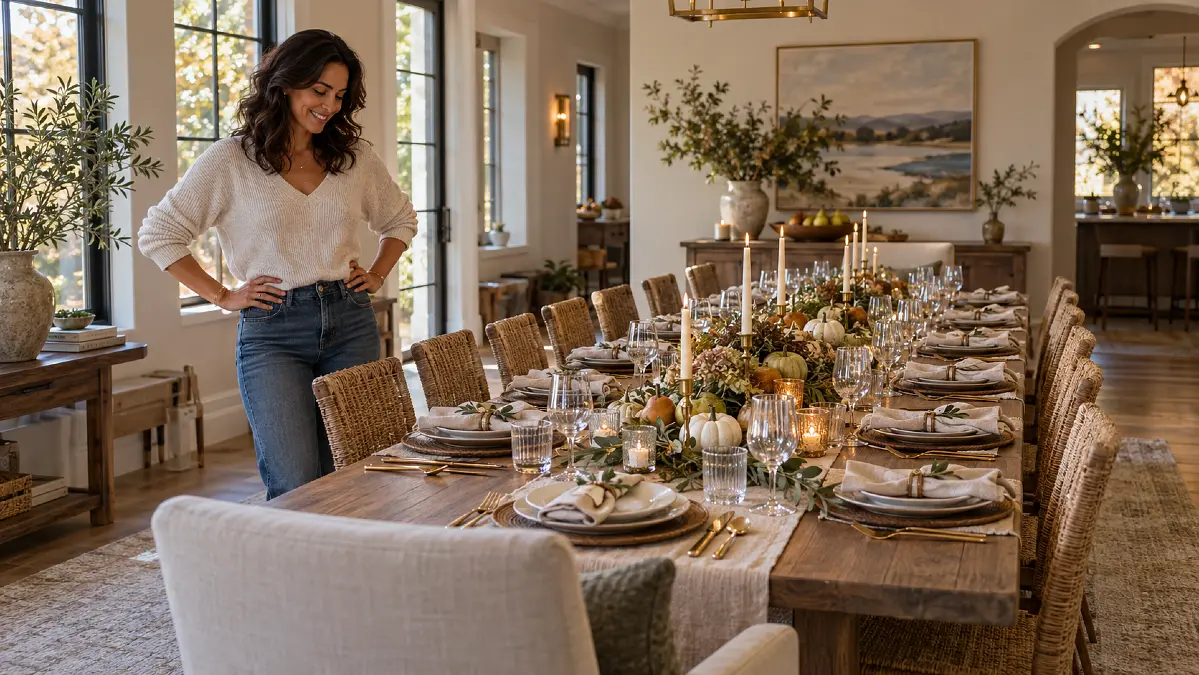
A Thanksgiving table for fourteen can start feeling crowded before the first dish even arrives. Between extra chairs, serving platters, mismatched plates, and decorations, it is easy to run out of space.
You want everyone to feel welcome, but you also want the table to look thoughtful. The frustrating part is figuring out how to make fourteen place settings feel like one beautiful arrangement instead of a collection of everything you own.
Learning how to set a Thanksgiving table becomes much easier when you work in the right order. Start with seating, build a simple color palette, and add only what makes the meal more comfortable.
You do not need matching dinnerware, expensive linens, or a dining room made for entertaining. For more color and centerpiece combinations that can work beyond Thanksgiving, browse these fall tablescape ideas.
Start With Fourteen Seats Before Choosing a Single Decoration
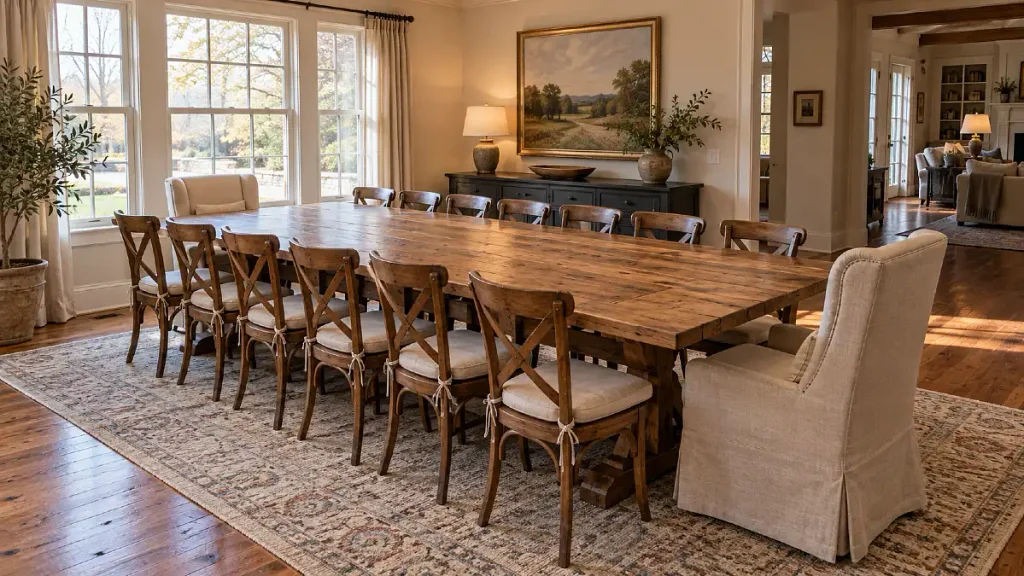
The biggest Thanksgiving table mistake often happens before anyone brings out the plates. People decorate the tabletop first, then discover there is barely enough room for everyone to sit comfortably.
Begin by counting your guests and placing every chair around the table. This gives you a realistic picture of how much room you have for dinnerware, centerpieces, and serving dishes.
A useful starting point is about 24 inches of table edge per adult, with 28 to 30 inches feeling more comfortable when space allows.
Try to leave around 36 inches between the table and nearby furniture for chair access, with extra room along busy walking paths.
These are planning guidelines rather than strict measurements. Wide chairs, table legs, and the shape of your room can change what actually fits.
Find the Seating Arrangement That Works for Your Room
You do not have to squeeze fourteen people around one dining table. Sometimes two smaller tables make the room feel more comfortable and keep everyone closer to the conversation.
Here are three practical ways to arrange the seating.
| Table arrangement | Seating plan | Best approach |
|---|---|---|
| One long rectangular table | Six guests on each long side, one at each end | Use an extension table with enough length and legroom |
| Two tables joined together | Arrange fourteen seats around the combined outer edges | Secure both tables and keep their surfaces level |
| Two separate tables | Eight guests at one, six at the other | Repeat the same linens and centerpiece colors |
For two separate tables, matching every detail is unnecessary. Use the same napkin color and similar centerpieces to make both arrangements feel connected.
If you are borrowing folding tables, check their stability before adding dishes. A full tablecloth can hide differences in table finishes, but it will not fix an uneven surface.
Scale note: Try sitting in several chairs after everything is arranged. If knees hit table legs or chairs cannot pull back, adjust the seating before decorating.
This simple test saves far more trouble than rearranging the room just before dinner.
Build the Thanksgiving Table Around One Color Palette
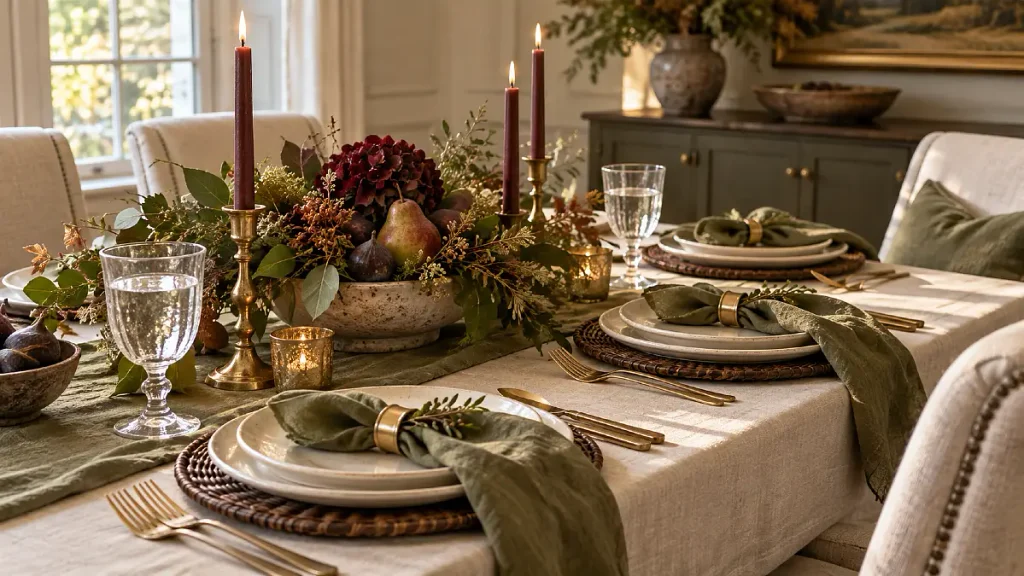
Once the chairs are settled, the fun part begins. Thanksgiving decorating works best when you choose a small group of colors and repeat them across the table.
You do not need six different fall colors competing for attention. A quieter palette allows your food, greenery, candles, and tableware to become part of the overall look.
For a warm Thanksgiving table, consider these combinations:
- Cream, rust, and warm brown: Soft linen, terracotta napkins, and wooden serving boards.
- Ivory, sage green, and brass: White plates, muted greenery, and warm metal candleholders.
- Oatmeal, burgundy, and walnut: Neutral fabric, wine-colored napkins, and dark wood accents.
- White, pumpkin orange, and natural green: Simple white dinnerware with small pumpkins and leafy branches.
Choose one neutral as your base, one stronger color for contrast, and one natural material to add warmth.
For example, an ivory tablecloth with rust-colored napkins and small wooden details feels seasonal without making every surface orange.
Let the Tablecloth and Runner Do Different Jobs
A tablecloth makes mismatched tables or everyday dining furniture feel more finished. It also creates a clean background that helps fourteen place settings look organized.
A soft cotton or linen-blend cloth is especially useful because it drapes naturally. If you are working with two joined tables, check that the cloth is large enough to cover the seam neatly.
A runner gives the middle of the table a visual direction. On a long rectangular table, it helps connect candles, greenery, and other small decorations.
You can also skip the tablecloth entirely. A beautiful wooden table looks welcoming with woven placemats, fabric napkins, and a narrow centerpiece.
Budget swap: Instead of purchasing fourteen new placemats, use the same neutral tablecloth for everyone. Spend your decorating effort on coordinated napkins and a few natural accents.
Those repeated details will do more to bring the setting together than a collection of new accessories.
Set Every Thanksgiving Place Setting in the Right Order
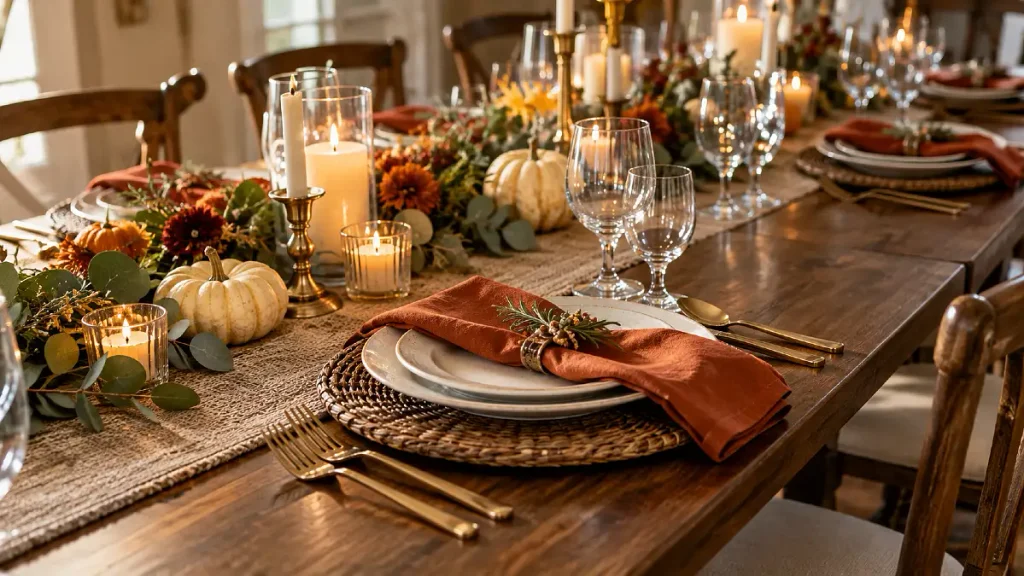
A beautiful Thanksgiving table still needs to work when dinner begins. Forks, knives, drinking glasses, and napkins should be easy for guests to reach without moving decorations out of the way.
Start by placing one dinner plate directly in front of each chair. Keep the plates evenly spaced and use the same distance from the table edge wherever possible.
If you own chargers, place them underneath the dinner plates for a layered look. They are optional, especially when fourteen place settings already occupy most of your table.
Where Each Plate, Fork, Knife, and Glass Belongs
For a traditional casual dinner setting, forks sit to the left of the plate. Knives go on the right with their blades facing inward, while a spoon goes beside the knife if the meal requires one.
Water glasses sit above the knives, toward the upper-right side of the setting. These placements follow the basic guidance from the Emily Post Institute.
Use this quick reference while setting all fourteen places.
| Table setting piece | Where it belongs | Practical styling note |
|---|---|---|
| Dinner plate | Centered in front of the chair | Keep spacing consistent |
| Dinner fork | Left of the plate | Add a salad fork outside it if needed |
| Dinner knife | Right of the plate, blade inward | Align the handle with the fork |
| Spoon | Right of the knife | Use only if the menu calls for it |
| Water glass | Above the knife | Leave room for guests to reach it |
| Napkin | On the plate or left of the forks | Repeat the same simple fold |
There is no reason to set out utensils that guests will not use. For a family-style Thanksgiving meal, one dinner fork, one knife, and a water glass may be enough.
If your menu includes a separate soup or salad course, add the needed utensils in the order guests will use them, working from the outside inward.
Dessert forks and coffee cups can come out later. Keeping them off the table during dinner gives everyone a little more room.
Make Mismatched Dinnerware Look Intentional
Fourteen matching plates are lovely, but they are not necessary for a welcoming Thanksgiving table. Mismatched dishes can look collected and personal when they share one visual feature.
Try grouping plates by color rather than pattern. White and cream plates usually work well together, even when their rims and shapes differ.
You can also alternate two plate styles around the table. Repeating the pattern keeps the arrangement balanced instead of making the differences feel accidental.
For a stronger finish, use the same napkin fold at every setting. Fold each napkin into a simple rectangle, place it across the center of the plate, and tuck a small rosemary sprig underneath.
The greenery adds a seasonal touch without needing fourteen matching napkin rings. Just make sure the sprigs are clean and dry before placing them near dinnerware.
Keep the Centerpiece Low, Natural, and Easy to Move
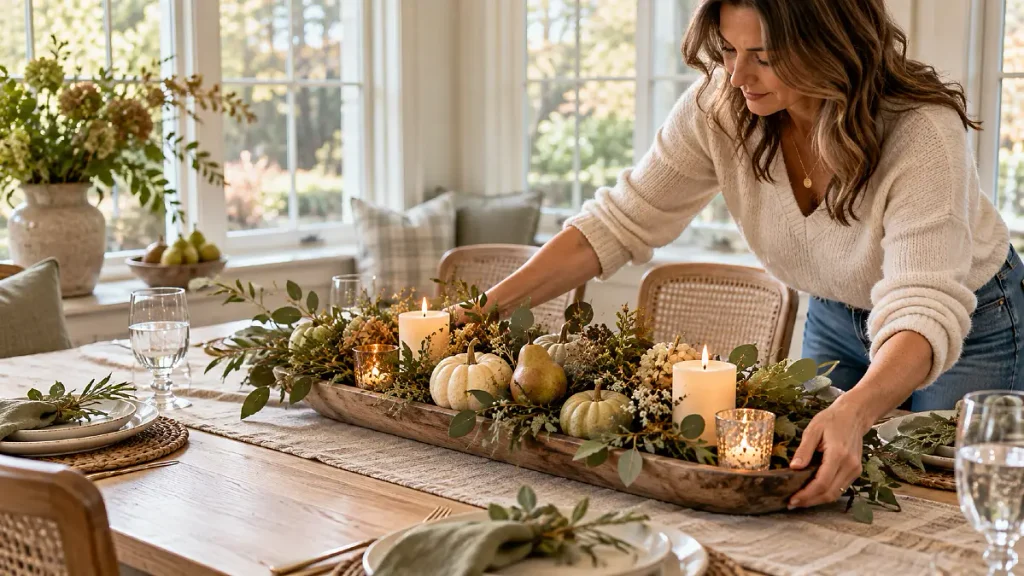
Thanksgiving centerpieces should make the table feel warm without getting in the way of dinner. A tall floral display may look beautiful from the doorway, but it can block conversation once everyone sits down.
For fourteen people, a long arrangement made from several small pieces often works better than one oversized centerpiece. For quick arrangements that suit a busy hosting day, see these 17 Thanksgiving centerpiece ideas you can make the morning of the meal.
Start with a loose line of eucalyptus, olive branches, or seasonal greenery along the center of the table. Add a few small pumpkins, pears, or dried accents for texture.
Keep the arrangement narrow enough to leave space for glasses and serving dishes. You should be able to reach across the table without pushing decorations aside.
Use Three Layers to Create a Cozy Fall Table
A natural Thanksgiving centerpiece works especially well when it includes three different textures.
Begin with something soft or leafy, such as fresh greenery or a linen runner. Add something solid, such as ceramic candleholders, small pumpkins, or wooden bowls.
Finish with a little warm light from low candles or flameless LED candles. This contrast between soft fabric, natural objects, and gentle light makes the setting feel layered rather than flat.
For an especially long table, repeat small groupings down its length. A cluster of greenery, a low candleholder, and a miniature pumpkin can appear several times without looking identical.
Keep tall stems and larger arrangements on a sideboard instead. They can still become part of the Thanksgiving decor without blocking guests’ faces.
Make Room for Real Life
If children are joining the meal, flameless candles can be a practical alternative to open flames. They provide a similar warm glow without creating another thing to watch during a busy dinner.
Strongly scented candles are best kept away from the dining area. Their fragrance can compete with the smell of the food, especially when several dishes are being served.
And do not feel pressured to fill every empty spot. A little open space around plates and glasses helps a table look calm, even when fourteen people are seated.
Plan Where the Food Will Go Before Guests Sit Down
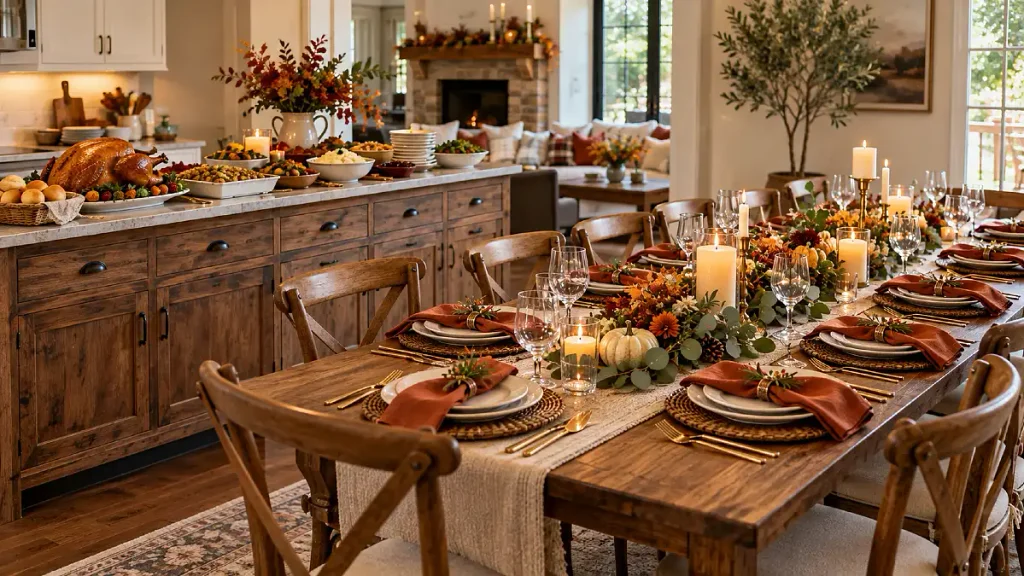
A Thanksgiving table for fourteen needs a serving plan just as much as a decorating plan. The turkey, stuffing, potatoes, vegetables, gravy, and rolls can take up more space than expected.
If every serving dish goes in the center, guests may struggle to pass food without bumping glasses or reaching across decorations.
The easiest solution is often to separate the dining table from the main serving area.
Create a Simple Thanksgiving Serving Station
A kitchen counter, console table, or sideboard can hold the larger platters and serving bowls. This gives the dining table a more comfortable layout while keeping the meal close by.
Arrange the food in a natural serving order:
- Start with the main dishes and larger serving platters.
- Place side dishes nearby with their own serving spoons.
- Keep gravy, sauces, and smaller toppings together on a tray.
- Put water pitchers and additional drinks in a separate easy-to-reach spot.
- Save dessert plates and coffee cups for after dinner.
For fourteen guests, more than one water pitcher can prevent people from constantly leaving their seats. Small bowls of butter or condiments can also be repeated at different ends of the table.
If you prefer family-style serving, place smaller portions of a few dishes at both ends rather than relying on one large bowl that everyone must pass.
The goal is not to make the table look empty. It is to leave enough space for food to move naturally around the group.
Use Place Cards When Seating Gets Complicated
Place cards are useful when you have several tables, a mix of relatives and friends, or guests who need particular seating arrangements.
They can also prevent confusion when fourteen people arrive at once. A simple folded card on each plate is enough to make the seating feel organized.
Handwritten names look especially lovely on cream cardstock or kraft paper. Keep the lettering clear rather than adding elaborate decorations.
For guests who may need extra room to stand, choose seats with easy access. Children can sit near the adults helping them, while guests who prefer quieter conversation can be seated away from the busiest serving area.
Thoughtful seating often makes a bigger difference to the meal than expensive table decorations.
Fix the Small Details That Make a Large Thanksgiving Table Feel Crowded
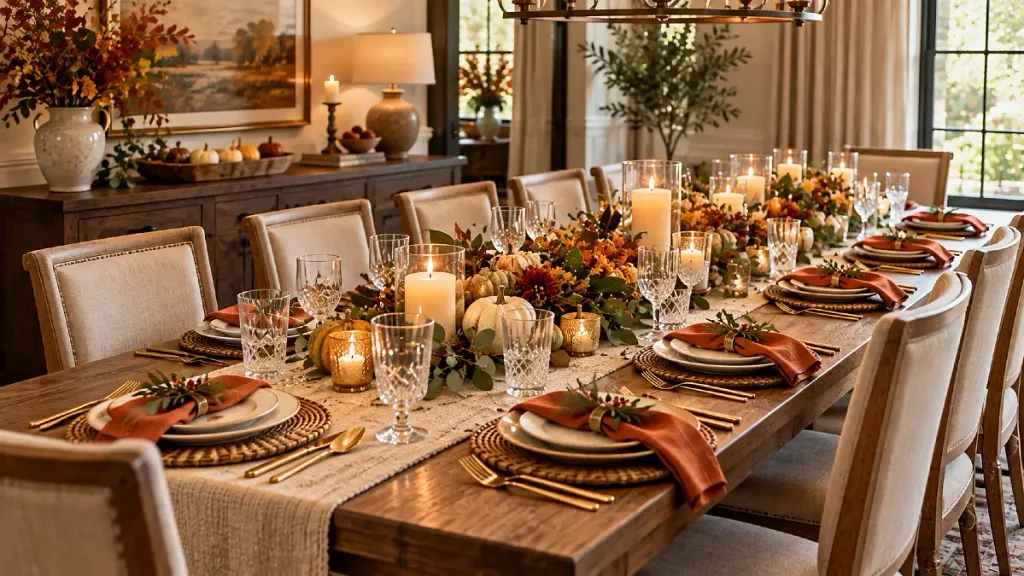
By the time all fourteen settings are arranged, the table may look completely different from the way you pictured it. This is normal when decorating for a large group.
Instead of adding more accessories, look for anything that interrupts the table’s balance or makes dining harder.
The most common issues have straightforward fixes.
| If the table feels like this | Try this instead |
|---|---|
| Too crowded with decorations | Remove large pumpkins and use a narrow greenery runner |
| Visually messy from mixed dishes | Repeat one napkin color at every setting |
| Hard to talk across | Replace tall flowers with low arrangements |
| Too dark for comfortable dining | Add soft overhead light alongside candles |
| Difficult to pass food | Move large platters to a sideboard or buffet station |
Small changes often do more than buying another set of decorations. Consistent spacing and a few repeated details can help the whole arrangement feel settled.
The Four-Piece Formula for a Thanksgiving Table
Formula: Neutral linen + coordinated napkins + low greenery + warm lighting.
This combination gives you a soft foundation, a clear color accent, natural texture, and a welcoming glow. It can work on one long table, two smaller tables, or a simple everyday dining set.
You can change the mood by switching only the napkin color and greenery. Burgundy napkins feel richer, while sage green gives the table a lighter, more relaxed look.
Give the Table One Final Check Before Dinner
About fifteen minutes before guests sit down, walk around the table as though you are joining the meal yourself.
Check that every chair can move, each setting has the proper utensils, and glasses sit safely away from the edge. Adjust anything that feels awkward.
Look at the table from the doorway, too. This helps you spot uneven spacing, a centerpiece that feels too large, or a section that looks much busier than the rest.
Then sit in one of the chairs and look across at the opposite seat. If you can see comfortably and reach your glass without moving anything, the arrangement is doing its job.
You do not need to keep changing the decorations until the last minute. A Thanksgiving table that works well for guests is already a successful one.
Frequently Asked Questions
How do you set a Thanksgiving table for fourteen people?
Start by arranging all fourteen chairs and making sure guests have enough room to sit. Add table linens, center the dinner plates, and place forks on the left with knives and any needed spoons on the right.
Finish with water glasses, napkins, and low seasonal decorations. Keep large serving dishes on a separate surface if the dining table feels crowded.
What is the easiest Thanksgiving table setting for beginners?
Use white dinner plates, one dinner fork, one knife, a water glass, and a neatly folded fabric napkin. Add a neutral tablecloth and a small greenery centerpiece for a seasonal finish.
This combination works with everyday dishes and does not require formal dinnerware. You can add chargers or extra utensils only when your menu calls for them.
Do Thanksgiving plates and napkins have to match?
No, but repeating a few colors helps different pieces feel connected. If you have several plate patterns, keep the napkins in one color and use the same basic arrangement at every seat.
White, cream, sage green, and muted rust are useful colors for tying mismatched dinnerware together.
How do you decorate a Thanksgiving table without spending much money?
Start with your existing plates, glasses, and table linens before purchasing anything new. A simple runner, greenery, small pumpkins, or fruit can provide enough seasonal detail.
Concentrate on repeating a few natural materials rather than buying a separate decoration for every place setting. The table will often look more coordinated with fewer pieces.
Should Thanksgiving food be served on the table or buffet style?
Both can work, depending on the amount of room available. Family-style serving feels relaxed, but fourteen place settings may leave little space for large bowls and platters.
A buffet or sideboard keeps the dining area clearer and makes refilling dishes easier. You can still place water pitchers, bread, and small condiments on the table for convenience.
A Thanksgiving Table That Feels Good to Gather Around
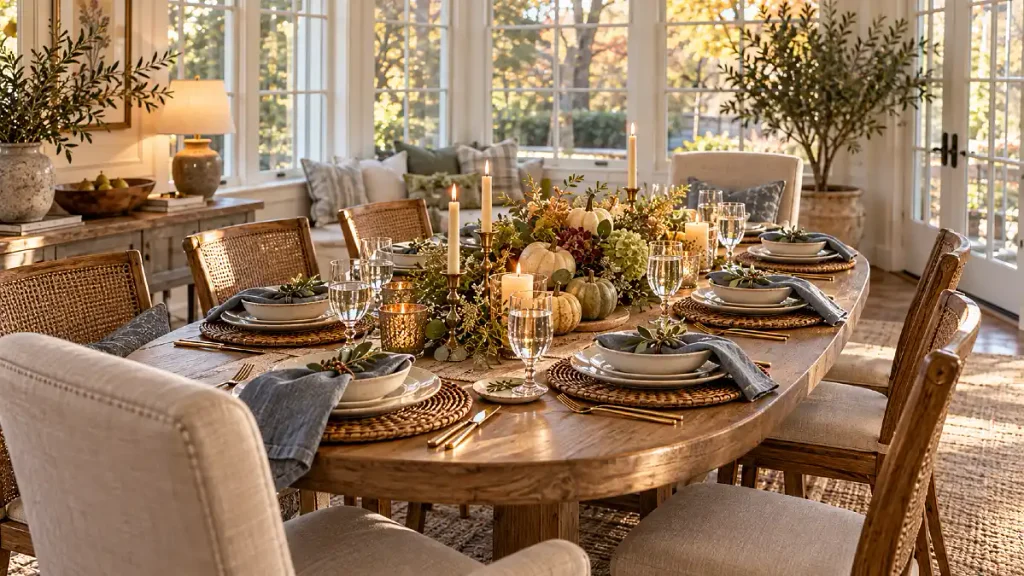
Setting a Thanksgiving table for fourteen does not have to mean fourteen matching sets of everything. The most welcoming arrangements usually begin with comfortable seating, useful tableware, and a few details that make the meal feel special.
Work with the space, colors, and pieces you already have. Let natural textures and simple layers bring warmth without crowding the table.
Start by arranging the chairs and laying out the plates. Once those two things feel right, the rest becomes much easier.

3 thoughts on “How to Set a Thanksgiving Table for 14 Guests With Ease”