
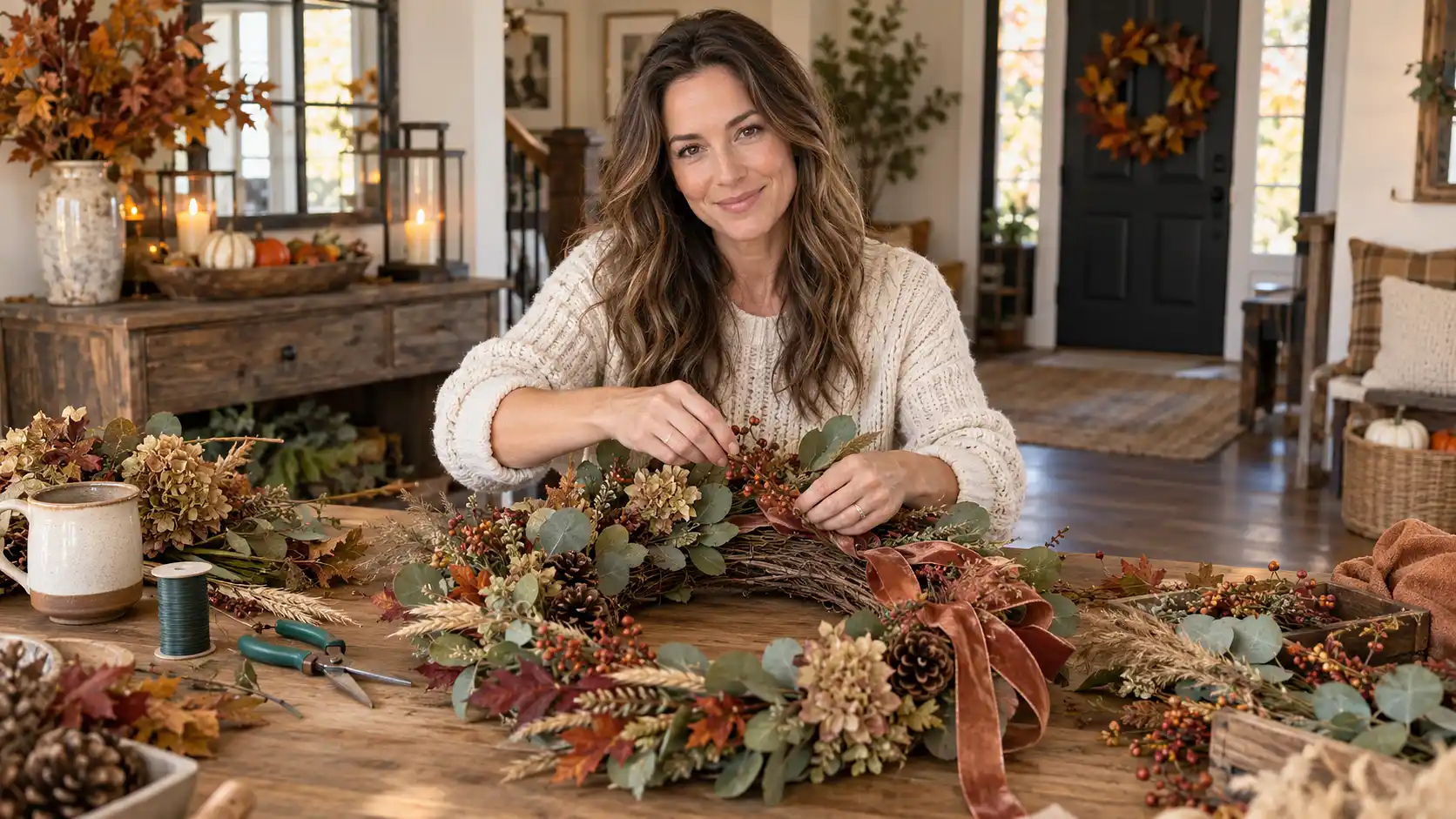
A fall wreath can look beautiful in September, then suddenly feel too Halloween-heavy or too bare once Thanksgiving gets close. The problem usually is not the wreath itself. It is building the whole design around one short moment in the season.
That can make seasonal decorating feel wasteful, especially when you are buying new pumpkins, ribbons, signs, and floral stems every few weeks. A front door can start feeling more like a rotating craft display than part of your home.
The better approach is to treat the wreath like flexible DIY home decor. Start with a warm, textural base, keep most of the materials season-neutral, and use a few removable accents to shift the mood as fall moves toward Thanksgiving.
Why Some Fall Wreaths Feel Outdated Before November Arrives
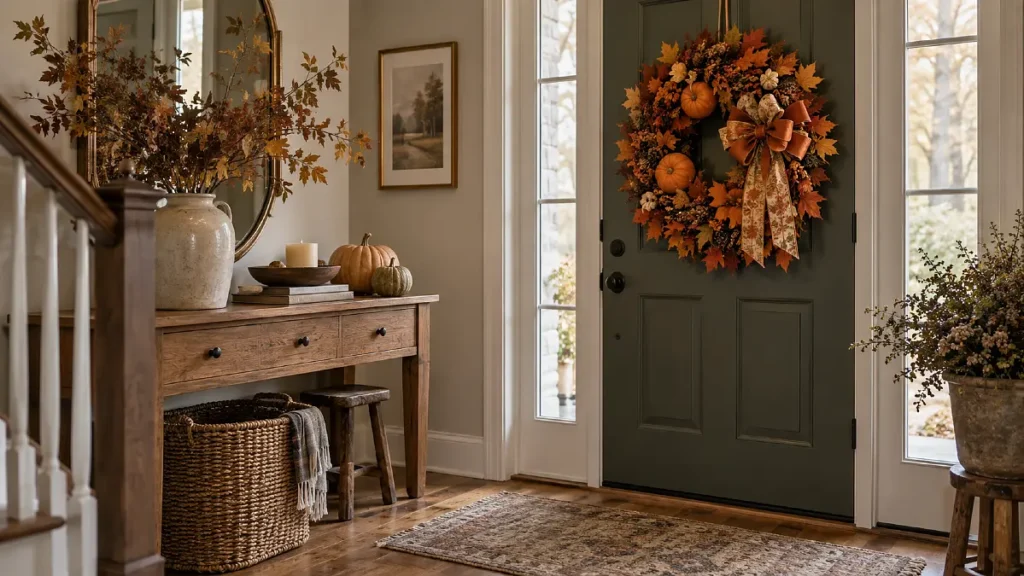
The easiest wreaths to live with are usually not the ones packed with the most fall decorations. They are the ones with enough natural texture and shape to stand on their own after the obvious seasonal pieces come off.
A wreath covered in bright orange pumpkins, Halloween ribbon, black accents, and signs has a very clear date attached to it. That may be exactly what you want for October, but it gives you less room to adjust it later.
Instead, think of roughly three layers: the base, the supporting texture, and the seasonal accent. The first two stay in place. Only the last layer needs to change.
This also keeps the wreath from feeling visually crowded. When every stem is trying to be the focal point, the eye has nowhere to rest, and even expensive materials can look messy.
Build the Wreath Around a Grapevine or Soft Greenery Base
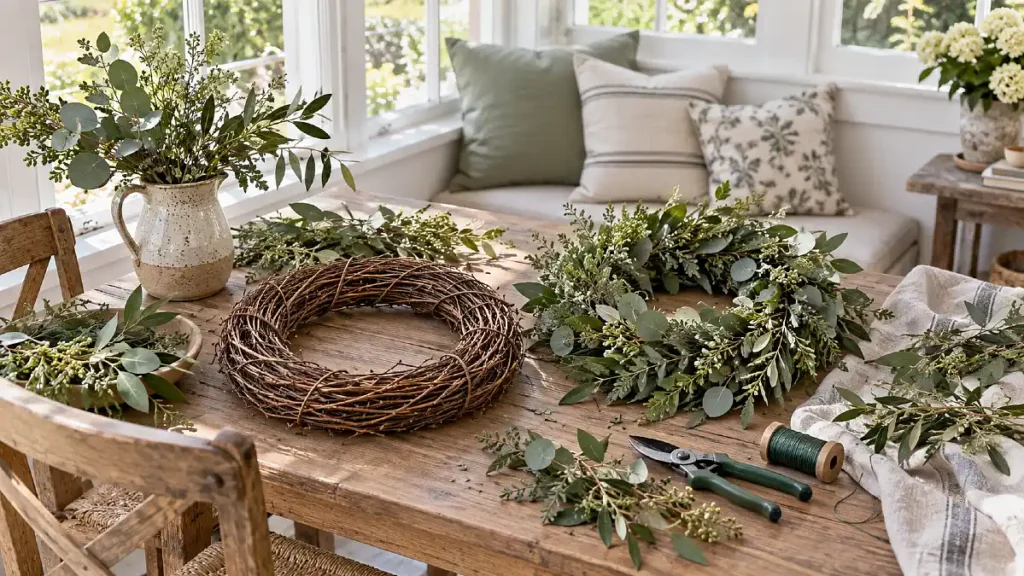
Start with a base that already has movement and texture before you add anything decorative. A grapevine wreath works especially well because its uneven branches give the design a relaxed, natural shape.
You can also use a simple faux greenery wreath if you want something fuller. Choose muted leaves rather than very bright spring green, since olive, eucalyptus, dusty green, and brown-green tones sit more comfortably beside fall colors.
A grapevine base tends to work well for a looser, more organic look. A fuller foliage base gives you a softer shape and can hide floral wire more easily.
Scale note: leave some of the base visible. Covering every inch can make the wreath feel heavy, while a little breathing room lets the different materials stand out.
For a front door, also look at the wreath from several feet away before adding more stems. Small details that look lovely on a table can disappear once the wreath is hanging at eye level.
Choose Foliage and Texture That Still Make Sense at Thanksgiving
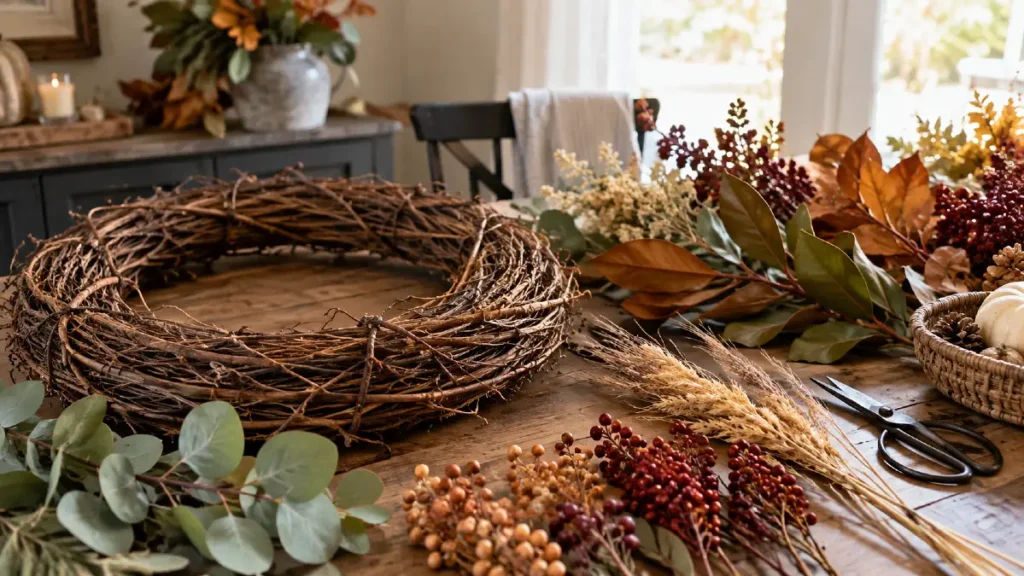
The strongest middle layer usually comes from leaves, dried-looking stems, berries, grasses, seed heads, and branches rather than highly themed decorations. These materials suggest autumn without locking the wreath into a single holiday.
Mixing smooth leaves with something rougher is especially useful. Magnolia-style leaves, eucalyptus, dried grasses, small berry stems, wheat-like pieces, or twiggy branches create depth because each surface catches light differently.
Here is a simple material guide for choosing that long-lasting middle layer.
| Material or Finish | What to Look For and Why It Works |
|---|---|
| Grapevine | Uneven brown branches add structure and already feel autumnal without extra decoration |
| Muted eucalyptus | Soft green tones break up brown and orange while keeping the wreath calm |
| Dried grasses | Fine texture creates movement and helps a simple wreath look more layered |
| Burgundy or brown berries | Small areas of deeper color add contrast without taking over the design |
| Magnolia-style leaves | Larger leaves give visual weight and help balance smaller stems |
| Wheat-like stems | Warm tan tones work well from early fall into a Thanksgiving setting |
You do not need all of these at once. Two foliage types plus one finer texture can give the wreath enough depth without making it hard to edit later.
A useful budget home decor approach is to shop your existing seasonal bins before buying new stems. A branch from an old arrangement may look completely different when used in a smaller cluster rather than spread across a vase.
Keep the Strong Fall Colors in Small, Removable Clusters
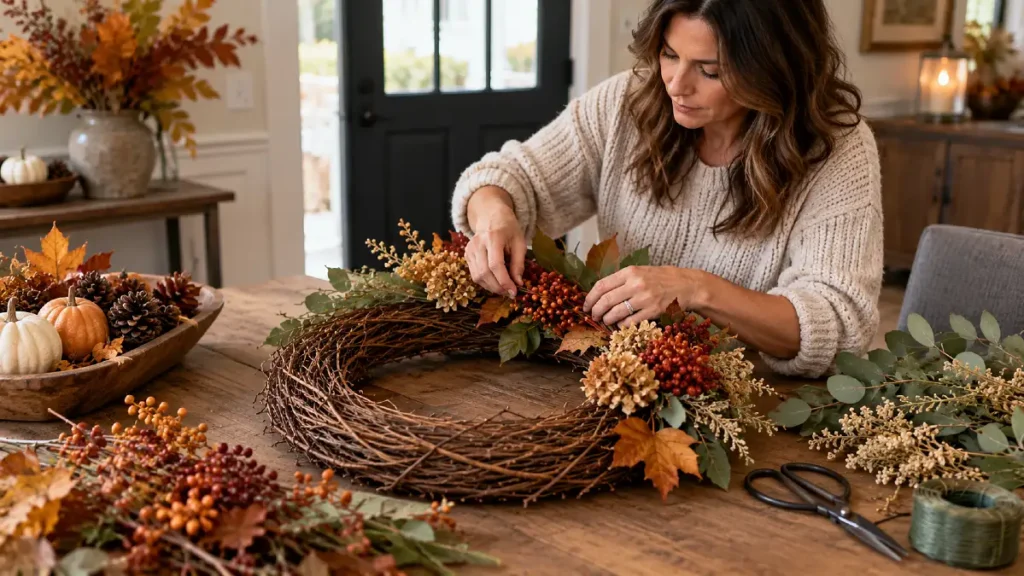
Color is where many wreaths become difficult to carry through the whole season. Too much orange can push the design toward Halloween, while too much dark brown can make it feel flat from a distance.
Try keeping about two-thirds of the wreath in quieter colors such as brown, tan, muted green, cream, or soft rust. Then use the remaining area for stronger seasonal color.
A cluster is easier to change than color spread evenly around the entire ring. For example, three small rust stems grouped together near the lower side can be removed in seconds without rebuilding everything else.
This seasonal swap table shows how one wreath base can move through autumn with only a few changes.
| Time of Season | Keep in Place | Add or Swap |
|---|---|---|
| Early fall | Grapevine, green leaves, grasses | Soft rust leaves, cream berries, muted mustard |
| October | Same base and texture | A few small pumpkins or deeper orange accents |
| Early November | Same base and texture | Remove Halloween pieces and add burgundy berries or brown leaves |
| Thanksgiving | Same base and texture | Add wheat, warm ribbon, dried-look leaves, or small pinecones |
The goal is not to erase every orange tone after October. Rust, cinnamon, terracotta, and burnt orange can still look right for Thanksgiving because they read as warm autumn colors instead of Halloween colors.
Color note: if your door already has a strong color, let the wreath work with it rather than compete with it. A navy or dark green door can handle richer rust and burgundy, while a pale door often looks balanced with deeper foliage and brown branches.
Let the Shape Feel Loose Instead of Filling Every Gap
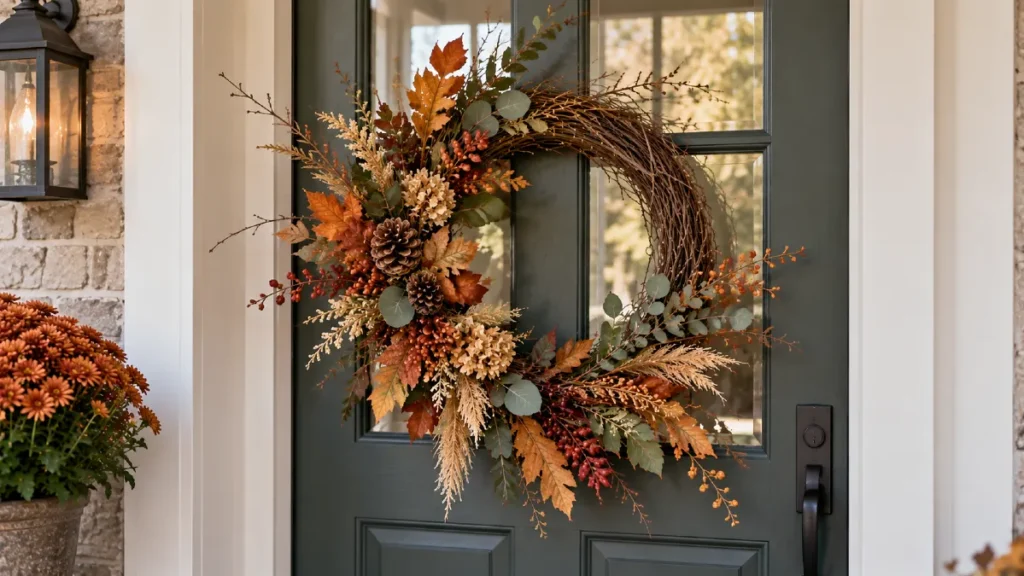
A wreath often looks more polished when its shape has a little movement. Stems that extend slightly beyond the main circle can make the arrangement feel more natural and less like a tightly packed craft-store ring.
Choose one part of the wreath to carry more visual weight. A fuller lower-left or lower-right cluster is easy on the eye because it gives the wreath a clear focal point while the rest of the ring stays quieter.
If you prefer a more symmetrical look, keep both sides balanced but vary stem height and texture. Matching every berry and leaf exactly can make the arrangement feel stiff.
Try these adjustments before adding more material:
- Turn a few stems outward instead of pointing everything around the circle.
- Place larger leaves near the focal cluster and finer grasses near the edges.
- Repeat one color in two or three small areas rather than everywhere.
- Leave a few inches of grapevine visible if the base has attractive texture.
- Step back often and check the overall silhouette instead of studying individual stems.
For a small apartment or narrow entry, the same principle still works. A slimmer wreath with fewer projecting stems can give you the layered look without crowding a tight doorway.
Use Ribbon as a Finishing Layer, Not the Whole Design
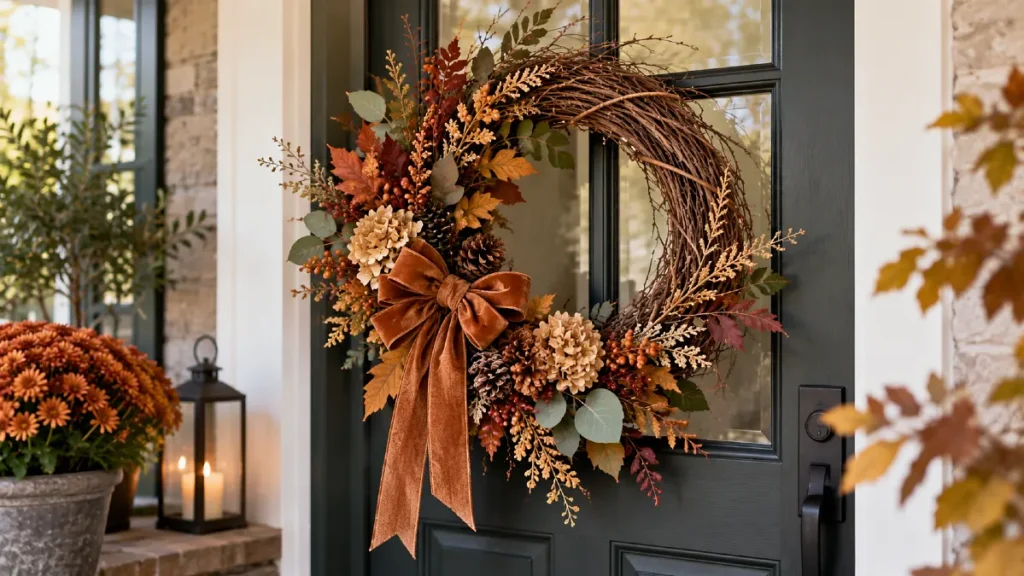
Ribbon can add softness, but it works best when the wreath already looks complete without it. That way, removing or changing the ribbon does not leave the design feeling unfinished.
For a wreath that needs to reach Thanksgiving, consider cotton, linen-look fabric, velvet, burlap, or another matte texture. These finishes tend to sit more naturally beside branches and dried-look foliage than shiny ribbon.
A rust velvet ribbon can make the wreath feel richer in October. Later, you could replace it with warm brown, olive, cream, plaid in muted fall colors, or simply remove the bow.
Rental-friendly swap: if you do not want to attach anything permanently to the door, use an over-door wreath hanger or another removable hanging method suited to your door material. Keep the hanging hardware visually quiet so the wreath stays the focus.
The same wreath can also move indoors. A smaller version can hang above a console, over a fireplace mantel, or on a kitchen wall as part of your cozy home decor without needing pumpkins or holiday wording.
Skip the Details That Make the Wreath Harder to Restyle
Seasonal decorating should be enjoyable, not a project you have to rebuild every few weeks. If the wreath already feels busy, editing usually helps more than adding another decorative stem.
These common choices are easy to adjust without starting over.
| Instead of This | Try This |
|---|---|
| Covering the whole wreath with mini pumpkins | Use two or three removable pumpkins in one small cluster |
| Mixing many bright fall colors evenly | Choose one deeper accent color and repeat it lightly |
| Using several signs, words, and bows together | Pick one focal detail and let foliage support it |
| Filling every open space with leaves | Keep some grapevine or greenery visible for contrast |
| Gluing every seasonal detail permanently | Wire or tie removable accents onto the stable base |
If you love a very full wreath, you do not need to give that up. Just create fullness with foliage and texture first, then add the shorter-lived seasonal pieces on top.
That small shift makes the wreath more useful and often more expensive-looking because the design depends on shape and layering instead of novelty decorations.
The Fall-to-Thanksgiving Wreath Formula
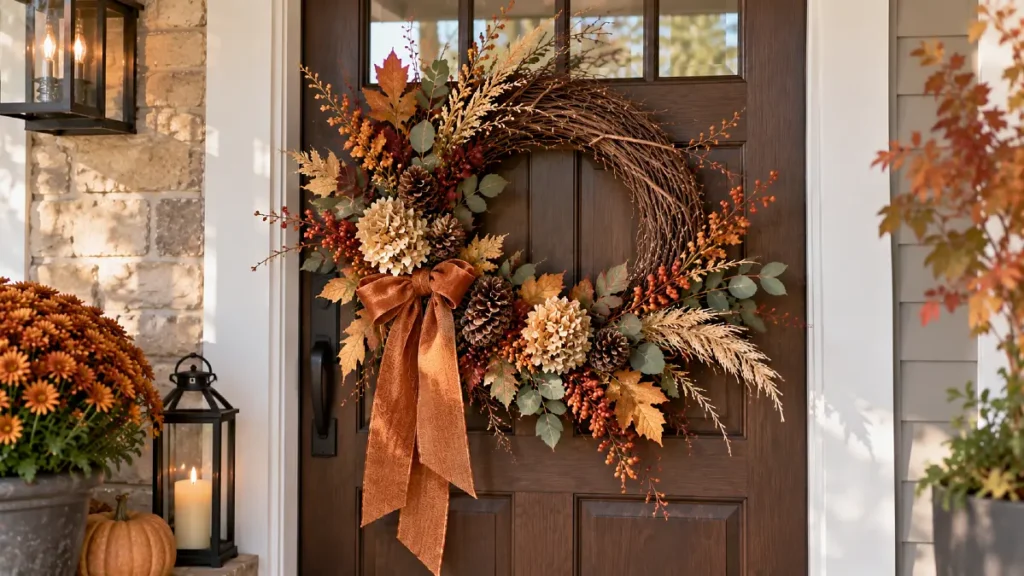
A repeatable formula makes this project much easier the next time you decorate. It also helps when you are standing in a store wondering if you need another bundle of stems.
Formula: grapevine base + muted foliage + one textural stem + one concentrated seasonal accent.
For example, use grapevine with eucalyptus, dried-look grasses, and a small rust berry cluster. In October, tuck in two small pumpkins. In November, remove them and replace them with wheat-like stems or deeper burgundy berries.
The formula works because each layer has a different job. The base controls shape, the foliage creates fullness, the texture adds depth, and the final accent tells the seasonal story.
That is also useful for DIY home decor on a tighter budget. You can reuse the expensive-looking base and middle layers for several years while changing only a few small pieces.
Frequently Asked Questions
What is the best base for a fall wreath?
A grapevine wreath is one of the easiest bases to restyle because its natural brown color already suits fall. Faux greenery can also work well if you prefer a fuller look and want an easier way to hide wire and stem ends.
Choose the base based on the look you want rather than one strict rule. Grapevine feels airier, while greenery gives you more visual softness.
What colors work for both fall and Thanksgiving wreaths?
Rust, olive, cream, tan, burgundy, brown, muted gold, and burnt orange can all carry well through the season. They work because they relate to leaves, grasses, wood, and other natural fall materials.
If bright orange feels too Halloween-heavy for your space, use it only in one removable cluster. Deeper rust or terracotta can give you similar warmth with a softer look.
How can I make a fall wreath look more expensive?
Focus on varied texture, controlled color, and a clear focal point instead of adding more decorations. Larger leaves mixed with finer grasses and a few deeper accents usually create more depth than many tiny pieces spread evenly around the wreath.
Leaving some of the base visible can also help. It gives the arrangement contrast and keeps the materials from blending into one dense ring.
Can I make a fall wreath without pumpkins?
Yes. Leaves, branches, wheat-like stems, berries, grasses, pinecones, and muted ribbon can create a strong fall look without using pumpkins at all.
This can make the wreath easier to keep through Thanksgiving because fewer elements need to be removed or replaced as the season changes.
How do I update a fall wreath for Thanksgiving?
Keep the main base, greenery, and textural stems in place. Remove anything that feels strongly Halloween-themed and add a small amount of wheat, deeper berries, brown leaves, pinecones, or warm fabric ribbon.
The wreath does not need to say “Thanksgiving” to feel right for the holiday. Natural texture and warm color can do that work more quietly.