Dried florals can lose their charm fast when fall decor leans too orange, too rustic, or too tied to October. The goal is to keep the warmth while making your rooms feel calm enough to carry into November.
These dried floral arrangements focus on softer autumn color, natural texture, and simple shapes that work on tables, mantels, shelves, and entryways. They bring seasonal character without making the room feel crowded.
You will find ideas using grasses, seed heads, muted leaves, branches, and earthy stems that blend easily with modern home decor.
How to Make Dried Florals Feel Right Through November
- Soften the palette: Trade bright pumpkin orange for rust, wheat, faded burgundy, taupe, olive, and warm brown so the arrangement feels less tied to Halloween.
- Mix fine and sturdy textures: Pair airy grasses with heavier seed pods, branches, or dried leaves. The contrast gives the arrangement shape without needing dozens of stems.
- Let the vase balance the flowers: Matte ceramic, aged brass, smoked glass, and simple stoneware add weight to delicate dried stems and make inexpensive arrangements feel more polished.
- Edit instead of adding: November decor works best with a little breathing room. Remove overly themed accents and let the natural shapes and muted colors become the seasonal statement.
1. A Moody Bottle Arrangement
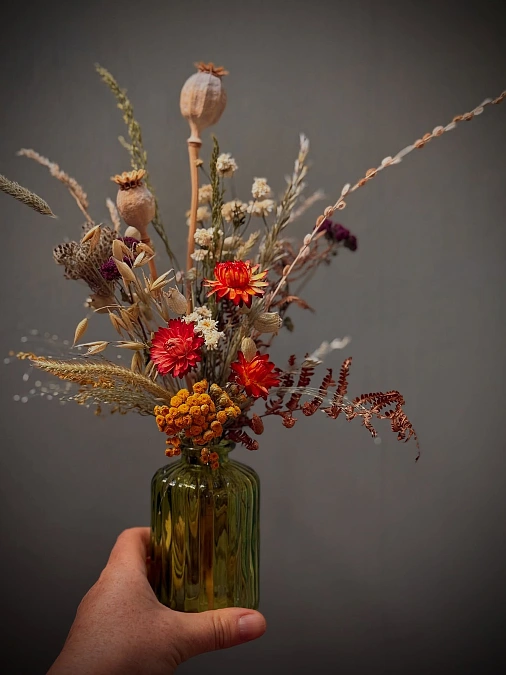
A ribbed olive-glass bottle holds a loose mix of dried poppy pods, airy grasses, tiny cream blooms, and rich red-orange strawflowers. The palette feels autumnal without leaning overly themed, thanks to the balance of muted wheat, soft beige, rust, and deeper berry tones. Against the plain gray background, the arrangement stands out in a clean, sculptural way.
Color note: The warm florals feel brighter because the vase has a smoky green tint. That contrast keeps the arrangement from looking flat and gives it more depth for late-fall styling.
The shape works especially well because it mixes height with movement. Tall pods draw the eye up, while the curved stems and fern-like pieces stretch outward and keep the bouquet relaxed. This would suit an entry console, bedside table, or open shelf where you want cozy home decor that feels natural, not cluttered.
For an even more finished look at home, place the bottle on a small tray with a candle or stacked book. That gives a petite arrangement more presence without making it feel heavy.
2. Plum Grasses + White Textured Vase
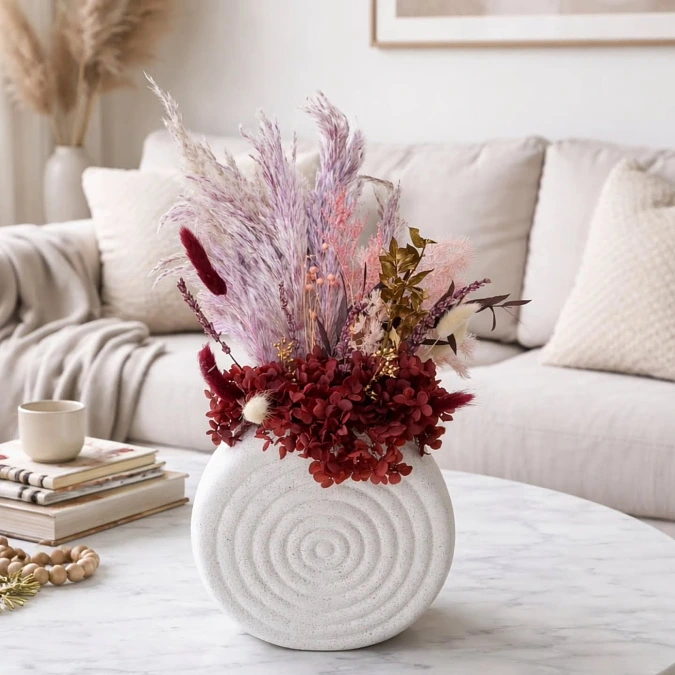
Copy the look:
- Furniture: soft ivory sofa, pale marble coffee table, and a light neutral backdrop
- Textiles: creamy cushions and a draped throw that keep the room calm and layered
- Lighting: bright natural light that lets the dried stems feel airy instead of heavy
- Finishing touch: a sculptural white vase with circular texture for a clean modern base
Lavender-toned grasses, blush plumes, deep burgundy florals, and a few bronze leaves give this arrangement a softer take on fall. The color mix feels fresh for November because it pairs warm seasonal depth with lighter tones that keep the room open and polished.
Why it works: The rounded vase keeps the fuller top section from feeling messy. It also adds visual weight, so the tall stems look balanced rather than top-heavy.
3. Blush Dried Bouquet with Ferns
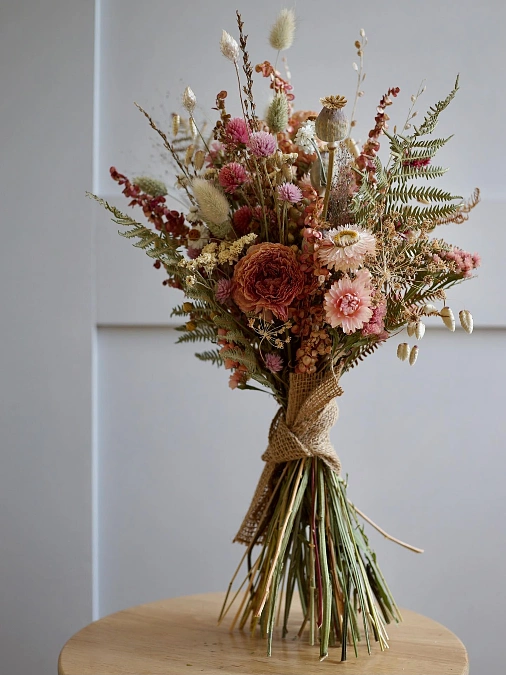
Decor formula: blush dried flowers + fern fronds + seed heads + natural jute wrap
Soft pink blooms, rust-toned flowers, pale grasses, fern fronds, and sculptural seed heads create a fuller bouquet with plenty of movement. The muted palette keeps the arrangement warm enough for fall while still feeling light enough to carry into November.
The open, hand-tied shape works because the taller stems rise above the denser flowers instead of forming one solid block. Natural jute around the stems adds a rustic texture that suits a dining table, console, or kitchen sideboard.
Proportion tip: Let a bouquet this tall stand on its own rather than crowding it with several accessories. A simple wood surface gives the arrangement enough visual space to feel polished instead of busy.
4. Autumn Florals with Mini Pumpkins
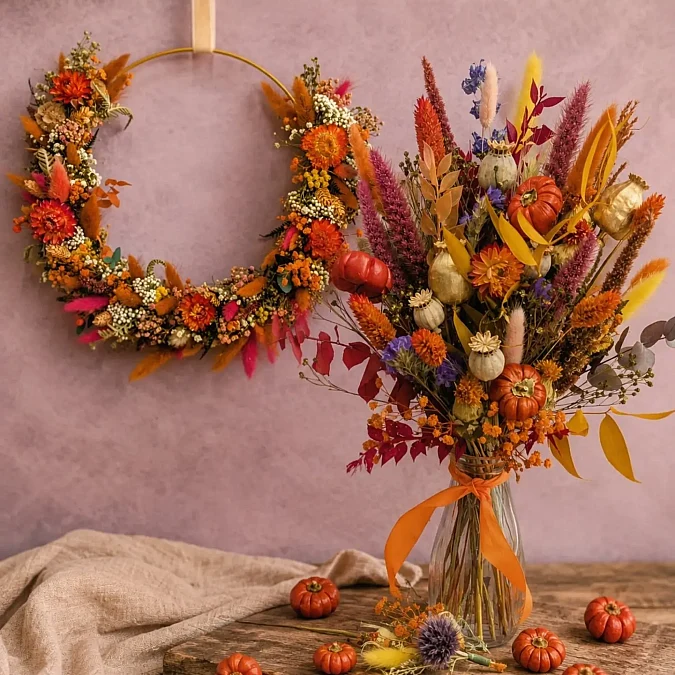
A tall glass vase filled with orange, rust, burgundy, mustard, and purple dried stems creates a rich late-fall focal point. Poppy pods, feathery grasses, preserved leaves, small dried blooms, and miniature pumpkins give the arrangement a playful harvest feel without relying on one texture.
Why it feels chic:
- The clear vase keeps the base visually light while the flowers carry the color.
- Warm oranges are broken up with plum and muted purple, which adds depth.
- Tall stems and seed heads keep the arrangement loose instead of overly dense.
- The matching dried-floral wreath makes the whole setup feel coordinated.
Seasonal swap: Once October passes, remove a few of the small pumpkins and leave the seed pods, rust stems, and deeper florals in place. The arrangement will still feel seasonal, but more suited to November decorating.
5. A Rustic Hydrangea Wall Arrangement
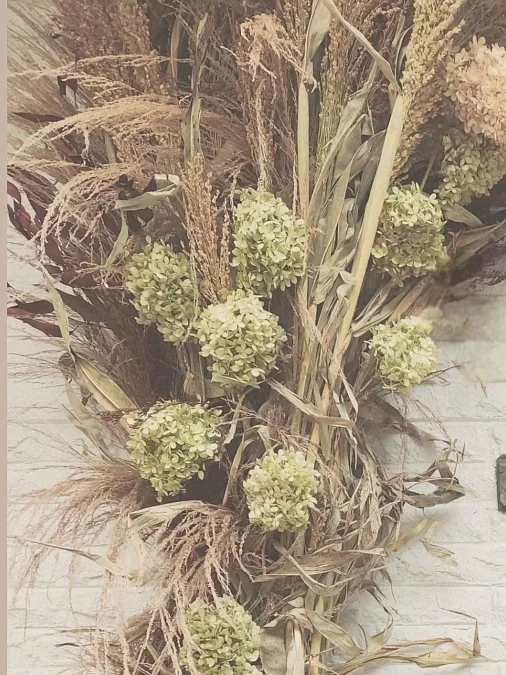
Best for: entryways, covered porches, mudrooms, or a dining wall that needs seasonal texture.
Pale green dried hydrangeas, tawny grasses, corn husks, and brown seed stems create a loose vertical arrangement against the white brick wall. The faded greens soften the heavier brown tones, so the display feels earthy rather than overly rustic.
The tall, irregular shape works well because it follows the natural direction of the stems instead of forcing them into a tight bouquet. That makes the arrangement feel relaxed and collected, with enough height to create impact without adding furniture or floor decor.
Upgrade suggestion: Add a few deeper olive or burgundy stems near the center if you want more November depth. Keep the additions sparse so the pale hydrangeas remain the main feature.
6. Stacked Pumpkins with Dried Floral Rings
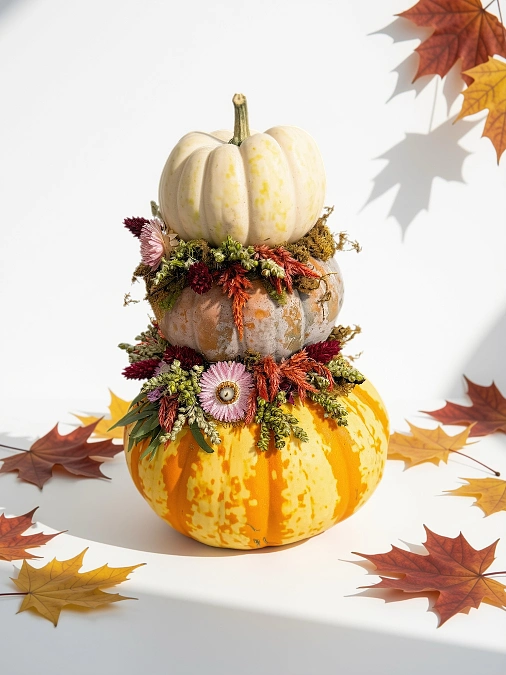
Three pumpkins in cream, muted taupe, and golden orange are stacked into a tall centerpiece, with bands of dried flowers tucked between each layer. Burgundy blooms, soft pink strawflowers, mossy greens, and rust-colored grasses add texture without hiding the sculptural pumpkin shapes.
Decor note: The strongest part of this setup is the color balance. The pale top pumpkin keeps the arrangement from becoming too orange, while the darker floral rings create clear separation between each level.
Use this idea on a dining table, entry console, or buffet where you have enough height for a statement piece. The narrow floral bands keep the footprint controlled, so the arrangement feels decorative rather than bulky.
For November, remove some of the scattered maple leaves around the base and let the stacked pumpkins and dried florals do most of the work.
7. Market Basket of Dried Fall Bouquets
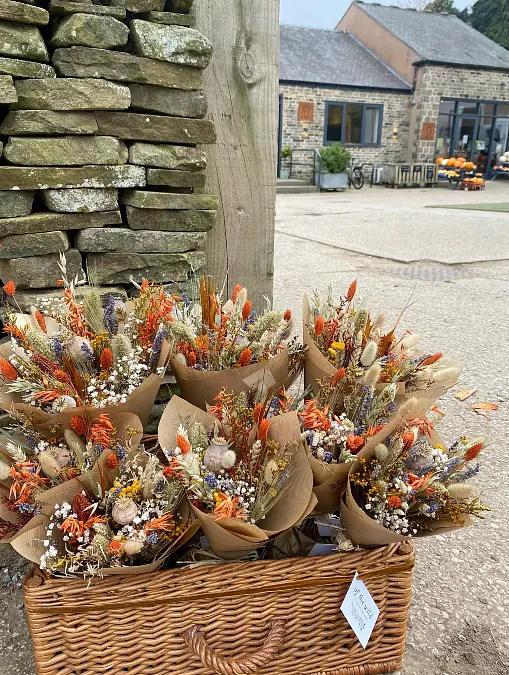
Clusters of dried bouquets fill a woven market basket with orange grasses, cream seed heads, soft blue-purple stems, tiny white flowers, and muted golden accents. The kraft-paper wrapping adds another warm brown layer that fits naturally with the stone and wood setting.
- Why it works: Repeating the same loose color palette across many small bouquets creates impact without making the display feel too formal.
- Styling tip: At home, group two or three similar bundles in a large basket or crock instead of spreading them across several small vases.
- Use it for: an entryway, covered porch, mudroom, or kitchen corner where you want fall texture that can stay in place well into November.
The mix feels especially strong because the bright orange stems are softened by beige, white, and dusty blue. That balance keeps the arrangement seasonal without looking too tied to early fall.
8. Floral-Filled Pumpkins in Jewel Tones
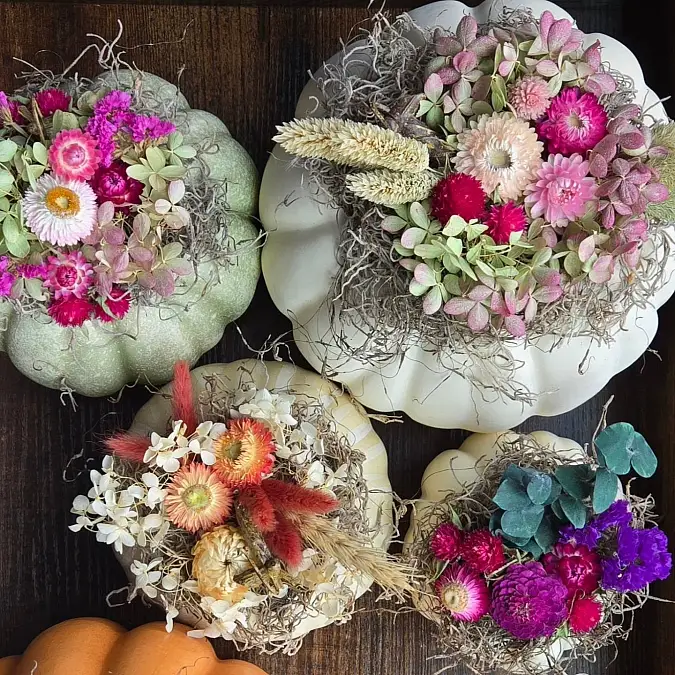
Soft green, ivory, and cream pumpkins are filled with dried hydrangea, strawflowers, wheat, eucalyptus, and wispy gray moss. Bright magenta, blush, violet, coral, and pale green blooms create a richer palette than traditional orange fall decor, while the pumpkins still keep the arrangement seasonal.
The contrast is what makes this setup work. Muted pumpkin colors act like neutral containers, so the stronger flowers can stand out without making the display feel too busy.
Color note: Jewel-toned dried florals are a smart way to carry fall decor into November. Pair them with cream, sage, or soft gray pumpkins rather than bright orange for a more polished late-season look.
For a dining table or console, use one larger floral pumpkin as the focal point and place one or two smaller versions nearby. The varied heights will feel collected while keeping the arrangement easy to style.
9. Soft Blush Dried Flower Wreath
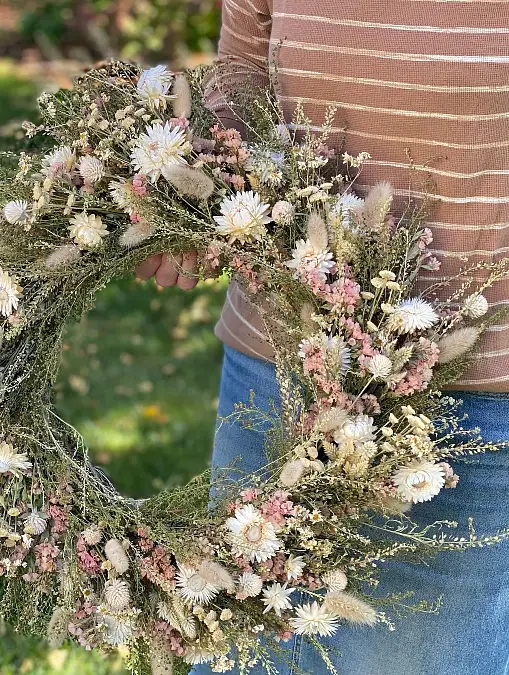
Cream strawflowers, dusty pink clusters, pale grasses, and fine green stems form a loose wreath with a soft meadow-like texture. The faded palette feels calm and natural, making it easy to use beyond early fall.
Styling idea: Hang a wreath like this against warm wood, soft white, or muted sage. Those backgrounds bring out the blush and ivory tones without competing with the delicate flowers.
The uneven edges are part of what makes the design work. Small stems extend beyond the main circle, giving the wreath movement and keeping it from looking too neat or manufactured.
For November decor, this softer color scheme is especially useful because it brings seasonal texture without depending on pumpkins, bright orange, or heavier harvest accents.
10. Sculptural Orange Branch Arrangement
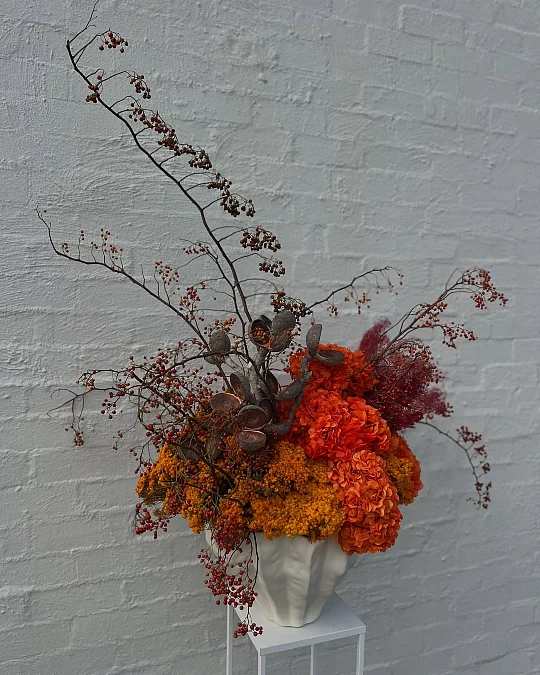
Decor formula: burnt-orange blooms + berry branches + dried seed pods + white sculptural vase
Dense orange flower clusters form a strong base, while dark seed pods and long berry-covered branches stretch upward and outward. The contrast between the compact flowers and bare, twisting stems gives the arrangement a dramatic shape without making it feel overly full.
Proportion tip: This type of arrangement needs height and open wall space. Let the branches extend freely rather than trimming them into a neat dome, since the asymmetry is what gives the display its modern, artistic feel.
The orange, rust, burgundy, and brown palette works especially well for November, when deeper fall colors feel more natural than bright early-season tones. A simple ivory vase keeps the focus on the texture and shape of the dried materials.
11. Jewel-Tone Florals in a Pumpkin Vessel
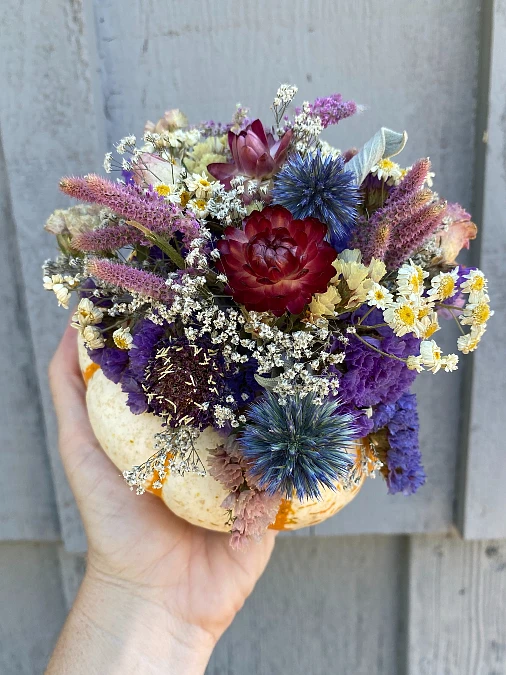
Why it feels chic:
- Deep burgundy blooms give the arrangement a strong fall anchor.
- Blue globe thistle and purple flowers cool down the warmer pumpkin tones.
- Tiny white flowers add air between the denser shapes, so the arrangement does not feel crowded.
- Soft pink spikes bring height and movement without overpowering the compact base.
The cream-and-orange pumpkin works almost like a small ceramic vessel, giving the arrangement a seasonal base while the jewel-tone florals add a more unexpected look.
Color note: Mixing burgundy, violet, blue, blush, and cream is a smart way to move fall decor into November. The palette still feels rich and seasonal, but it looks less predictable than a fully orange arrangement.
12. White Pumpkin Floral Centerpieces
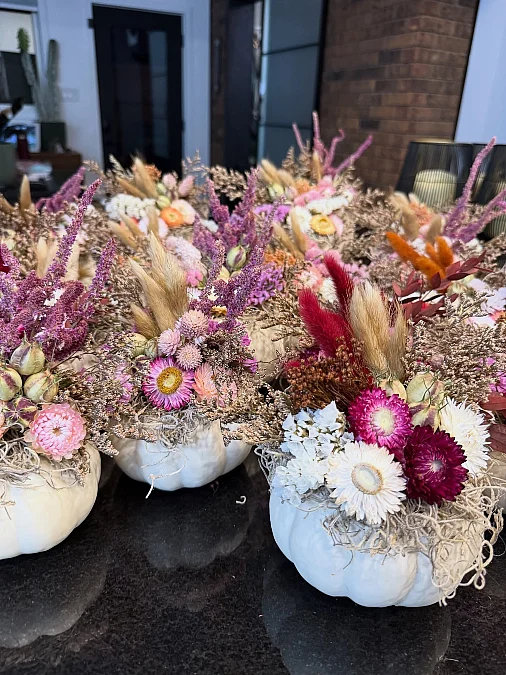
Creamy white pumpkins, dusty pink strawflowers, burgundy blooms, purple spikes, dried hydrangea, seed pods, and soft tan grasses create a layered centerpiece with plenty of late-fall texture. The pale pumpkin bases keep the stronger berry and rust shades from feeling too heavy.
Grouping several arrangements together works because the colors repeat while each pumpkin has a slightly different mix of stems. That variation makes the display feel collected rather than overly matched.
Copy this: Use one arrangement on a coffee table or group three along a dining table. Keep the flowers low and slightly loose so the pumpkin shape remains visible and the centerpiece does not block sightlines.
13. Seed Pods + Purple Grasses + Cream Vase
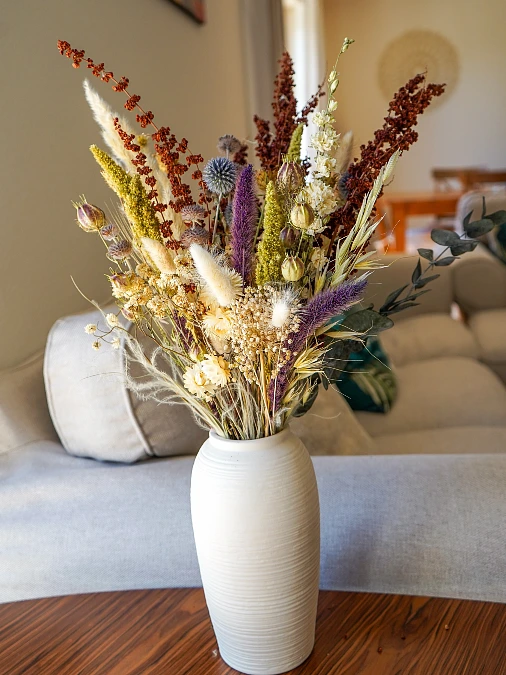
Tall rust branches, purple grasses, soft cream plumes, seed pods, and dried wheat rise from a simple ribbed ceramic vase. The mix feels loose and natural, with enough height to make the arrangement noticeable without looking heavy.
Why it works: The ivory vase calms the stronger rust and plum tones, while the varied stem heights create an easy layered shape.
Styling tip: Keep the surrounding table mostly clear so the fine grasses and seed heads stay visible. Warm wood underneath adds just enough contrast to make the pale vase stand out.
Use it for: a living room side table, dining console, or entryway where you want dried floral arrangements that feel seasonal well into November.
14. Orange Florals in a Cane-Wrapped Vase
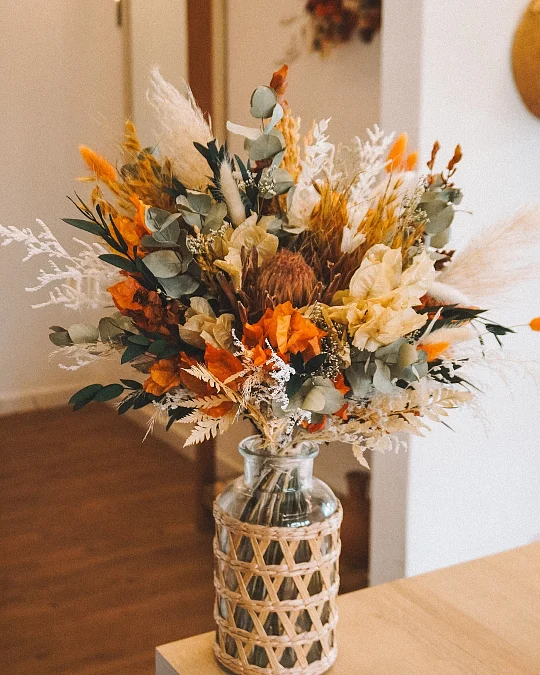
Burnt orange blooms, creamy dried flowers, eucalyptus leaves, pale pampas plumes, and a large textured seed head create a warm, layered arrangement with a soft November feel. The mix of muted green, ivory, rust, and wheat tones keeps the brighter orange from taking over.
The cane-wrapped glass vase adds natural texture at the base and helps connect the bouquet to the warm wood surface beneath it. Because the arrangement is full at the center and lighter around the edges, it feels generous without becoming too heavy.
Make it cozier: Pair this style with warm wood, linen, or woven accessories rather than adding more bright seasonal decor. The natural materials already give the arrangement enough autumn character.
15. Neutral Hydrangeas + Pampas + Dried Grasses
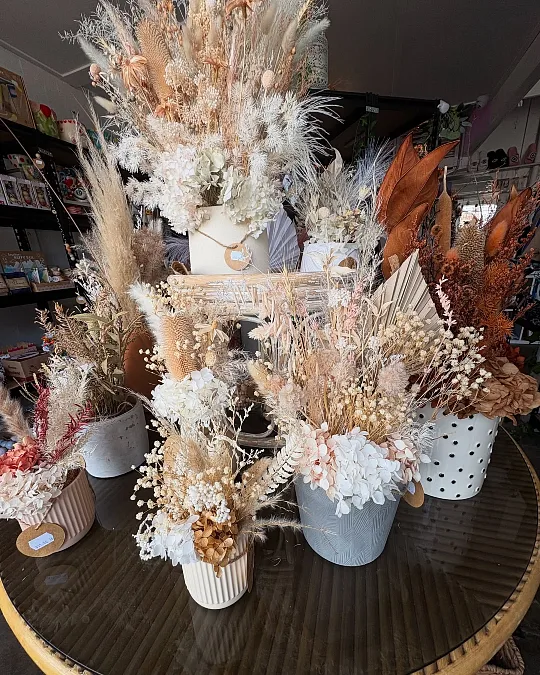
Cream hydrangeas, bleached foliage, pampas plumes, wheat-like stems, and soft beige seed heads create a layered display built almost entirely from quiet neutrals. The mix feels light and airy, while a few rust-brown leaves add enough depth to keep the palette from washing out.
The different vase shapes help the display feel collected rather than overly matched. Ribbed ceramic, matte stoneware, and simple white vessels all work because they stay within the same soft color family.
Decor note: This is a strong approach for November if you want fall texture without obvious seasonal colors. Keep one arrangement tall, one medium, and one compact so the group has clear height changes and does not read as one dense block.
16. Warm Rust and Blush Dried Bouquet
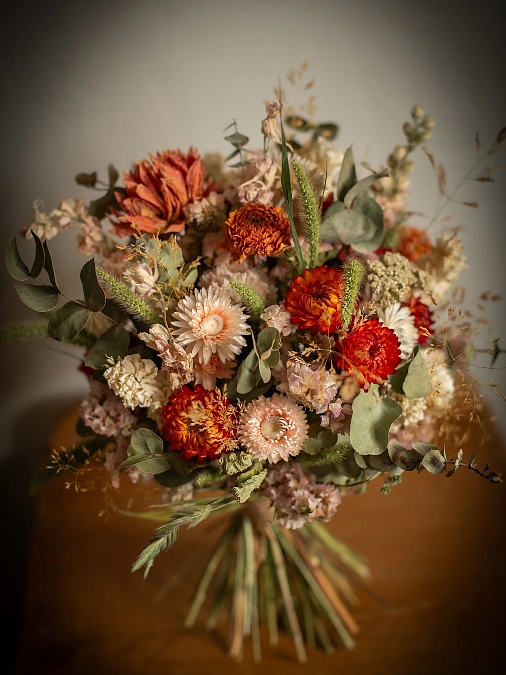
Burnt orange strawflowers, pale blush blooms, dusty eucalyptus, soft green foxtail grasses, cream clusters, and fine dried stems create a bouquet with warm autumn depth and a softer November finish.
The mix feels full through the center, while the longer grasses and eucalyptus branches loosen the edges and keep the shape natural.
Rust and muted green do most of the visual work here. The orange flowers bring warmth, but the faded blush and cream tones stop the arrangement from feeling too bright or tied to October.
Practical takeaway: This palette works especially well with warm wood furniture, ivory walls, and soft neutral rooms. Keep nearby accessories simple so the varied flower textures remain the focal point.
17. Cream and Mustard Meadow Bouquet
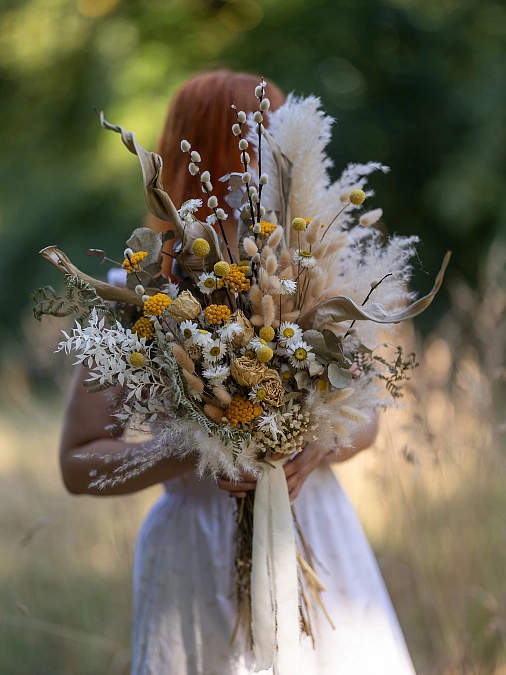
Best for: a dining table, entry console, or quiet corner where you want fall texture without heavy color.
Soft cream pampas, pale dried leaves, tiny white daisy-like flowers, mustard-yellow button blooms, and delicate seed stems create a light, meadow-inspired arrangement. The palette feels warm and seasonal, but the ivory and beige tones keep it calm enough for November.
Lighting idea: This type of bouquet looks especially good near natural light, where the fine grasses and fluffy textures can catch the sun. Against warm wood, linen, or soft neutral walls, the yellow accents add just enough contrast without making the arrangement feel too bright.
The loose, slightly wild shape is what gives it charm. Keep the stems uneven and airy rather than trimming everything to one height.
18. Neutral Pampas Table Arrangement
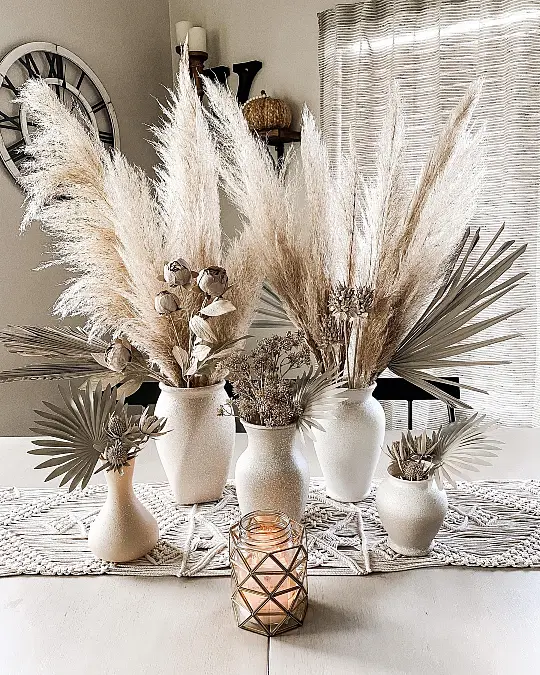
Best for: a dining table or console where you want soft fall texture without strong seasonal color.
Tall ivory pampas plumes, dried palm leaves, sculptural seed pods, and muted botanical stems fill a group of white ceramic vases in different heights. The layered cream, beige, and taupe palette feels calm and modern, while the chunky woven table runner adds warmth beneath the smooth pottery.
The scale works because the tallest arrangements sit toward the back, with smaller vases stepping down toward the front. This keeps the display full without making every piece compete for attention.
Lighting idea: A small amber candle adds just enough warmth to stop the neutral palette from feeling flat, especially in the evening.
19. Burgundy and Peach Dried Floral Bouquet
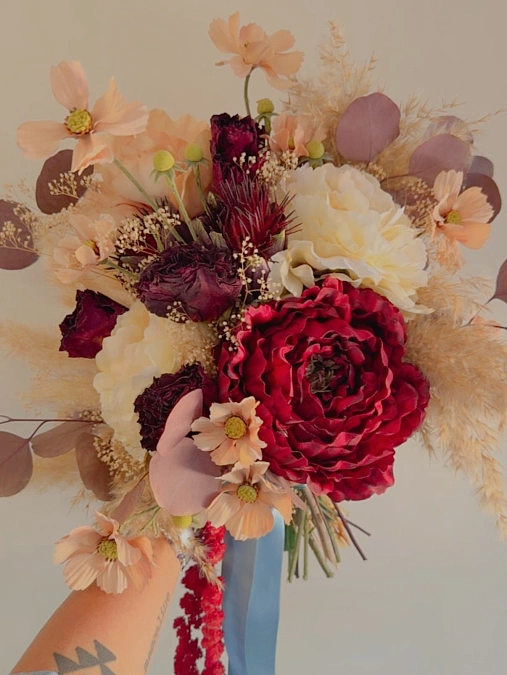
Deep burgundy blooms, creamy ivory flowers, peach cosmos-like stems, muted mauve leaves, and feathery beige grasses create a rich arrangement that feels warm without relying on classic orange. Small green button flowers and tiny cream filler stems keep the darker colors from feeling too dense.
Color note: Burgundy gives this bouquet its November mood, while peach and ivory soften the look. That balance makes it easy to pair with warm neutrals, walnut wood, taupe walls, or simple cream textiles.
The larger flowers sit close to the center, with lighter stems spreading around the edges. This keeps the bouquet full and dramatic while still giving it enough movement to feel natural rather than tightly arranged.
For a home display, place it in a matte cream, smoky glass, or muted brown vase and keep nearby accessories minimal so the deep floral colors stay in focus.