

Nadia stared at her crowded living room shelves and realized she hated every single vase sitting there. The space felt heavy with outdated ceramic pieces that offered no joy.
She desperately wanted a fresh look but had zero budget for new items. She realized that to successfully sell used home decor, a clear plan was necessary.
Nadia figured out how to audit her apartment, photograph her old items, and price them to move. She successfully earned $1,100 in cash without spending a single dime.
The Decor Audit: Deciding What Stays and What Goes
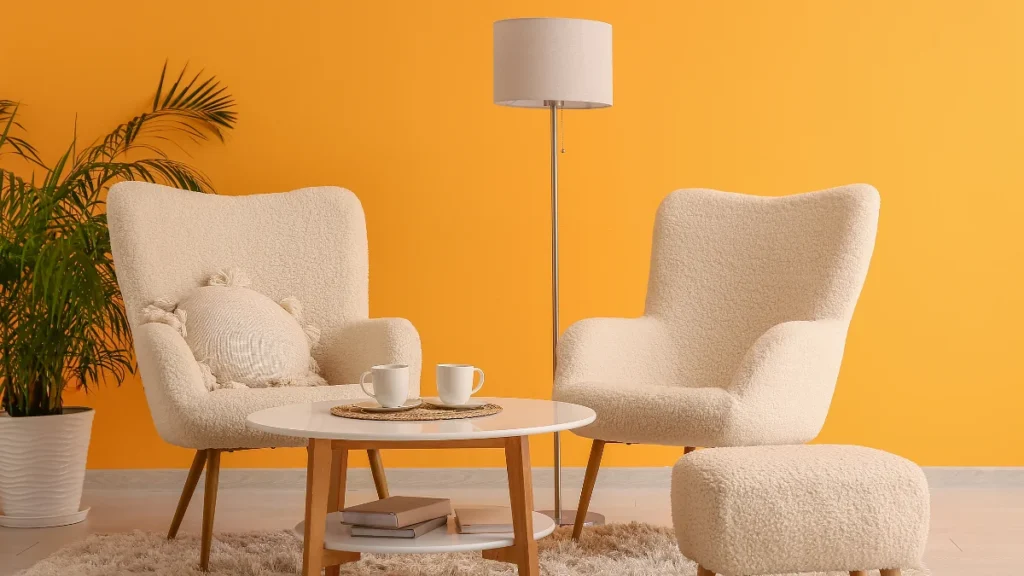
Nadia grabbed a plastic laundry basket and walked straight into her cluttered living room. She decided that a clean slate was the only way to see her space clearly. She pulled every piece of decor off the shelves, walls, and the coffee table.
Her coffee table alone held four different brass objects and a stack of unread design books. Placing everything into a central pile on the rug forced her to confront the sheer volume.
She quickly realized how much visual weight these unused items added to her daily life.
To properly declutter home decor, she knew she needed strict rules for keeping anything. She grouped the items by category, placing textiles in one corner and lighting in another. Seeing six throw pillows piled together made it very easy to part with four of them.
Nadia asked herself three strict questions before allowing any item to stay in the room.
- Is this piece functional for daily life?
- Have I loved looking at this object in the last six months?
- Does this item fit the style I actually want right now?
If the answer was no to any of these, the item went directly into the sell pile. She read a Chairish Home Furnishings Resale Report that gave her confidence in her decision. The report noted that the recommerce market for home goods is growing exceptionally fast.
It actually grows fifteen percent faster than broader retail markets across the country. This data proved that plenty of buyers were actively looking for the exact items she disliked. Once her basket was full, she needed to know exactly where to post those pieces.
She examined a stack of heavy wool blankets that took up too much closet space. They were beautiful but completely impractical for her warm apartment climate. She added them to the basket along with two dusty artificial plants.
Her used home decor pile grew rapidly over the course of an hour. The living room suddenly felt twice as large just by removing the unnecessary accessories. A clean slate is truly the best starting point for any room refresh.
Where to Sell Home Decor for the Highest Profit

Posting a heavy floor mirror on the wrong app will cost precious time and money. Nadia learned very quickly that matching the item to the correct platform was crucial. Bulky items needed local buyers, while small items were perfect for nationwide shipping.
She tested several different platforms to see where to sell home decor the fastest. Facebook Marketplace proved to be the absolute best choice for her large wooden wall art. She sold a heavy wooden framed mirror there for $75 in just two hours.
Local pickup eliminated the terrifying risk of glass shattering in transit. However, her textile items needed a completely different approach to reach the right audience. Apps like Mercari and Poshmark were excellent for easily shipped items like throw pillow covers.
Nadia read a recent Mercari Reuse Report while researching her selling options. The report noted that home decor is one of their top five fastest selling categories. This encouraged her to list a set of velvet curtains she no longer used.
She sold the curtains for $45 and popped them straight into a simple poly mailer. For higher end items, she looked into specialized platforms like Chairish. She had a vintage Persian rug that required a buyer who understood its true value.
| Platform Name | Best Decor Items to Sell Here | Seller Fee Percentage | Payout Speed |
| Facebook Marketplace | Bulky mirrors, large art | Zero percent | Immediate |
| Mercari | Throw pillows, small vases | Zero percent | Fast |
| Poshmark | Designer brand textiles | Twenty percent | Fast |
| Chairish | Vintage rugs, high end pieces | Thirty percent | Slow |
Nadia discovered that she could make money selling home items much faster by cross posting. She listed her Target Threshold items on three different apps simultaneously to test the waters. Picking the right platform is only half the battle when selling used goods.
She realized that cross posting her best items cast the widest possible net. A buyer in another state might pay top dollar for a vase that local buyers ignored. It required a few extra minutes of copying and pasting, but the effort paid off.
She highly recommends creating a dedicated folder on a smartphone for all listing photos.
Keeping the images organized made uploading to multiple platforms incredibly fast and efficient. Cross posting the best items is the proven way to cast the widest net.
How to Photograph Your Decor Items Like a Pro

Buyers shop with their eyes above all else when browsing second hand marketplaces. Nadia quickly saw that shoppers scroll right past dark or blurry photos. She knew she had to improve her presentation to get the prices she wanted.
She read a study by Etsy during her late night research sessions. The study revealed that ninety percent of shoppers consider photo quality the most important factor. Good lighting was clearly the secret to making old items look desirable again.
She started by moving a dark, dusty ceramic table lamp out of a dark corner. She gave it a thorough wipe down with a damp microfiber cloth to remove grime. Then, she placed the lamp on a clean wood side table directly next to a window.
The natural daylight completely transformed the way the glaze looked on camera. It suddenly looked like a high end boutique find rather than thrift store clutter. That simple change helped her sell used home decor online much faster than she expected.
Nadia learned to style the item in a clean space with zero background mess. She took close up photos of the back, the bottom, and any minor chips. Honest photos prevented buyers from complaining and returning items after the sale.
She placed a common coffee mug next to a large vase to show the scale. This trick worked perfectly when she could not find her metal tape measure.
Providing clear visual size references stopped buyers from asking endless questions in her messages.
Crisp photos allow a seller to command a higher price for basic items. A quick wipe down and natural light worked absolute wonders for her inventory. It truly made a $20 vase look like an $80 antique.
Pricing Strategy: How to Value Secondhand Decor
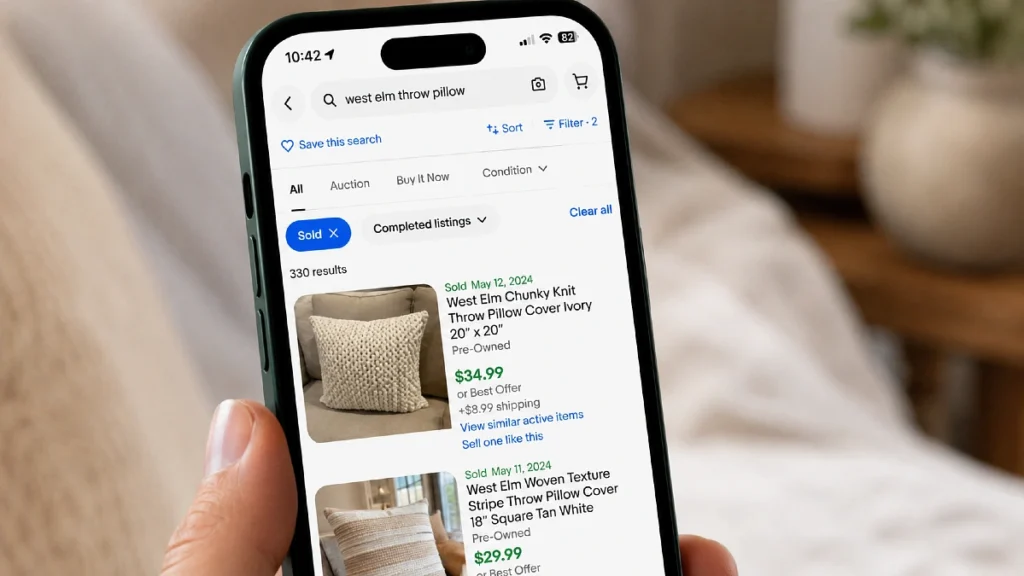
Pricing old throw pillows too high guarantees they will sit in a closet forever. Nadia struggled initially with assigning a dollar value to pieces she had owned for years. She wanted to maximize her profit without scaring away potential buyers.
She learned to search for her exact item on eBay to gauge the actual market. Filtering her searches by sold items showed her what people were actually willing to pay. This method gave her a realistic baseline to appropriately price secondhand decor.
She set a firm rule for mainstream brand items like her West Elm planters. She priced them at forty to fifty percent of their original retail cost. Buyers loved feeling like they were getting a massive discount on recognizable brands.
Nadia found that vintage pieces like solid brass candlesticks were harder to pin down. She added a buffer of ten to fifteen percent to her listing price for these items. This gave her plenty of room to negotiate with aggressive bargain hunters.
| Item Condition | Recommended Pricing Formula | Negotiation Buffer | Price Example |
| New with tags attached | Seventy percent of retail | Add ten percent | Retail $100, list at $80 |
| Like new without tags | Fifty percent of retail | Add fifteen percent | Retail $100, list at $65 |
| Visible wear or chips | Thirty percent of retail | Add twenty percent | Retail $100, list at $50 |
She read that items with a make offer option sell significantly faster online. Poshmark data shows that allowing offers moves inventory thirty percent quicker than fixed pricing. This strategy helped her make money selling home items rapidly during her first week.
She noticed that listing items on Friday evenings resulted in the highest engagement. Weekend shoppers were more willing to submit reasonable offers on her decorative pieces. Understanding this timing gave her an extra edge over other casual sellers.
Cash in hand is great, but the real reward is the newly empty space. Always leave a tiny margin for buyers who love the thrill of negotiating.
Restyling the Keeps: A Zero Dollar Room Refresh

Nadia stood back and realized her living room looked completely different now. The heavy visual weight was gone, leaving behind only the pieces she genuinely loved. She finally had room to breathe and appreciate the architecture of her apartment.
Now that the clutter was gone, she needed to style what actually remained. She started by moving a small, sculptural bedroom table lamp onto her living room console. This fresh lighting instantly changed the mood of the room without costing a single penny.
She decided to lean a tall hallway mirror against a dark living room wall. The glass caught the afternoon sun and bounced bright light into a previously gloomy corner. She proved that a zero dollar room refresh was entirely possible with simple swaps.
She completely emptied her wooden bookshelves and put back only half the books. Nadia decided to actively embrace negative space on the open wooden shelves. She found a quote from Maxwell Ryan, the founder of Apartment Therapy, that guided her.
He stated that negative space gives the eye a place to rest in a room. Giving her decorative objects room to breathe made them look significantly more expensive. The American Society of Interior Designers backs up this exact concept.
They report that optimizing spatial arrangement can improve a room’s functionality by forty percent. Nadia experienced this firsthand as her space suddenly felt calm and perfectly organized. To properly declutter home decor means honoring the pieces that get left behind.
She swapped a bright patterned rug from her bedroom into the main living area. The colors popped beautifully against her newly minimalist and uncluttered shelving units. It felt like walking into a luxury hotel suite every single evening.
Now that her space looked perfect, it was time to finalize those lingering sales. She promised herself she would shop her own house before stepping foot in a store again.
Safety and Shipping: Getting Items to the Buyer
Securing the sale means getting the item safely out of the house. Nadia knew that a broken ceramic planter would result in a refunded payment. She took the shipping process very seriously to protect her hard earned profits.
She set strict rules for any local buyers picking up heavy items. She always met them in a public, brightly lit grocery store parking lot. Sometimes she used her local police station safe exchange zone for added peace of mind.
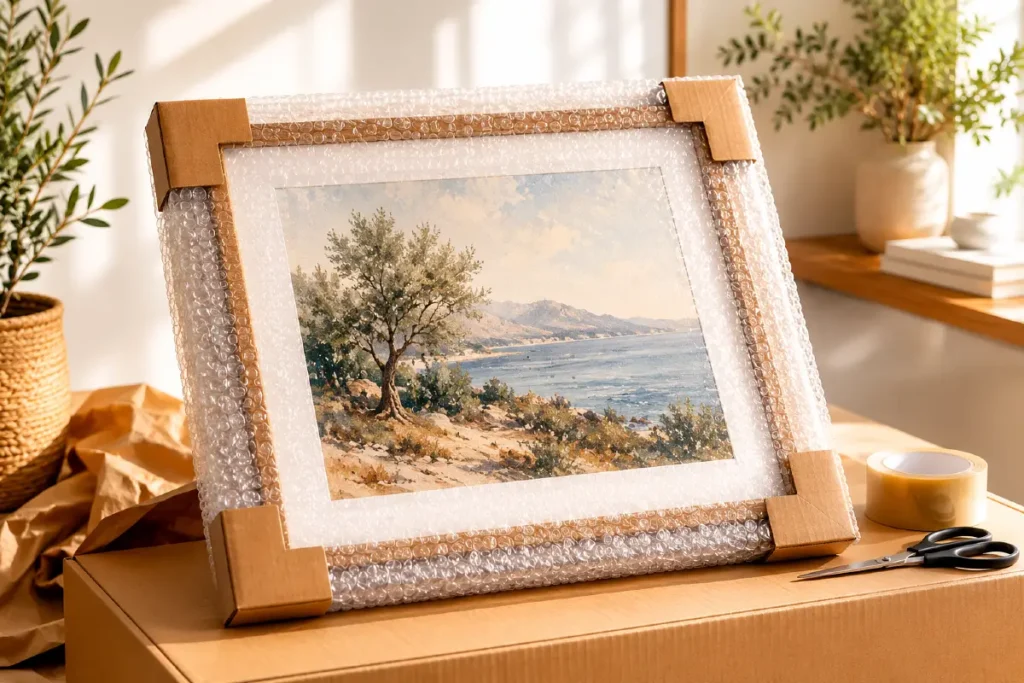
Nadia had to learn how to properly ship fragile home decor across the country. She started saving her old Amazon boxes and packing paper to keep her expenses low. Reusing materials kept her shipping costs at absolute zero for the entire month.
She developed a specific process to pack fragile ceramic vases and glass frames.
Double-Box Freight Protocol
Zero-damage logistics & transit preparation
Primary Cushioning
Wrap the fragile item securely in three distinct layers of large bubble wrap to form the initial protective shock shield.
Immobilization Bind
Tape the bubble wrap tightly across all axes so the item cannot physically shift or slide within its casing.
Inner Chamber Containment
Place the wrapped item snugly inside a small, sturdy cardboard box with absolutely zero remaining void space.
Outer Suspension Hull
Put that small inner box precisely inside a larger box filled with crushed paper for full 360-degree impact suspension.
Structural H-Tape Seal
Tape every seam of the outer box securely (top and bottom) with high-adhesion, heavy-duty packing tape.
Logistics Scanning
Attach the printed shipping label clearly on the flat top surface, avoiding any taped seams or curved edges.
This double boxing method felt tedious but it absolutely worked every time. According to the USPS, proper double boxing reduces fragile item breakage by over seventy percent. A little preparation keeps those profit margins completely intact.
Her final step to successfully sell used home decor was tracking every single shipment. She saved her tracking receipts until the buyer confirmed the item arrived safely. Save those boxes, meet in public spaces, and watch the extra cash pile up.
Nadia transformed her cramped apartment by learning to ruthlessly audit her living room shelves.
She discovered that taking brightly lit photos near a window was the secret to high prices. Listing her pieces across multiple platforms allowed her to move her inventory rapidly.
She proved that a zero budget room makeover is entirely possible with focused effort. Anyone can replicate this process by simply starting with a single surface. Nadia suggests picking one cluttered bedroom nightstand or a living room console table today.
Finding three old items to list online is the perfect way to start. Once she learned how to sell used home decor, she never looked at her clutter the same way again.