The cardinal sin of interior design is the floating rug. Fixing it is easier than you think. Rooms often feel flat and cold. They can look visually disconnected. This happens a lot in large open concept spaces.
It is also common in homes with hard flooring. You might buy a beautiful rug and feel disappointed. The room still lacks warmth. You are missing a key design secret.
You need to know how to layer rugs in a living room. We will show you the exact mathematical proportions you need. You will discover the best material pairings.
Cure the Floating Rug
Use the smart button to apply the 4 designer layering rules.
1. Start With the Perfect Base Rug
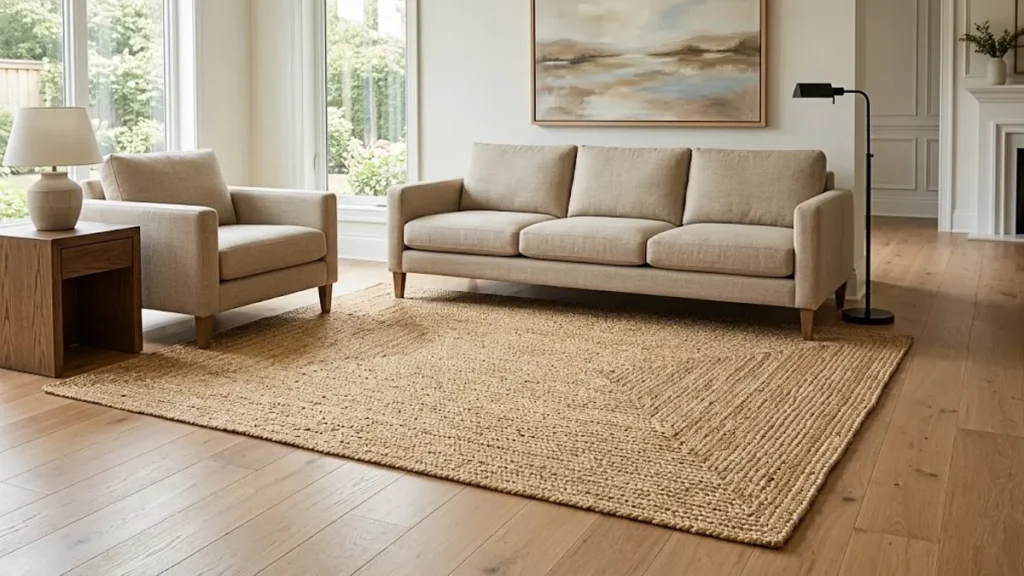
Every great layered look starts with a solid foundation. The base rug anchors the room. It must be large enough for all front furniture legs to sit on it. You want to create a clear conversation zone.
The base rug should extend 8 to 12 inches beyond the sides of your sofa. This grounds the space. It prevents the furniture from looking like it is floating. Use an Augmented Reality sizing app from a major retailer to test the size first.
Next, think about the material. Stick to low profile choices. Good options include coarse jute and flat cotton. Sisal is also excellent.
You must avoid using a thick or high pile rug as a base. A thick base creates a tripping hazard. It also makes furniture wobble.
Color is just as important. Opt for neutral or earthy tones. Warm sand colors work well. Terracotta and mocha are great choices too. A quiet base color ensures it does not fight the top layer.
Finding the best base rugs for layering makes the rest of the process easy. You want a canvas that supports the room. This is one of the best living room rug layering ideas you can use.
Once your canvas is set and your furniture is grounded, you can bring in the star of the show.
2. Choose Your Statement Top Layer
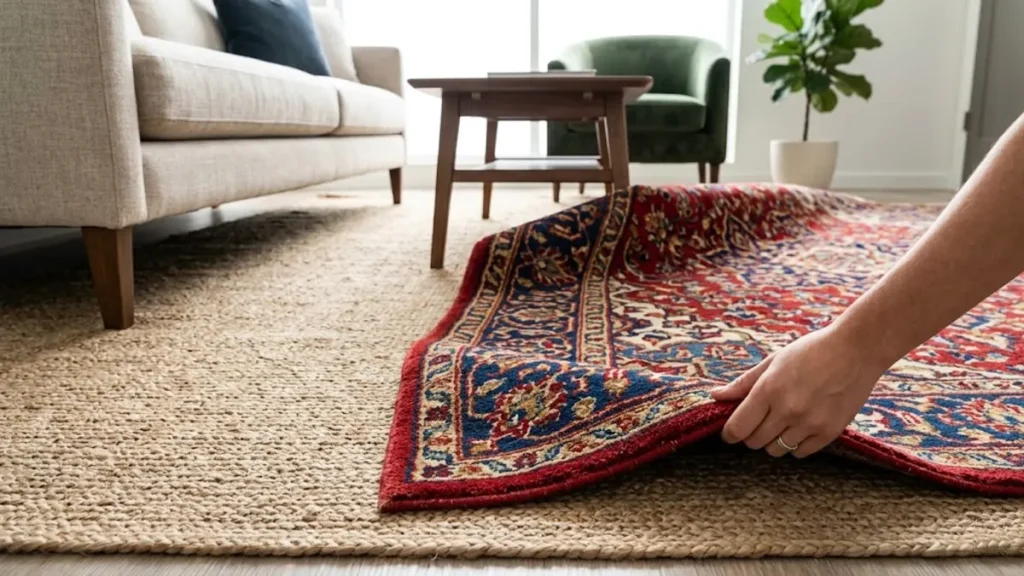
If the base rug is the stage, the top rug is the lead actor. This is where you inject personality and color. You can use this piece to tell a story in your space.
Current layered rugs 2026 trends offer amazing options. Grandmillennial styles featuring vintage florals bring a fun sense of nostalgia.
You can also place distressed vintage rugs over sleek modern bases. This clash of old and new is highly popular right now.
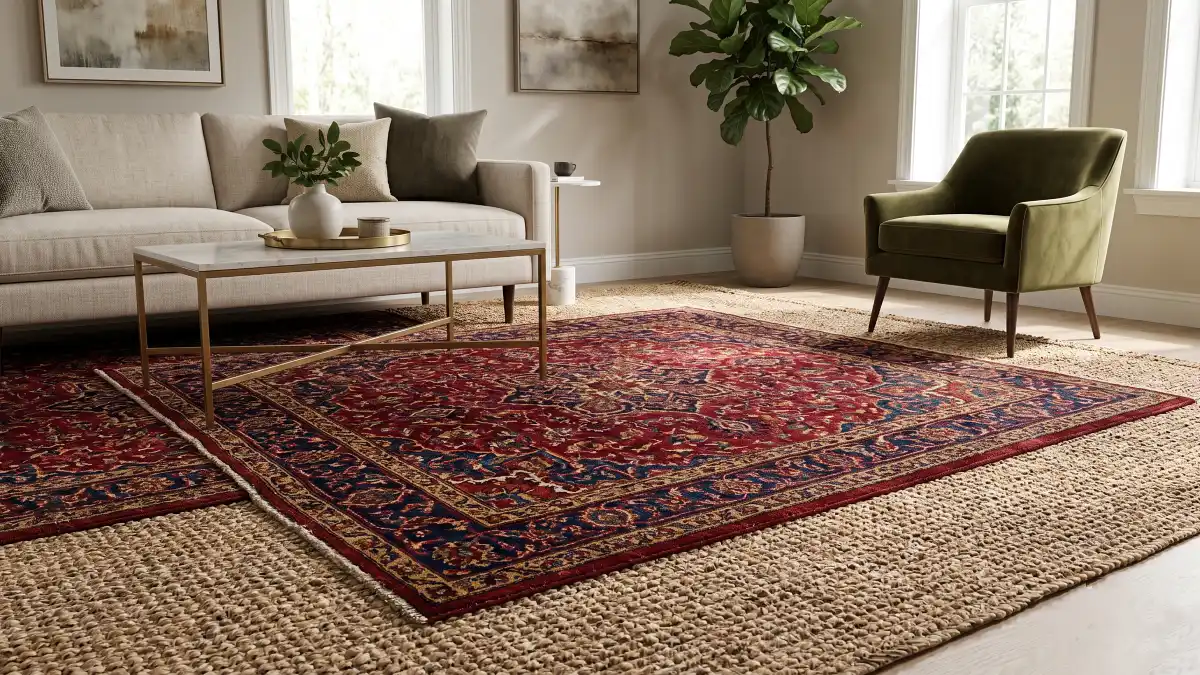
Proportions matter immensely. Ensure enough of the base rug remains visible to frame the top rug. The top rug should be 20 to 40 inches smaller on each side than the base rug. This guarantees a distinct contrast. If the sizes are too similar, the rugs just look stacked.
Sue Jones is the co founder of Oka. She notes that layering adds a lived in look that makes a house feel like a home.
You want the top rug to draw the eye. It should act as a piece of art on your floor. But a beautiful rug will get lost if it does not contrast with its surroundings. Let us talk textures.
3. Master Pattern and Texture Mixing
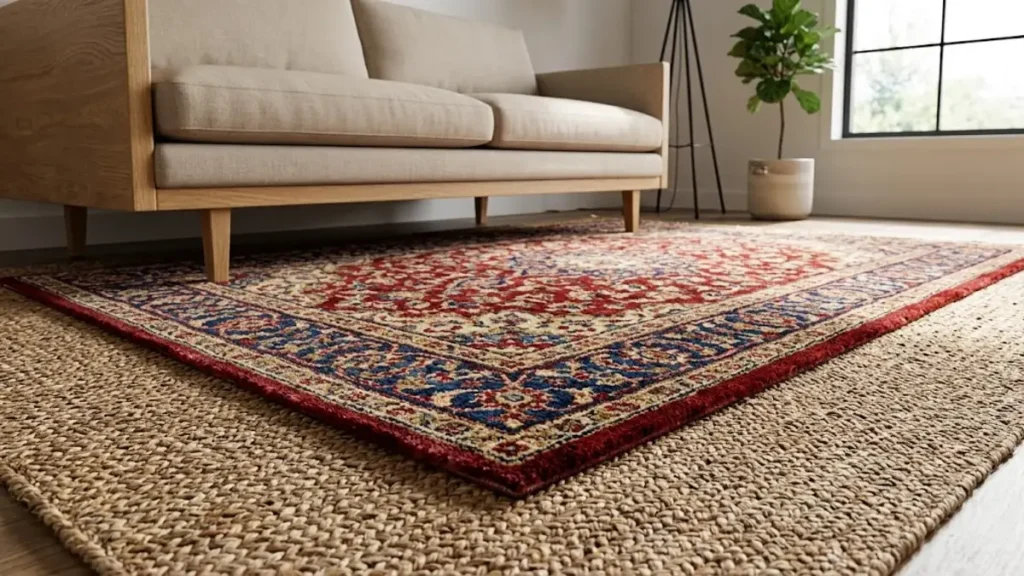
The secret to making layered rugs look intentional rather than accidental is contrast. Contrast is the golden rule. Layering identical textures or colors is like wearing double denim in the exact same wash. It just blurs together into a messy blob.
You must pair high pile or plush rugs with flat woven choices. You should also balance a loud or vintage pattern with a solid base. A subtly textured base works well too.
Here are fail proof material pairings:
The Art of Layering
Global Textures & Depth
Classic Elegance
A natural jute foundation paired with a beautifully vintage, hand-tufted Persian rug.
Soft Contrast
A structured flatweave cotton base layered with plush, organic sheepskin accents on top.
Vibrant Geometry
A plain sisal base topped with a brightly colored, intricately woven geometric kilim.
Desert Warmth
A warm sand flatweave grounded underneath a beautifully plush, tribal-patterned Moroccan shag.
These combinations work because they offer visual breaks. They provide a mix of soft and rough elements. This prevents visual boredom.
These living room rug layering ideas work in any space. Now that you have your perfect pair, it is time to lay them down correctly.
4. Placement, Angles, and Anchoring
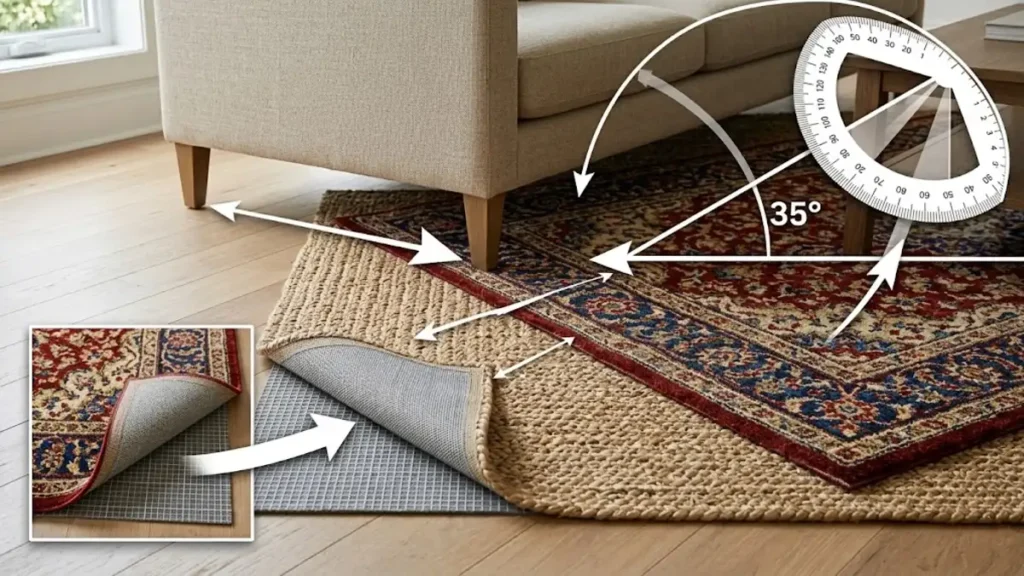
Even expensive rugs will look cheap if they are placed poorly or constantly bunch up. You have two main layout choices.
You can use a centered and symmetrical placement. This looks clean and formal. You can also use a relaxed angled placement.
Angling a top rug between 30 to 45 degrees disrupts rigid room lines. This makes small spaces feel deliberately styled. Jen Baxter of Baxter Hill Interiors loves this approach. She says slightly haphazard overlaps create eclectic charm.
Think about the traffic in your room. Keep angled rugs out of main walking paths. Reserve them for sitting zones under coffee tables.
You must secure your rugs. This is not optional. You need a thick rug pad between the floor and the base rug.
You might also want non slip rug tape between the two rugs. Always use a high quality rug pad to protect your floors, stop slipping, and prevent tripping.
5. Mix and Match Shapes for Better Flow
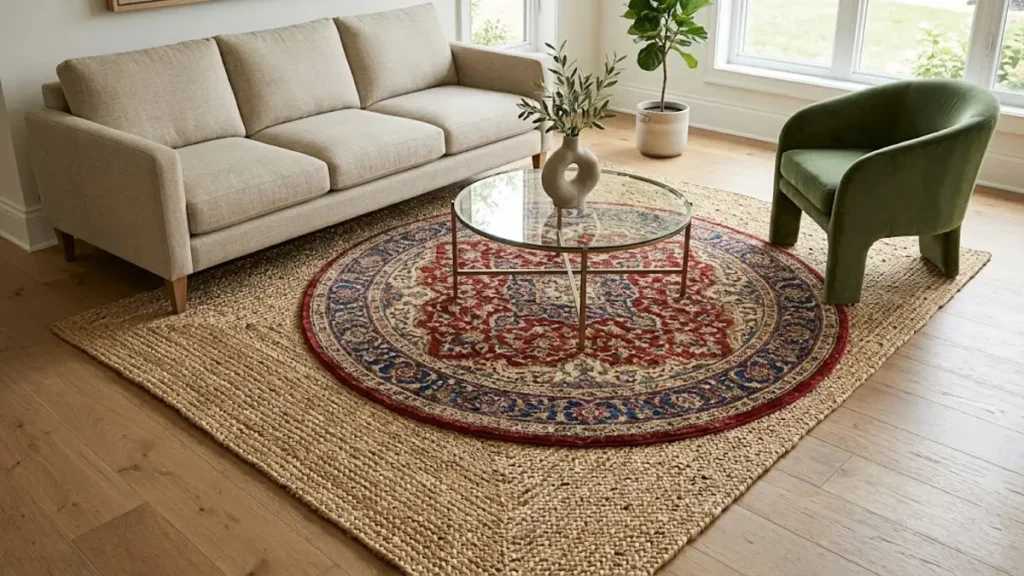
You do not always need two rectangular rugs. Mixing different shapes adds instant visual interest to your room. A large rectangle is the standard base choice.
Putting a round shape on top changes the whole feel of the space. This trick breaks up harsh straight lines in boxy rooms. It also highlights specific furniture pieces perfectly.
An irregular animal hide looks amazing under a simple glass coffee table. Using the wrong shapes makes the room feel chaotic.
The 1-Minute Rug Layering Cheat Sheet
| Your Room Setup | Buy This Base Rug Size | Buy This Top Rug Size | Best Texture Pair To Use |
| Small Apartment / Loveseat | 6 by 9 feet | 4 by 6 feet | Flat Cotton + Faux Sheepskin |
| Standard 3-Seat Sofa | 8 by 10 feet | 5 by 8 feet | Natural Jute + Plush Wool |
| Large Sectional Sofa | 9 by 12 feet | 6 by 9 feet | Coarse Sisal + Vintage Kilim |
| Giant Open Concept Space | 10 by 14 feet | 8 by 10 feet | Flat Synthetic + Animal Hide |
Conclusion
Layering rugs is about basic spatial logic. You must anchor the room with a large and low profile base. You then contrast that foundation with a smaller and textured top layer.
Finally, you must secure everything safely. This technique instantly warms up cold floors. It transforms the feel of your home. Challenge yourself to evaluate your current setup today.