
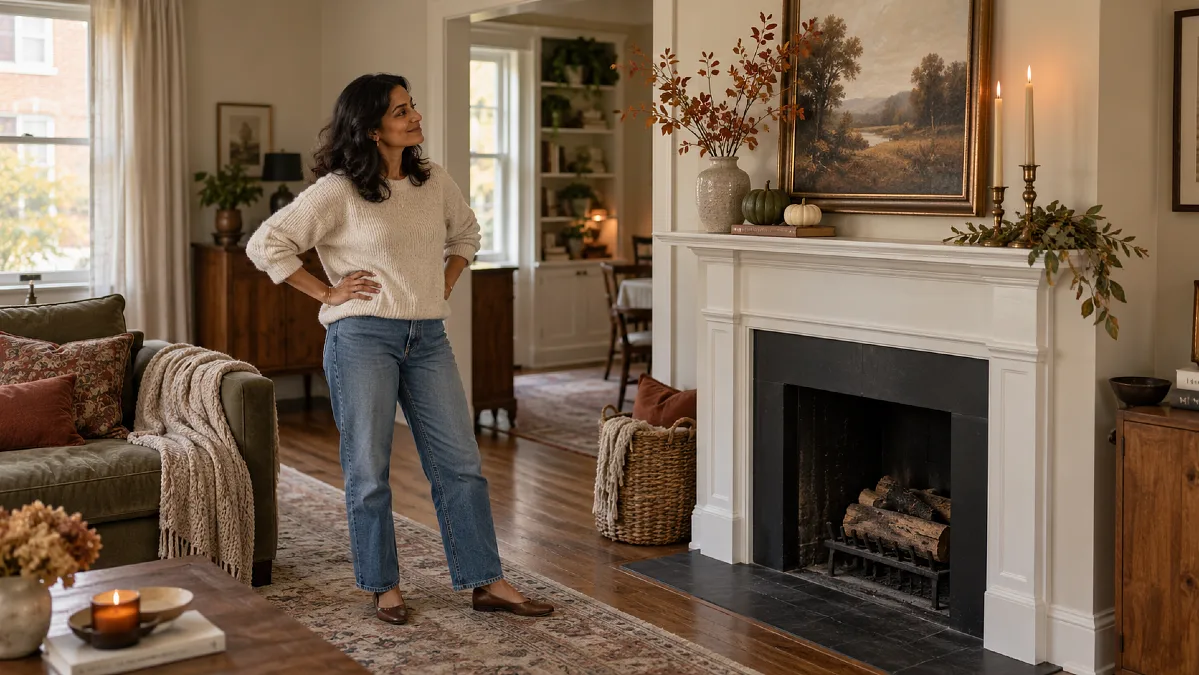
A fall mantel can go from warm and collected to crowded surprisingly fast. Add a pumpkin, then a garland, then candles, leaves, signs, and suddenly the fireplace feels more like a seasonal display aisle than part of your home.
The tricky part is that most fall decorations look good on their own. The problem shows up when too many colors, shapes, and small objects compete for attention in one narrow space.
The best home styling tips for fall are less about adding more and more about choosing what gets to stand out. With a clear focal point, a tighter color palette, and a few textural layers, your mantel can feel cozy and seasonal without looking overloaded.
Why Fall Mantels Start Looking Busy So Quickly
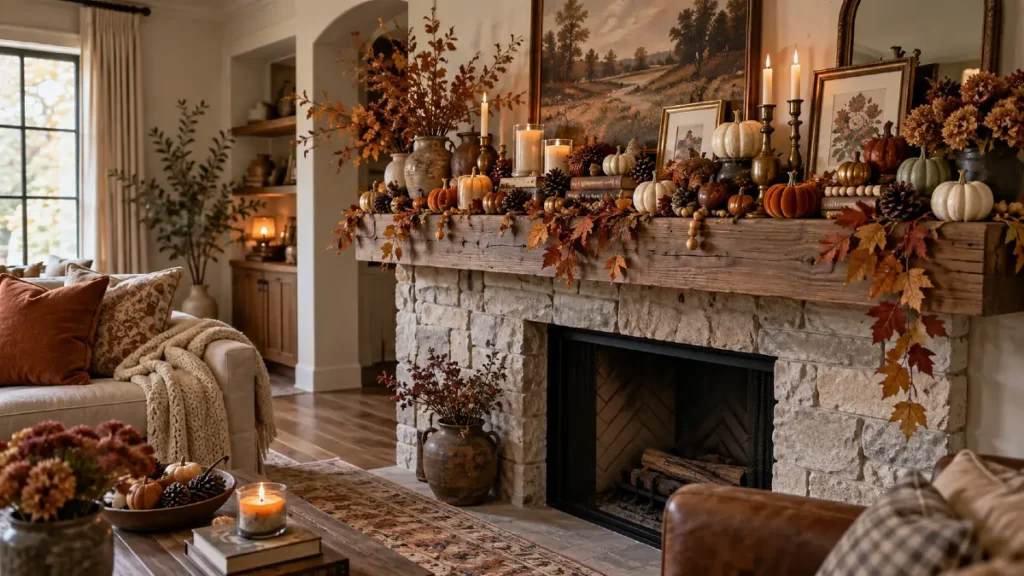
A mantel is long but shallow, which makes it surprisingly easy to overcrowd. Ten small decorations may technically fit, yet your eye reads them as ten separate things demanding attention.
This gets even trickier when fall decor introduces several strong elements at once. Orange pumpkins, dark leaves, plaid ribbon, wood signs, brass candlesticks, and garlands all bring their own color and texture.
Instead of thinking about how many decorations will fit, think about how many visual moments the mantel needs.
Usually, three are enough. You need one main focal point, one supporting layer, and a few smaller accents that connect the arrangement.
A framed print with two candleholders and trailing branches can feel more finished than fifteen miniature pumpkins lined across the shelf.
Scale note: If everything on the mantel is roughly the same height, the display can feel cluttered even when you have not used many pieces. Mixing one tall element with medium and low pieces gives your eye somewhere to rest.
Let One Large Anchor Do Most of the Visual Work
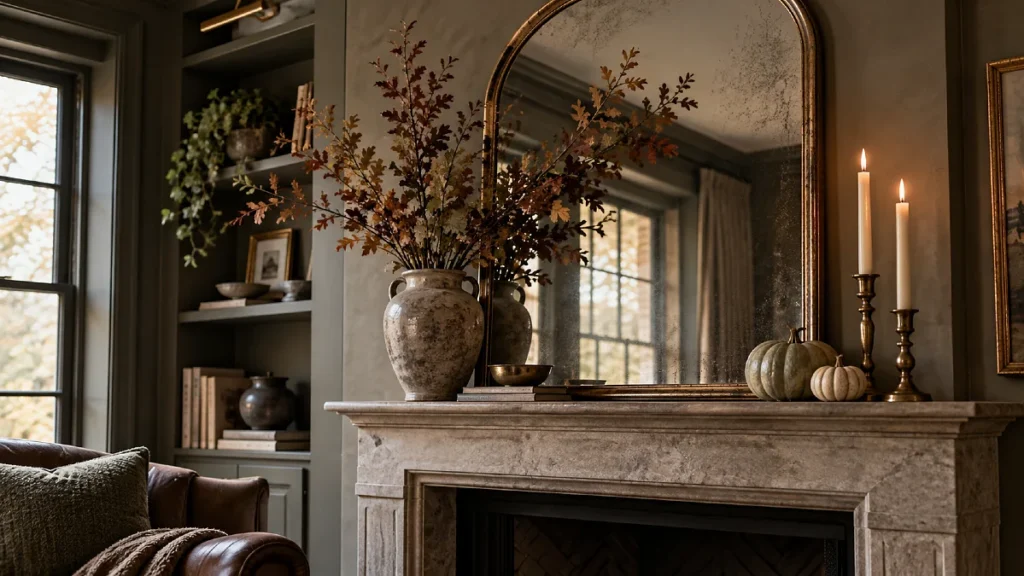
Start with the largest object before touching the little pumpkins.
Your anchor might be a mirror, framed landscape, large piece of art, autumn wreath, or substantial vase filled with branches. It should hold enough visual weight that the mantel does not need dozens of smaller decorations to feel complete.
As a general guide, the anchor should feel connected to the width of the fireplace rather than floating like a tiny object above it.
If the piece you already own feels too small, you do not automatically need to replace it. Try layering it in front of a slightly larger mirror or resting it against the wall beside a taller vase.
That creates visual mass without adding lots of individual objects.
For renters, leaning art or a mirror on the mantel can also be easier than hanging something new. Just make sure anything leaning is secure and placed safely away from heat.
One of the most useful home styling tips here is simple: solve empty space with scale before solving it with quantity.
A larger anchor fills visual space. A collection of small accessories fills physical space. Those are not the same thing.
Keep the Fall Color Palette Tighter Than the Decor Aisle
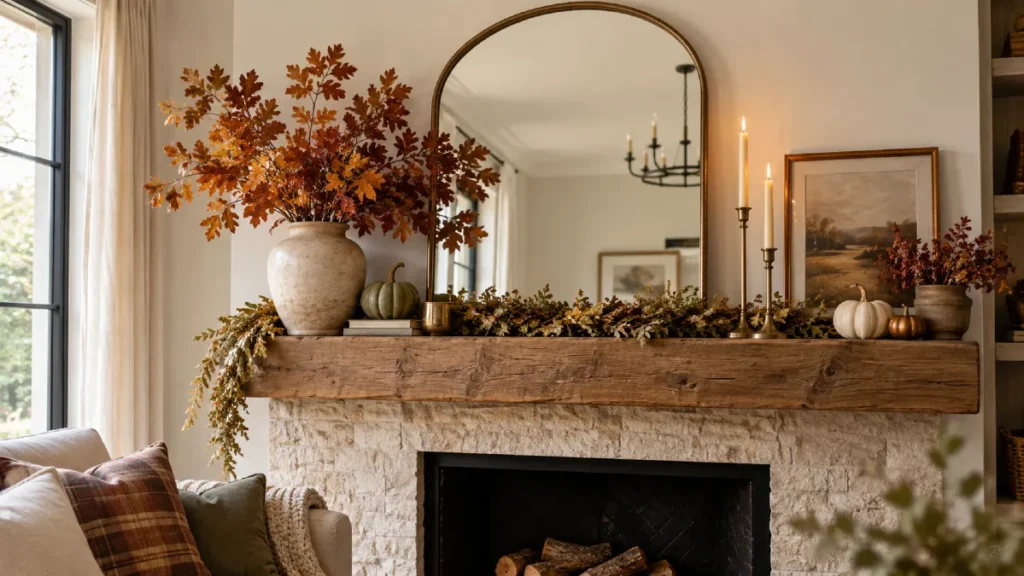
Traditional fall colors can be beautiful, but you do not need orange, rust, burgundy, mustard, brown, cream, green, and black all competing on the same mantel.
Choose two or three dominant tones and let the materials create the rest of the interest.
A warm neutral room might use cream, muted rust, and dark brown. A cooler modern room could use soft taupe, olive, and aged brass. If your existing room already has blue or green, there is no reason to abandon it just because autumn arrived.
The mantel should still belong to the room around it.
Here are a few restrained material and color combinations that work without feeling overly themed.
| Material or Finish | What to Look For and Why It Works |
|---|---|
| Aged brass | Adds warmth and contrast without introducing another loud seasonal color |
| Natural wood | Connects easily with dried leaves, branches, pottery, and neutral rooms |
| Cream ceramic | Gives darker autumn colors breathing room and keeps the display light |
| Amber or smoked glass | Brings subtle fall color through transparency rather than solid blocks of orange |
| Woven or dried texture | Adds seasonal warmth through texture instead of obvious themed decorations |
Color note: Look around the room before choosing your mantel colors. Pulling one or two shades from your rug, pillows, curtains, or artwork makes seasonal decor feel integrated rather than temporarily dropped into the space.
Mix Real Texture With Fewer Decorative Objects
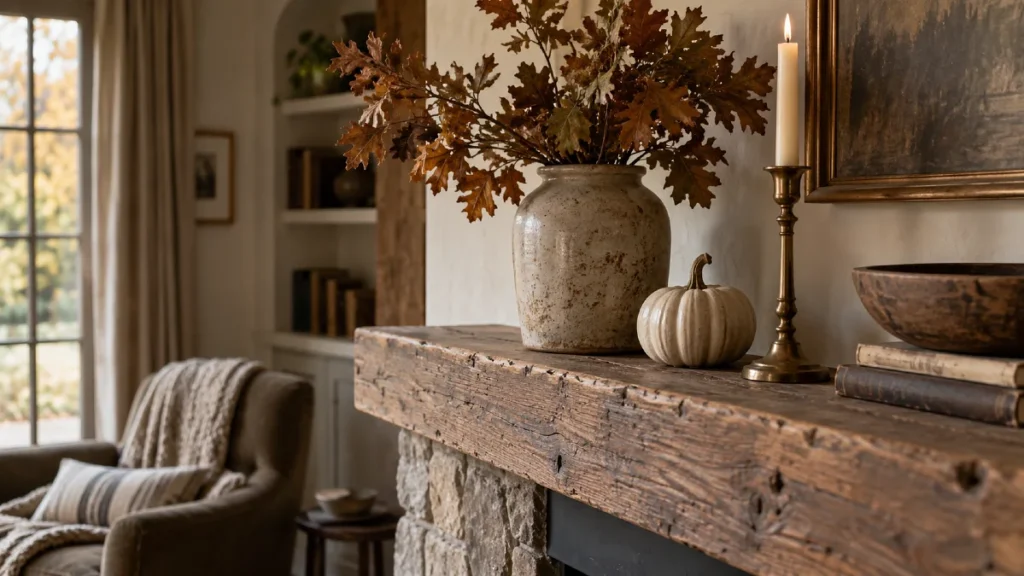
Fall decor looks richer when texture does the work that extra accessories normally would.
Think branches, dried stems, wood, stoneware, woven baskets, linen ribbon, glass, and metal. These materials create depth because they reflect light differently and have different surface textures.
For example, three ceramic pumpkins can easily read as a themed collection. One ceramic pumpkin beside rough branches and a brass candlestick feels much more layered.
Try mixing:
- one organic element such as branches, eucalyptus, dried leaves, or grasses
- one soft or matte texture such as ceramic, wood, or woven material
- one harder finish such as glass, brass, iron, or another metal
You do not need all three in equal amounts.
The organic material can be the main event while the harder finish appears only in two candleholders.
Budget swap: Before buying seasonal stems, look at what you can safely gather or reuse. Bare branches, dried garden clippings, existing neutral vases, wooden bowls, and everyday candleholders can carry much of the look.
That is especially useful when decorating on a budget because the mantel still feels seasonal without requiring an entirely separate collection of fall accessories.
Create Height Without Decorating Every Inch
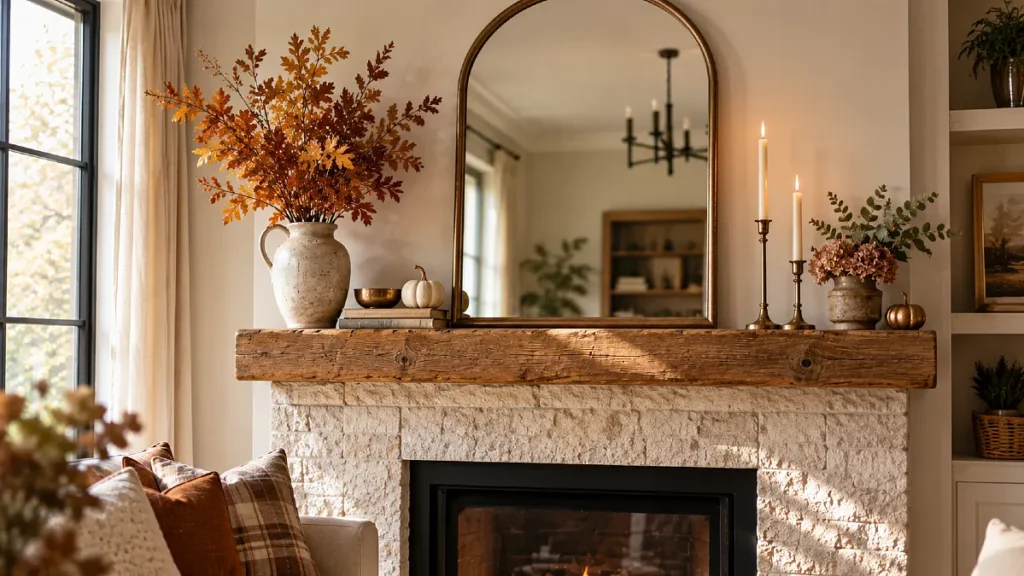
Empty space is part of the arrangement.
A common instinct is to stretch decor from one end of the mantel to the other. That can work with a very simple garland, but it becomes visually heavy once pumpkins, candles, frames, and stems join it.
Instead, build two or three clusters and allow small gaps between them.
One side might hold a tall vase with branches. The center might feature your mirror or artwork. The opposite side could have two candleholders and one small pumpkin.
The heights should move up and down rather than forming a straight line.
You can also use asymmetry. A taller cluster on one side paired with a lower, wider grouping on the other often feels more relaxed than trying to mirror every object exactly.
If symmetry feels calmer to you, use it. Just vary the heights inside each grouping so the arrangement does not become stiff.
This is where scale and proportion matter more than following a particular fall decorating trend. You are balancing visual weight, not completing a checklist.
What Makes a Fall Mantel Feel More Craft Store Than Collected

Usually, the problem is not one specific decoration. It is repetition.
Too many pumpkins, signs, faux leaves, bows, or miniature objects can turn separate accents into a theme display.
If your mantel already feels too busy, you probably do not need to start again. Remove a few pieces and look at what remains.
This quick comparison can help you edit without stripping away all the personality.
| If the Mantel Feels Like This | Try This Instead |
|---|---|
| Six or seven similar pumpkins in a row | Keep two or three in different sizes and leave space around them |
| Several signs with fall sayings | Let one artwork, mirror, or wreath become the main focal point |
| Orange appearing in every object | Use orange once or twice and bring in cream, wood, or muted green |
| Garland plus branches plus leaf sprays | Choose one dominant foliage treatment |
| Many small objects across the full mantel | Create two or three larger groupings with clear gaps |
Another common issue is buying fall decorations without considering the room they will sit in.
A very rustic arrangement can feel disconnected in a clean contemporary living room. A sleek black-and-white mantel may feel unusually cold in a room filled with warm woods and traditional furniture.
You do not need seasonal decor to match everything exactly. It simply needs one or two connections to the surrounding room.
That connection might be color, material, finish, or shape.
Let Lighting Make the Mantel Feel Like Fall
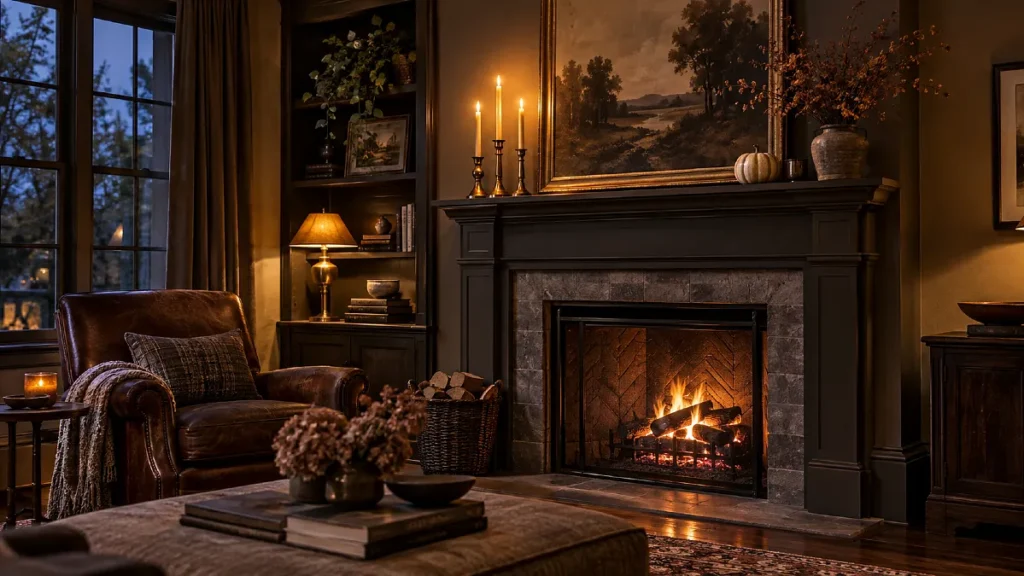
You can create autumn atmosphere without adding another decorative object.
Warm lamp light, candlelight, or soft firelight changes how wood, brass, amber glass, and dried foliage read in the evening. Texture becomes deeper and the whole arrangement feels more intimate.
If you use candles, vary their heights instead of placing a row of identical ones across the mantel.
Battery-operated candles can also work well in homes with children or pets, especially when you want the glow without an open flame.
The mantel itself does not need to provide all the lighting. A nearby table lamp or floor lamp can make the fireplace wall feel warmer as part of the larger room.
Lighting swap: Before adding more decor because the mantel feels flat, turn off harsh overhead lighting and switch on the lamps you normally use at night. You may find that the missing layer was light, not another pumpkin.
Use This Fall Mantel Formula When You Feel Stuck
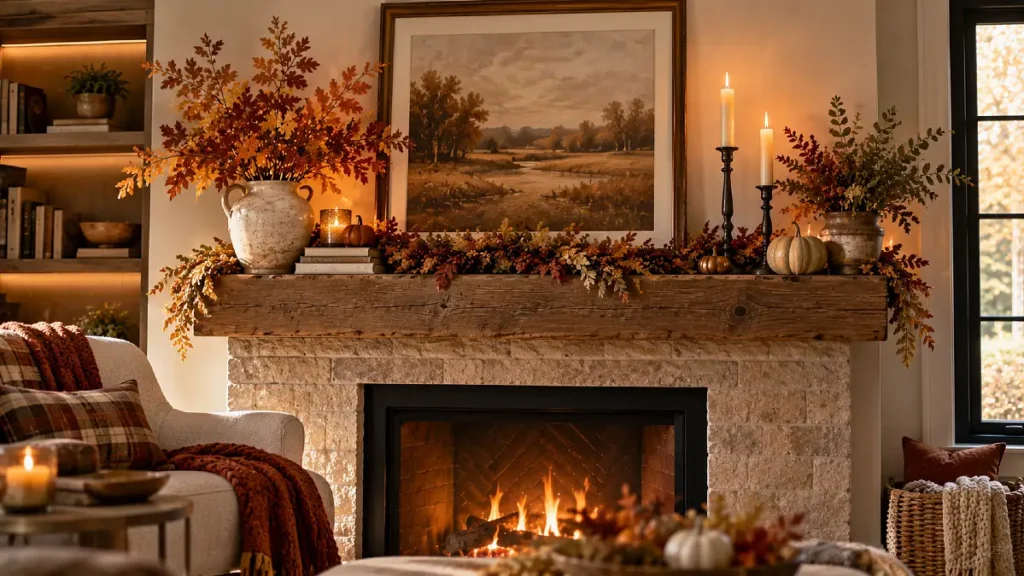
A repeatable formula keeps seasonal decorating from turning into decision fatigue.
Formula: large anchor + organic texture + two supporting accents + breathing room
Start with a mirror, framed artwork, or wreath. Add branches, dried stems, or a restrained garland. Finish with one or two supporting elements such as candleholders, pottery, books, or pumpkins.
Then stop and look from across the room before adding anything else.
Here are a few ways the same formula can shift with your home rather than forcing every mantel into one style.
| Mantel Mood | Anchor | Organic Layer | Supporting Pieces |
|---|---|---|---|
| Warm neutral | Wood-framed mirror | Dried branches | Cream pottery and brass candleholders |
| Modern autumn | Large abstract art | Olive branches | Dark candleholders and one muted pumpkin |
| Traditional | Framed landscape | Leafy branches | Brass candlesticks and stacked books |
| Cozy cottage | Vintage-style mirror | Dried grasses | Stoneware vase and small pumpkins |
| Minimal fall | Simple framed art | One sculptural branch | Two candles or one ceramic vessel |
The important part is not copying a particular combination. It is keeping the hierarchy.
One element leads. One adds texture. The smaller pieces support them.
That approach works with thrifted finds, hand-me-down decor, existing accessories, and pieces collected over time. You do not need a matching seasonal set for the mantel to feel pulled together.
Frequently Asked Questions
How many items should I put on a fall mantel?
There is no fixed number because the scale of the pieces matters more than the count. Three substantial objects can fill a mantel beautifully, while eight small ones may still feel scattered.
Start with fewer pieces than you think you need. Add only when a specific area looks visually unsupported.
How do I decorate a fall mantel without using pumpkins?
Use seasonal texture rather than seasonal symbols. Dried branches, amber glass, warm wood, brass candleholders, woven pieces, dried grasses, and earthy artwork can all create an autumn feeling without a pumpkin in sight.
This can work especially well if you prefer modern home decor or want decorations that can stay out beyond October.
Should fall mantel decor be symmetrical?
It can be, but it does not have to be. Symmetry tends to feel calmer and more traditional, while an asymmetrical arrangement often feels relaxed and collected.
Choose whichever fits the room, then balance the visual weight rather than trying to match every item.
How can I make cheap fall decor look more expensive?
Use fewer pieces and mix them with everyday materials already in your home. A simple pumpkin often looks more considered beside real wood, pottery, books, glass, or metal than it does surrounded by several similar seasonal decorations.
Good spacing also makes inexpensive pieces feel more intentional.
How can I decorate a fall mantel in a small space?
Keep the arrangement shallow and let height create interest. One tall focal point, a slim branch arrangement, and two or three smaller accents can give you the seasonal feeling without objects spilling into the room.
These same home styling tips also work when the fireplace shares space with a television or when the mantel itself is narrow.