

Your sofa looks clean, but it still feels flat. Luxury pillow covers can fix that faster than new furniture because they change the texture, color, and shape people notice first.
The same thing happens on a bed, accent chair, or entry bench. A thin pillow cover can make the space feel tired. A richer one can make it feel finished.
This guide shows how to choose $19 covers that look more costly, style them well, and avoid the mistakes that make budget pillows look cheap.
Why $19 Luxury Pillow Covers Can Change the Whole Room
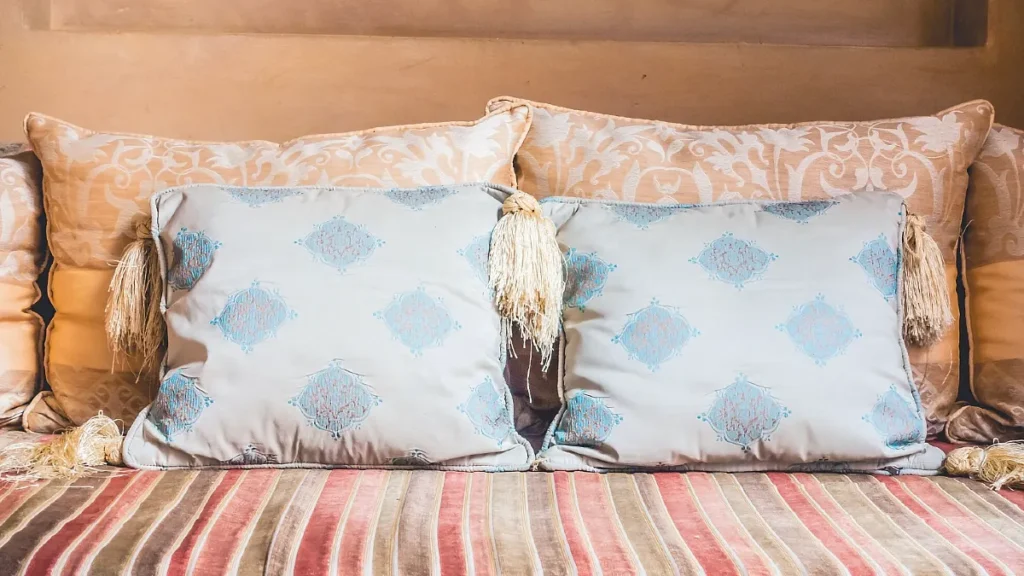
A plain sofa or bed can look fine and still feel unfinished. Nothing is wrong with the furniture. The room just needs a stronger visible layer.
That is why luxury pillow covers work so well. They sit right where the eye lands first. On a sofa, they frame the seating. On a bed, they soften the whole wall of bedding. On a bench, they make a bare spot feel styled.
A cover also costs less than a full pillow. If you already own inserts, you can swap the outside and keep the soft part. That makes the change easier, cheaper, and less wasteful.
The best part is speed. You do not need to move heavy pieces. You do not need to repaint. You can change the mood of the room in minutes.
Houzz reported that nearly 50 design and remodeling pros named warm palettes, tactile layering, and rich textures as major home design themes in 2025. That matters here because textured pillow covers give you that layered look without a large project.
Houzz also pointed to layered textures as a strong design direction. Materials like boucle, handmade details, and other tactile finishes now work like quiet neutrals in a room. Pillow covers are one of the easiest ways to bring that feeling home.
Rich looking decor does not mean every seat needs 6 pillows. It means the pillow covers look chosen. The fabric has weight. The colors connect. The inserts look full.
Once you see why texture matters, the fabric choice gets much easier.
The Fabric Rule That Makes Cheap Pillow Covers Look Expensive
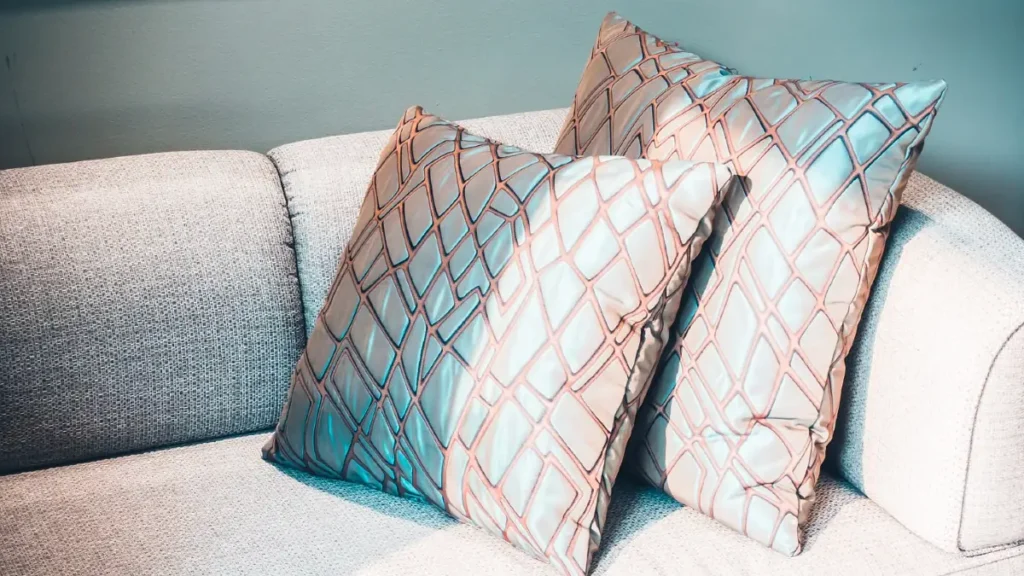
Touch the fabric before judging the color. A pretty shade can still look cheap if the material is thin, shiny, or limp.
The best budget covers have surface interest. Velvet pillow covers add soft shine and depth. Linen pillow covers bring a relaxed, airy look. Boucle feels cozy and rich. Chenille adds softness. Heavy cotton and woven covers feel casual but still polished.
HGTV says velvet, silk, and chenille can make a room feel more formal and refined. It also notes that cotton, linen, and twill work well in relaxed family spaces. That makes fabric a smart first filter when you shop.
Think about how the room is used. A lounge sofa can take boucle, velvet, or chenille. A family room may need cotton, linen blend, or washable woven covers. A bed can handle softer textures because the pillows do not get as much daily wear.
Small details matter too. Look for a hidden zipper. It should sit flat and not pucker. Check the seams. They should look straight and tight. Loose threads can make a cover feel low quality before it even touches the sofa.
Apartment Therapy shared advice from Danielle Walish, creative director of The Inside, that links texture, pattern, throw pillows, and throws with rooms that feel “layered and chic.”
That idea works well with budget pillow styling because texture does most of the visual work.
Plain covers can still look expensive. A solid olive velvet cover may look richer than a busy print in weak fabric. A cream boucle cover can do more for a chair than a loud pattern that fights the room.
Choose texture first. Then choose color.
Best Colors for $19 Pillow Covers That Look Rich
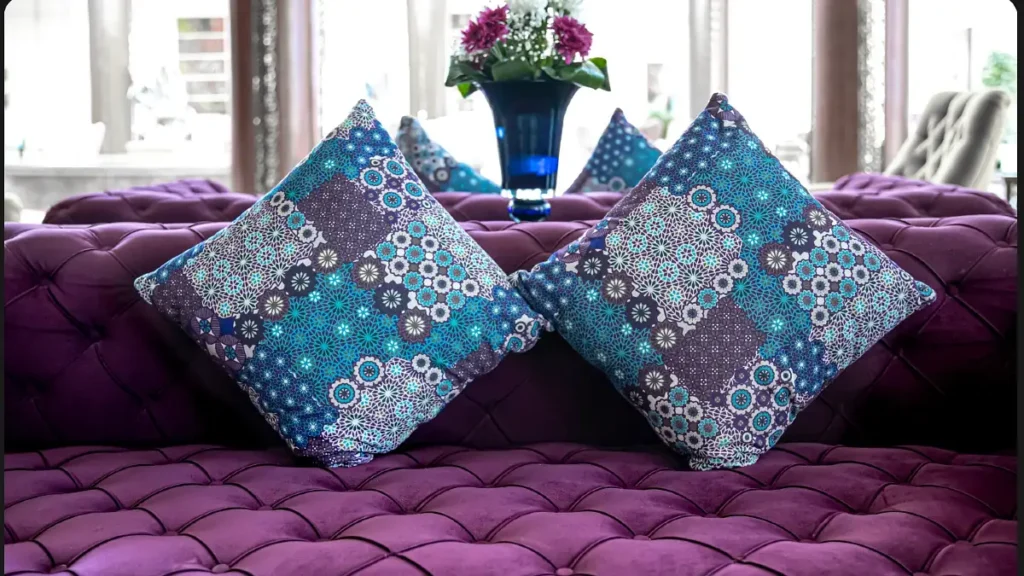
Buying a pretty pillow cover that matches nothing is one of the fastest ways to make a room feel random. Color needs a job.
Start by looking at what you already own. Pull one color from your rug, bedding, curtains, art, throw blanket, or nearby decor. Then repeat that shade through the pillow cover.
This is where designer pillow styling feels simple. The cover does not need to match everything. It needs to speak to something.
Rich pillow colors often have depth. Try deep olive, rust, camel, charcoal, ivory, navy, chocolate, burgundy, or muted gold. These shades feel grown up without shouting.
Houzz reported that designers are seeing a shift away from stark white and cool gray. Warm earthy tones like terra cotta, beige, taupe, ocher, dusty blue, sage, and olive green are gaining strength.
That trend fits pillow covers well. You can try warm color without repainting or buying new furniture. A pair of olive covers can soften a gray sofa. Camel covers can warm up white bedding. Burgundy can give a plain chair more weight.
Use jewel tones in small doses. One navy velvet lumbar pillow can feel rich. Five jewel tone pillows can feel heavy unless the room already supports bold color.
Warm neutral pillow covers are also powerful. Ivory, oat, camel, mushroom, and taupe add softness without clutter. They work well when the room already has wood, woven baskets, linen, or warm lighting.
The right color still needs the right size.
The Pillow Size Mistake That Makes a Room Look Cheap
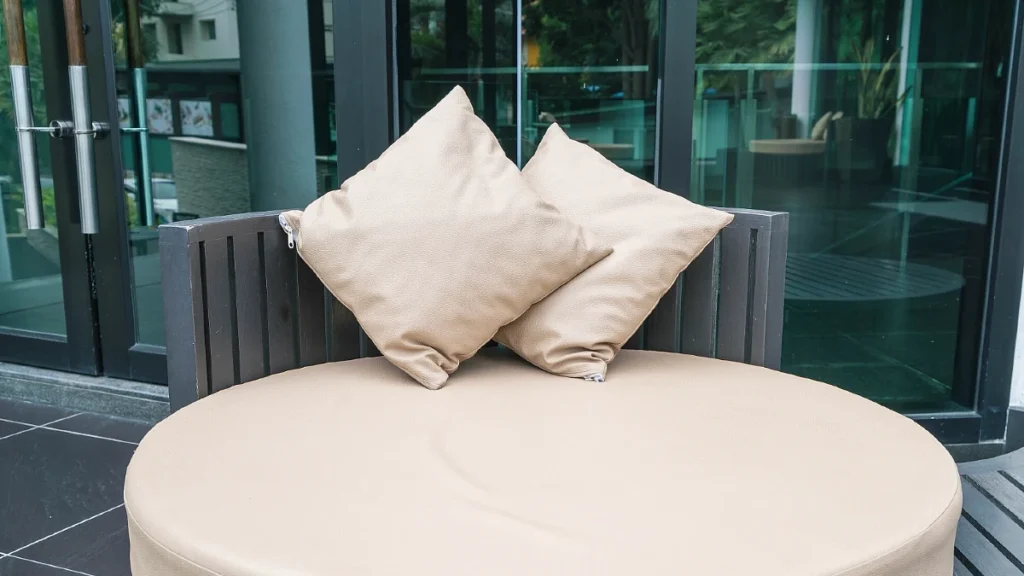
Small pillows can make big furniture look unfinished. They sit low, sink into corners, and make the sofa or bed feel less balanced.
A larger cover often looks more designer because it gives the eye a stronger shape. This does not mean every pillow needs to be huge. It means the base pillows should feel in scale with the furniture.
HGTV styling examples often use varied heights, textures, materials, and shapes to create finished pillow combinations. The mix is what keeps the look from feeling flat.
The insert matters as much as the cover. Use an oversized insert when you want a fuller look. For many covers, that means placing a 22 inch insert inside a 20 inch cover. It fills the corners and keeps the pillow from sagging.
Do not overfill every cover. Some linen and woven covers look better with a relaxed shape. Velvet and boucle often look better with more fullness.
Use fewer pillows with better texture. A sofa with 3 strong covers can look more polished than a sofa with 8 small, flat pillows.
| Furniture piece | Best cover size | Best insert size | Best number of pillows | Rich looking styling tip |
|---|---|---|---|---|
| Standard sofa | 20 inch to 22 inch | 22 inch to 24 inch | 3 to 5 | Anchor each end with larger covers |
| Sectional | 22 inch to 24 inch | 24 inch to 26 inch | 5 to 7 | Use one color story across both sides |
| Accent chair | 18 inch to 20 inch | 20 inch to 22 inch | 1 | Pick one strong texture |
| Queen bed | 22 inch to 24 inch | 24 inch to 26 inch | 3 to 5 | Add one long lumbar in front |
| King bed | 24 inch to 26 inch | 26 inch to 28 inch | 5 to 7 | Use larger back pillows for scale |
| Entry bench | 18 inch to 20 inch | 20 inch to 22 inch | 1 to 2 | Choose washable fabric and firm inserts |
This pillow cover size guide keeps the look planned. Now that the size is right, placement finishes the look.
How to Style Pillow Covers on Sofas, Beds, Chairs, and Benches
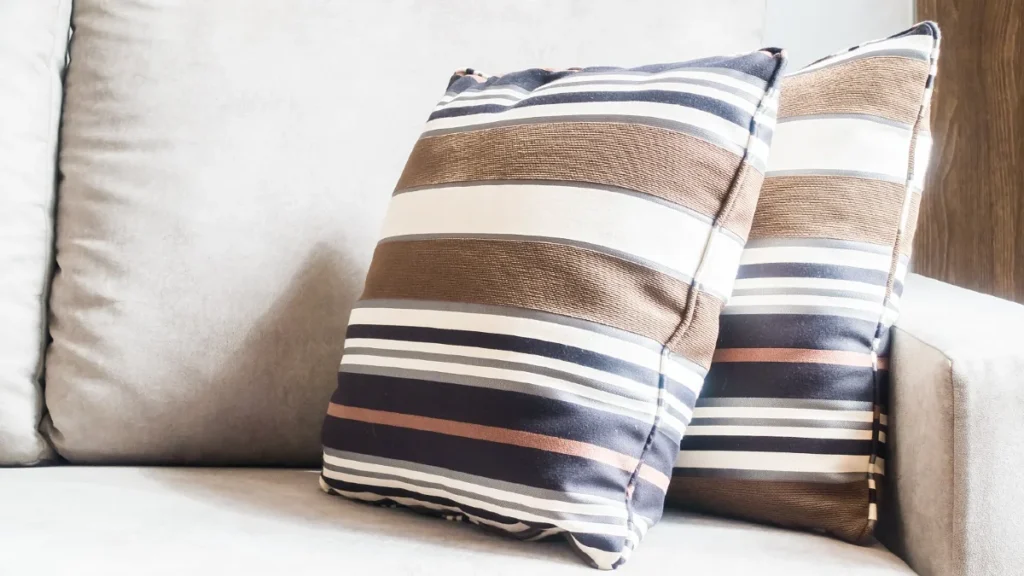
Use fewer pillows when the texture is strong. A rich cover needs room to breathe.
On a sofa, start with the corners. Place one larger cover on each end. Then add one smaller square or one lumbar in front. This gives the sofa shape without making every seat hard to use.
For a standard sofa, 3 pillows often feel clean. For a deeper sofa, 5 can work. A sectional can take more, but the covers need a shared color story.
Try this simple sofa formula. Use 2 large solid textured covers, 2 medium patterned covers, and 1 lumbar pillow. Keep at least one color repeated across the set.
For a bed, think in layers from back to front. Use larger pillows at the back, then smaller decorative covers, then one long lumbar in front. This works well because the eye reads the bed as one soft stack.
Good bed pillow styling does not need a pile of pillows. For a queen bed, 3 decorative covers can be enough. For a king bed, 5 may feel more balanced.
On an accent chair, use one pillow with real presence. A boucle cover, velvet lumbar, or block print can make the chair feel styled without stealing the seat.
On an entry bench, think about function first. Choose washable fabric, firm inserts, and colors that hide light marks. A linen blend or woven cotton cover usually works better than delicate velvet here.
HGTV notes that choosing colors already found in the space helps pillows feel connected instead of random. That is the key to learning how to style pillow covers without guessing.
Good placement makes budget covers look chosen, not random. Before you buy, check the details that make a $19 cover worth it.
What to Buy and What to Skip at the $19 Price Point

Price alone does not decide whether a pillow cover looks rich. Some $19 pillow covers look better than covers that cost more.
The trick is knowing what details matter. Fabric comes first. Then closure, seam quality, color, pattern scale, and insert fit.
IKEA’s SANELA cushion cover was listed at $14.99 for a 26 inch cotton velvet cover in the United States. A 20 inch SANELA version was listed below $10 in some colors during a recent IKEA sale. That makes cotton velvet one real option below the $19 target.
H&M Home has also sold velvet cushion covers near the $19.99 mark. That slightly passes the exact target, but it still supports the budget decor point. You can often find rich texture without moving into high end pricing.
Target’s Threshold line often sells finished decorative pillows around $35. That price can be useful as a comparison. If you already own inserts, budget pillow covers can give you more flexibility for less.
Look for solid velvet, linen blends, boucle texture, piping, flange edges, woven cotton, or simple block prints. These details give the cover structure.
Skip thin polyester shine. It can look flat under daylight. Also skip weak seams, rough zippers, and patterns that fight every other textile in the room.
Buy pairs for balance. Then add one statement cover if the setup needs energy. A pair of camel velvet covers plus one patterned lumbar can look richer than 5 unrelated pillows.
| Feature to check | Rich looking choice | What to skip | Why it matters |
|---|---|---|---|
| Fabric | Velvet, linen blend, boucle, woven cotton | Thin shiny fabric | Texture creates depth |
| Closure | Hidden zipper | Exposed rough zipper | Clean edges look finished |
| Seam quality | Tight straight seams | Loose threads | Weak seams make covers look cheap |
| Color | Warm neutral or deep tone | Random bright shade | Color needs to connect |
| Pattern scale | Simple stripe, block print, soft floral | Tiny busy print | Clear patterns feel calmer |
| Insert fit | Insert 2 inches larger | Flat insert | Full corners look richer |
Even a good cover can look wrong when it is styled badly.
Common Pillow Cover Mistakes That Ruin the Rich Look

Too many pillows with no plan can ruin the look fast. The sofa may have color, but it does not have style.
The first mistake is buying all matching pillows. Matching sets can feel easy, but they often look flat. Mix texture instead. Pair velvet with linen. Pair boucle with smooth cotton. Keep the colors connected.
The second mistake is going too small. Tiny pillows can make a full sofa or king bed look awkward. Start larger, then layer smaller pieces in front.
The third mistake is choosing a color that repeats nowhere else. A rust pillow looks better when the room has warm wood, a terracotta pot, or art with the same tone. Repetition makes the cover feel planned.
The fourth mistake is using flat inserts. A sagging pillow can make even good fabric look tired. Size up the insert when the cover needs shape.
The fifth mistake is overloading every seat. A chair still needs space to sit. A bench still needs room for daily use. The best expensive looking throw pillows support the room. They do not take it over.
HGTV stresses contrast, existing color, and texture as key parts of pillow styling. Apartment Therapy also connects texture and pattern with rooms that feel finished on a budget. Both ideas point to the same rule: edit before adding more.
With those mistakes out of the way, the upgrade becomes simple. Pick better fabric, choose the right size, repeat your colors, and let the pillow covers do the work.
Conclusion
The fastest rich looking upgrade is usually not new furniture. It is better texture, better scale, and better color.
Start with one visible spot. Try the sofa, bed, accent chair, or entry bench. Choose velvet, linen, boucle, chenille, heavy cotton, or woven texture.
Then size up the insert so the cover looks full. Repeat one color already in the room. Edit the rest.
This works because luxury pillow covers change the layer people notice first. Pick one $19 cover, test it in real light, and build from there.