You stare at your living room and something still feels wrong. You bought expensive furniture and carefully painted the walls, but the space looks chaotic instead of cohesive.
The 60/30/10 color rule eliminates this confusion completely. You will learn the exact mathematical formula professional designers use to balance any room perfectly.
You will finally understand how to mix paint, fabrics, and small decor without the stress. This exact blueprint transforms your space from flat to magazine ready.
What Is the 60/30/10 Color Rule for Perfect Balance?

Do you ever wonder why some spaces feel instantly calming while others give you a headache? The secret relies heavily on math rather than pure creativity.
Professional decorators rely on interior design color ratios to guide the eye. The human brain craves order and visual predictability when entering a new space.
This formula divides your room into three distinct percentages. Your dominant background claims 60 percent of the visual space. Your secondary layer takes up 30 percent.
The final 10 percent serves as your bold accent pop. This specific breakdown prevents colors from competing for your attention.
This concept roots itself deeply in the psychological principle of the Golden Ratio. An architectural study published in 2021 proved that uneven color distribution actually reduces visual fatigue.
When you split colors equally, the brain works too hard to decide what to look at first. Giving one color the majority share creates an immediate sense of calm.
When you enter a room with three competing colors, your eyes dart around nervously. The 60 percent base stops this chaotic scanning process immediately.
Staring at a wall of paint chips causes massive decision fatigue. This formula narrows your choices down to a single category of soft background tones.
You skip the bright shades and focus only on building a solid foundation. Next, you need to know exactly where to apply your biggest color block.
How to Choose Your 60 Percent Dominant Color
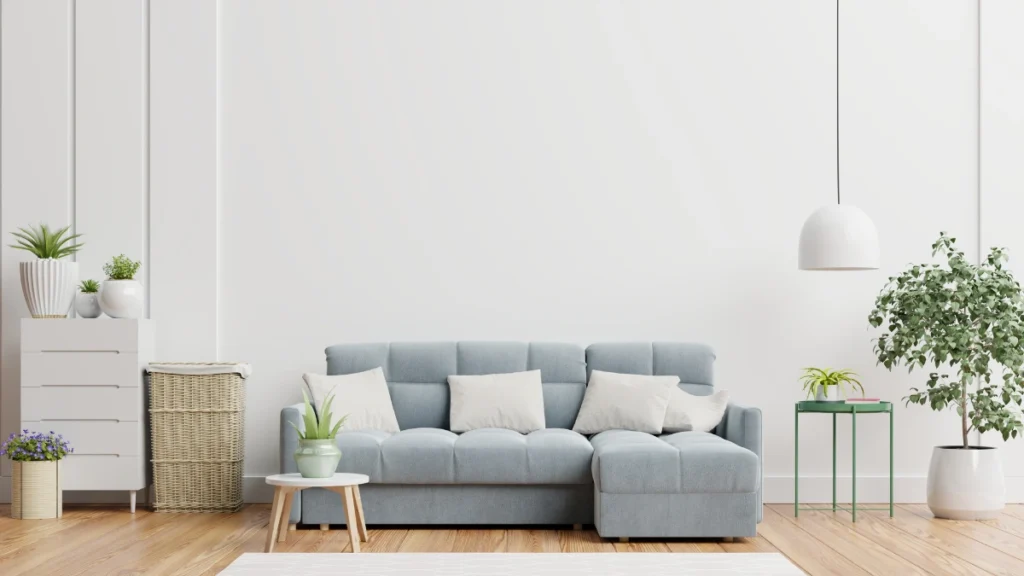
Your 60 percent color dictates every other design choice you will make. This massive block of color forms the literal canvas for your entire living room.
You must apply this dominant shade to your largest surface areas. Your walls, ceiling, and large area rugs fall into this category.
Do not use bright or aggressive colors for this foundational layer. A bright red wall might seem fun, but it quickly overwhelms the senses and breaks the formula.
Stick exclusively to neutral or highly muted tones for your dominant background. Crisp whites, warm creams, soft grays, and pale taupes work perfectly here.
These quiet shades reflect light and make your living room feel much larger. They also protect your home value if you ever decide to sell.
The 2024 Zillow Paint Color Analysis proved this point with hard data. Their research showed that homes with neutral walls sell faster and for more money.
You can still have personality in a room with boring walls. The neutral background actually allows your furniture and art to stand out properly.
For a foolproof dominant color, try a proven paint like Benjamin Moore White Dove. At $70 per gallon, it provides a warm and creamy base that never feels stark.
Here are the best places to apply your 60 percent color:
- All four living room walls
- The ceiling and crown molding
- A large area rug covering most of the floor
- Built in bookcases or large architectural features
A rug that sits too small in the center of the room ruins the proportions. This is why knowing how to choose the right size area rug remains critical.
Your rug must tuck firmly under your front furniture legs to anchor the space. When your base layer stays quiet, your next color choice gets to do the heavy lifting.
Picking the 30 Percent Secondary Color for Depth
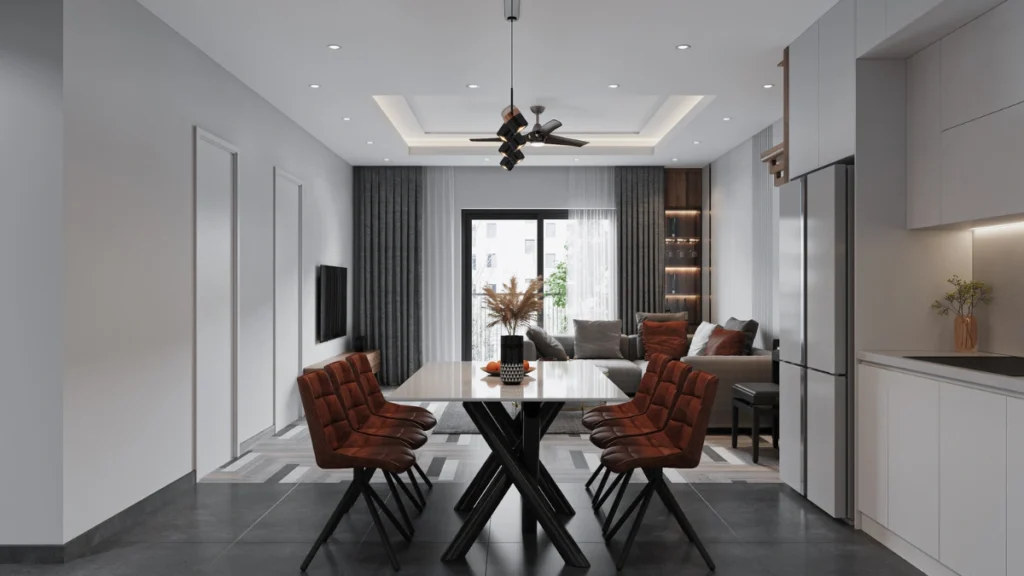
Your secondary color introduces true visual interest to the living room. This 30 percent slice supports your neutral base while adding crucial depth.
You will apply this color to the large furniture pieces in your space. Think about your main sofa, large accent chairs, and heavy window treatments.
This shade must contrast noticeably with your dominant wall color. If your walls are cream, a dark green or navy sofa provides the perfect visual tension.
Creating living room color palettes requires this distinct separation of tones. A room where the sofa matches the walls exactly will look completely flat.
Large furniture pieces carry massive visual weight in any space. An Architectural Digest report noted that a standard sofa dominates the visual field in a 200 square foot room.
Because furniture draws the eye so quickly, your 30 percent color defines the room style. A leather sofa creates a rustic vibe, while a blue velvet sofa feels glamorous.
A popular choice for this layer is the Article Sven Sofa. Priced around $1,899, its rich fabric options perfectly anchor the middle tier of your palette.
Shea McGee from Studio McGee constantly emphasizes this exact balance in her designs. She notes that grounding a neutral room with a solid secondary color prevents the space from feeling cold.
The texture of your secondary pieces matters just as much as the actual color. A flat cotton sofa feels entirely different than a rich velvet piece in the exact same shade.
Always remember to count your window treatments in this 30 percent category. Hanging heavy drapes in your secondary color pulls the shade vertically through the room.
| Element Type | Percentage | Common Examples |
| Dominant Background | 60 Percent | Walls, ceiling, large area rugs |
| Secondary Layer | 30 Percent | Sofas, accent chairs, curtains |
| Accent Pop | 10 Percent | Pillows, lamps, art, vases |
With your base and secondary colors established, the room is almost complete. You just need to add the final layer of personality to finish the look.
The 10 Percent Accent Color: Your Secret Weapon
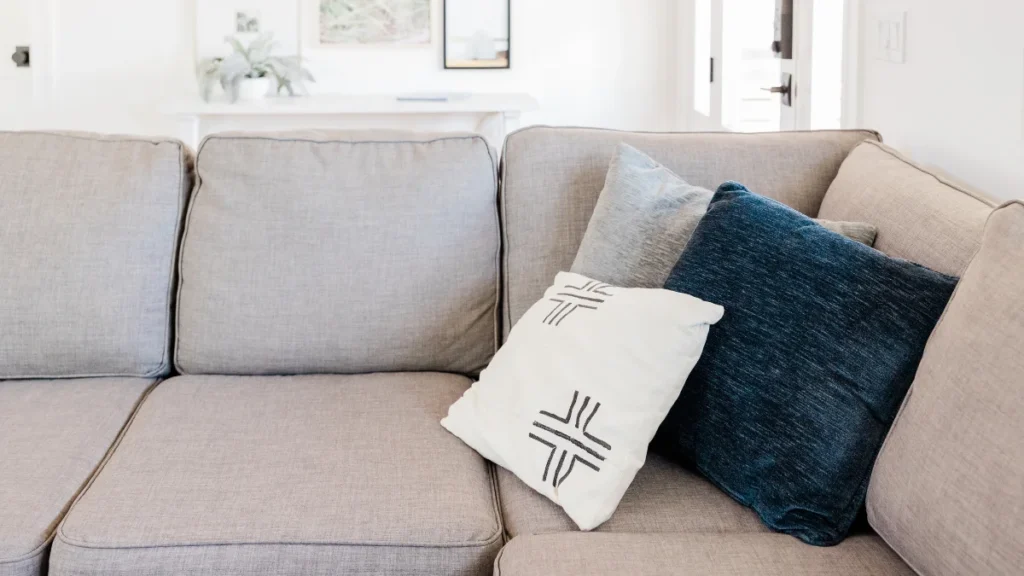
This final layer gives you complete permission to break free from boring choices. Your 10 percent accent color injects pure energy into the living room.
You will apply this bold shade to your smallest, most easily replaced items. Throw pillows, lampshades, artwork, and small decorative vases fall perfectly into this category.
Designer Emily Henderson frequently praises the importance of small colorful accents. She insists that a room without a tiny pop of unexpected color feels entirely lifeless.
Because these items take up so little physical space, you can go incredibly bold. Hot pink, bright mustard yellow, or emerald green all work brilliantly in small doses.
You never have to commit to an accent color permanently. When your tastes change, you can completely alter the vibe of the room in one afternoon.
A recent Houzz survey revealed how incredibly affordable these quick updates actually are. The data showed that swapping out living room accents costs under $100 but refreshes the entire space.
For example, you can buy two West Elm velvet throw pillows for $45–$90 total. Tossing those onto your secondary colored sofa instantly changes the visual dynamic.
Small colorful details bring incredible joy to an otherwise serious adult space. You can display vibrant travel souvenirs or unique thrift store finds.
Many people swap their 10 percent accents out seasonally to keep their homes feeling fresh. You might use rust orange pillows in the fall and swap to light blue in the spring.
Just be careful not to let your accent items take over the room. The power of these small swaps relies entirely on their limited quantity.
The Biggest Mistakes People Make with This Rule

Decorating a room feels highly overwhelming when you try to do it all at once. Even with a mathematical formula, it remains very easy to make critical errors.
The National Association of Home Builders published a report detailing common DIY design regrets. Their findings showed that people consistently struggle with balancing visual proportions.
To keep your space looking professional, avoid these three specific traps.
Splitting Colors Equally
The most common mistake involves ignoring the percentages and using three colors equally. When your walls, sofa, and rug all carry the same visual weight, the room feels totally chaotic.
Your eyes cannot figure out how to combine colors in a room when everything screams for attention. You must maintain the strict visual hierarchy for the formula to actually work.
Forgetting Wood Tones Count as Colors
People often buy a blue sofa, paint the walls gray, and add yellow pillows. Then they fill the room with dark mahogany side tables and wonder why the space feels heavy.
Wood tones absolutely count as part of your color palette. If you have dark hardwood floors, they heavily impact your 60 percent dominant background layer.
Ignoring Natural Light
Ignoring natural light ruins even the most perfectly calculated color scheme. A dark green secondary color looks completely different in a bright room versus a dark basement.
If your room lacks natural light, you cannot use heavy, muddy colors. You will need to rely on the best warm white paints for dark rooms to fake a sunny glow.
Your 10 percent category must consist of one single bold color. Using five different bright colors for your pillows and art destroys the careful balance you built.
Fixing just one of these common mistakes today will drastically improve your living room. Once you master these basics, you can start bending the guidelines.
Breaking the 60/30/10 Color Rule Like a Pro
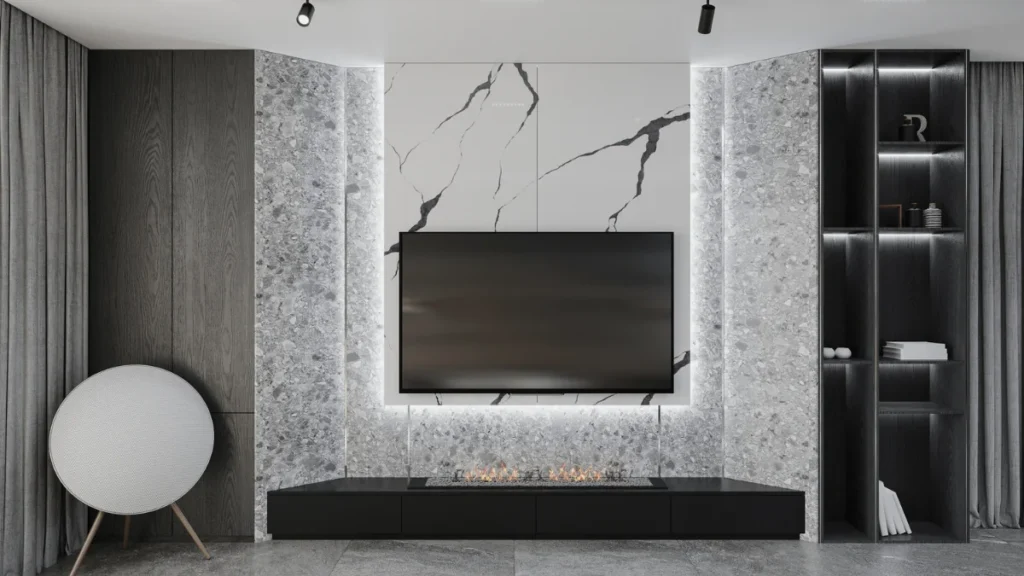
You have total permission to bend these guidelines once you understand the basic math. Professional designers routinely tweak the percentages to create slightly more complex spaces.
Many top decorators use a modified 110 percent formula in their expensive projects. They keep the standard ratios but add an extra 10 percent for a dark grounding element.
This extra layer usually comes in the form of matte black hardware or brass light fixtures. These tiny additions give the eye something solid to grab onto without ruining the primary palette.
Current Pinterest Trends data shows a massive spike in searches for black accent hardware. People love how a black curtain rod or lamp base instantly grounds a soft space.
Search volume also spikes for moody living room designs every autumn. You can achieve this look by making your 60 percent color dark, like a rich charcoal or navy.
If you flip the script and use a dark background, keep your secondary pieces very light. This contrast prevents the room from feeling like a claustrophobic cave.
Another popular trend involves using varying shades of green as a secondary choice. Pin volume for green velvet sofas continues to dominate interior design boards online.
| Vibe | Dominant (60) | Secondary (30) | Accent (10) |
| Coastal Calm | Soft White | Sea Glass Blue | Sandy Beige |
| Moody Modern | Charcoal Gray | Forest Green | Brass |
| Warm Desert | Terracotta | Cream | Matte Black |
Once you feel confident, you can introduce subtle patterns into your secondary layers. A subtle stripe on an accent chair easily counts toward your 30 percent color block.
Experimenting with these variations feels much less risky once your foundation is solid. You now have the exact knowledge required to build a beautiful room from scratch.
Conclusion
Creating a beautiful living room does not require a degree in interior design. You simply need to follow the math and trust the percentages.
Remember to keep your dominant 60 percent background quiet and completely neutral. Choose a substantial 30 percent secondary color for your main furniture pieces to add rich depth.
Finally, use your 10 percent accent budget to inject bold, easily swappable personality. This proven framework completely eliminates the stress of matching expensive furniture and paint.
Look at your living room right now and identify which layer is causing the chaos. Go buy a few sample paint pots and pick your 60 percent background color today.