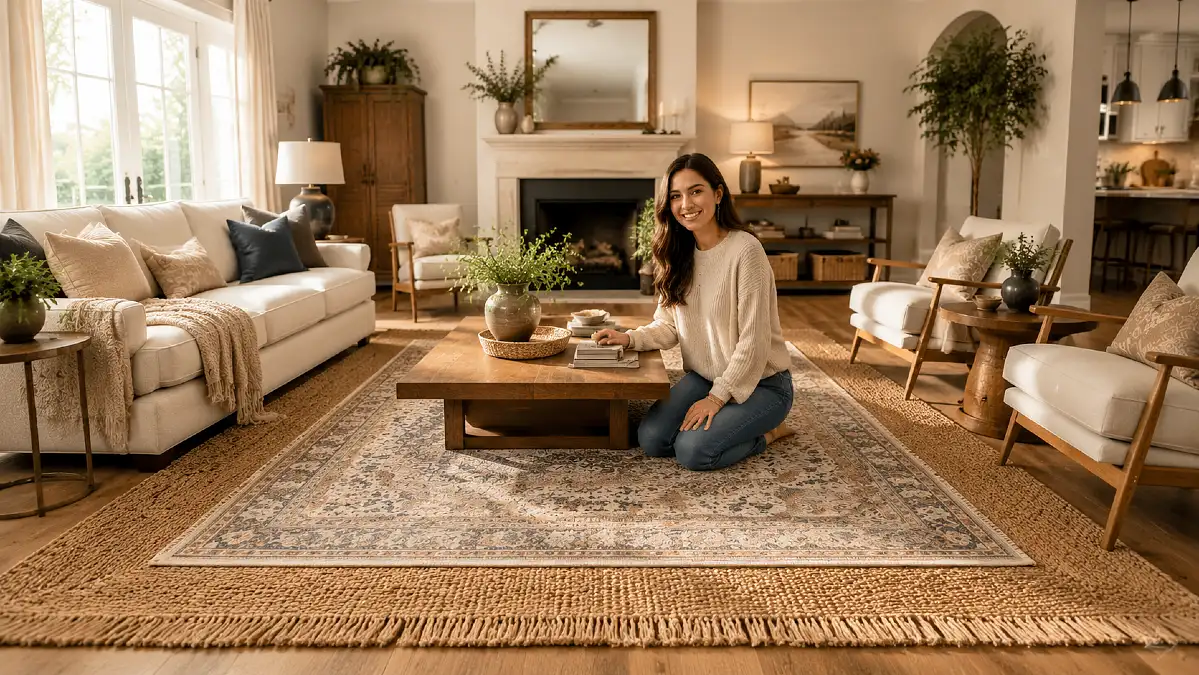
A room can feel unfinished when the rug looks too small or flat. The cheap rug layering trick uses a large neutral base rug under a smaller decorative rug to make floors look fuller, warmer, and more expensive. It fixes scale first, then adds color, softness, and texture.
This is why designers use layered rugs on a budget so often. You get the look of a custom floor plan without paying for one oversized statement rug. Here is how to layer rugs so the whole floor looks planned.
What Is the Cheap Rug Layering Trick Designers Use?
What is the cheap rug layering trick designers use?
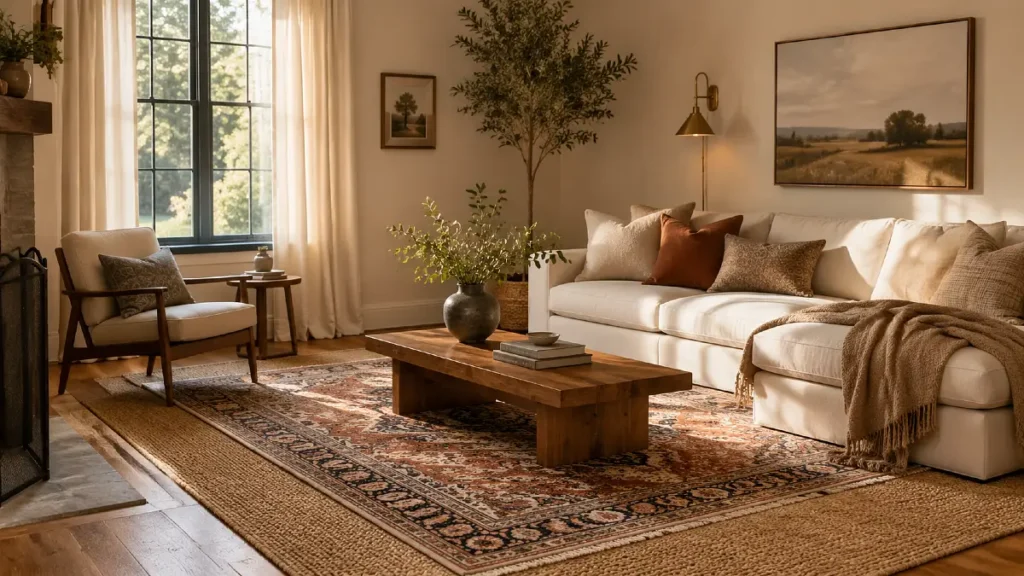
The cheap rug layering trick is placing a large neutral rug, often jute, sisal, seagrass, or flatwoven, under a smaller decorative rug. The base rug gives the floor scale, while the top rug adds pattern, softness, and character. This creates a custom designer look for less.
Think of it as building the floor in two simple layers. The first rug acts like a quiet frame. The second rug acts like the art inside that frame.
This works because many rooms look wrong when the rug is too small. A small rug can make a sofa, bed, or reading chair feel like it is floating. A larger base rug fixes that problem fast.
Better Homes and Gardens says rug layering can define spaces and add depth, texture, and visual interest. That is the real reason the designer rug trick works. It changes the floor from plain to styled.
It can also save money. A large vintage wool rug can cost far more than many people want to spend. But a large jute rug with a smaller vintage style top rug gives a similar layered look.
Kate Lester, creative director and CEO of Kate Lester Interiors, told Jaipur Living to “go as big as you can” with the colorful rug when possible. When that larger patterned rug costs too much, layering gives you another path.
This trick works best on hard flooring, such as wood, tile, laminate, or vinyl. It can also work over low pile carpet if both rugs stay flat.
The trick starts with the rug you barely notice first.
How to Choose the Right Base Rug Without Overspending
What is the best base rug for layering on a budget?
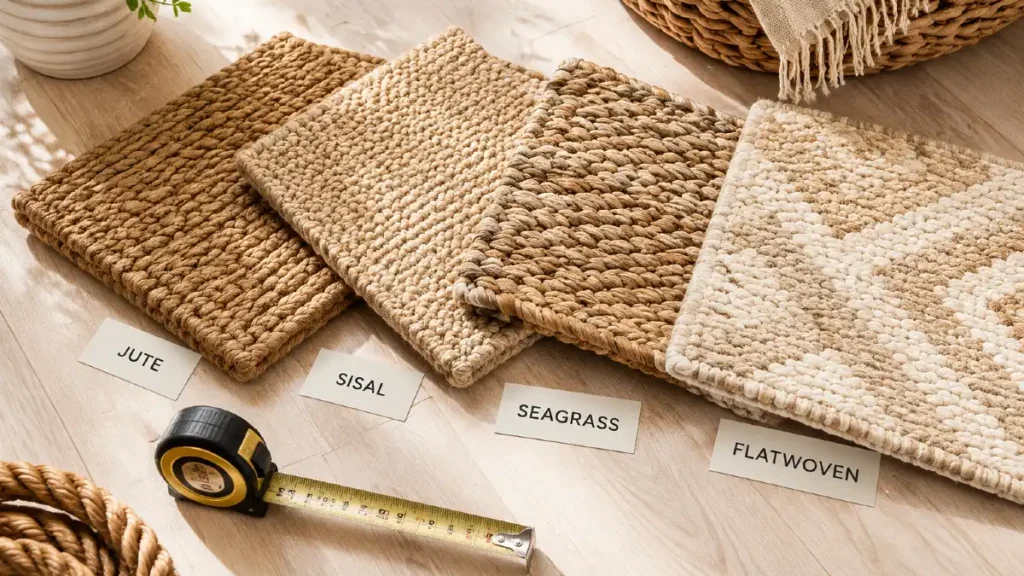
The best base rug for layering is large, neutral, flat, and textured. Jute, sisal, seagrass, hemp, and flatwoven synthetic rugs work well because they add warmth without stealing attention. A calm base rug lets the smaller top rug carry the color, pattern, and focal point.
Start with size before color. The base rug for layering should be large enough to sit under the front furniture legs. This makes the full area rug setup feel grounded.
A natural fiber rug is popular because it gives texture without looking busy. Jute feels warm and relaxed. Sisal looks tighter and more tailored. Seagrass has a firmer weave and a clean border look.
Homes and Gardens named texture, vintage rugs, flatweaves, and layering rugs on rugs among its 2026 rug trends. That supports what designers have used for years. Texture makes a plain floor feel richer.
IKEA LOHALS is a useful example of an affordable jute rug. IKEA lists the 6 feet 7 inch by 9 feet 10 inch LOHALS flatwoven jute rug at $159.99. It is simple, neutral, and easy to vacuum.
Rugs USA also lists the Perfect Handwoven Jute Blend Rug in 5×8 at $54.99 at the time of checking. That makes it a strong budget base if you want the layered neutral rugs look.
Avoid shag as the bottom layer. It can make the top rug ripple. A thick base can also catch feet near the edge.
Choose a base rug that looks calm from across the room. Once the base is quiet, the top rug can do the interesting work.
How to Pick the Top Rug So the Floor Looks High End

The top rug is where the room gets personality. It can be vintage, patterned, soft, washable, colorful, or slightly worn in. This is the piece people notice first.
A vintage rug over jute is the classic formula. The jute rug creates the wide, calm border. The vintage style rug brings age, color, and movement.
You can use a real vintage Turkish rug, a Persian style printed rug, a low pile wool rug, or a washable layered rug. The best choice depends on how much traffic the room gets.
Good Housekeeping says its Textiles Lab tests washable rugs for washability, durability, softness, design, and ease of cleaning. That matters if you have pets, kids, or coffee near the rug.
Ruggable is one example because its 5×7 rugs are machine washable and made for everyday messes. Ruggable says its 5×7 size works under coffee tables, at the foot of a bed, or in a home office.
Keep one shared color between the top rug and the rest of the room. If your pillows have blue, a rug with a small blue detail can make the space feel connected.
Do not pair two rugs that look almost the same. If both are beige and flat, the room can look dull. You need contrast in material, pattern, or color.
Nate Berkus told ELLE Decor that he likes rugs to be the “foundation of the space.” That is a smart way to think about the top rug too. It should support the room, not fight it.
After style comes the part that makes or breaks the look: size.
What Rug Sizes and Proportions Make Layering Look Intentional?
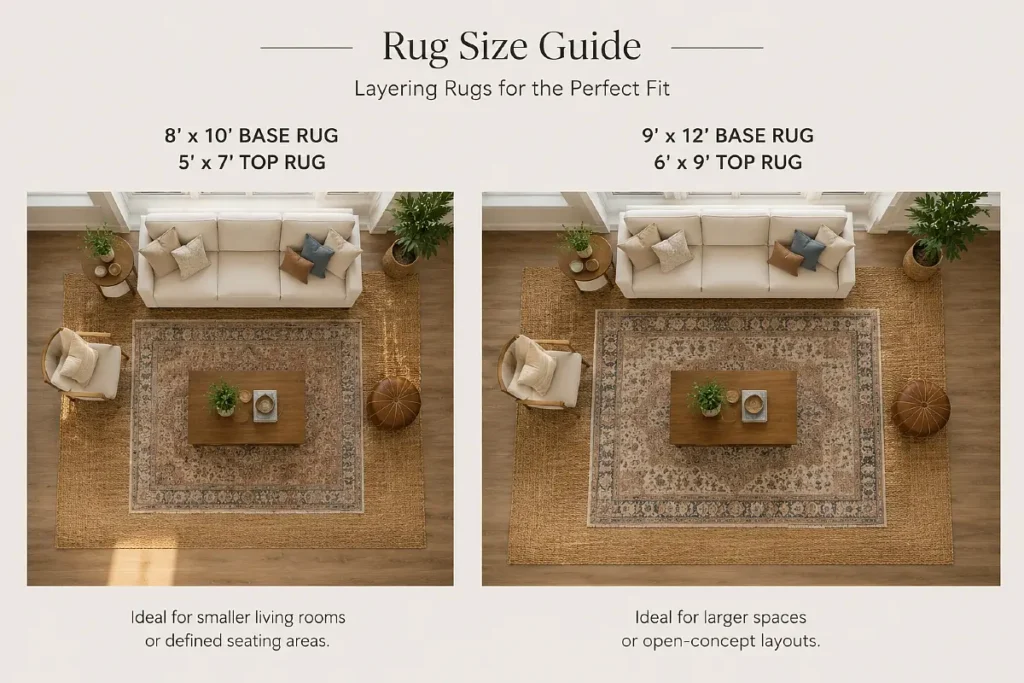
What size rugs should you use for layering?
The easiest rug layering proportions are one large base rug with a top rug one or two sizes smaller. A common pairing is an 8×10 base rug with a 5×7 top rug, or a 9×12 base rug with a 6×9 top rug. Leave the base rug visible around every side.
The base rug fixes the room scale. The top rug adds the style. If the top rug covers almost the whole base, the layering will look accidental.
A visible border is what makes the floor look designed. Aim for about 6 to 18 inches of base rug showing, depending on the room size.
In a seating area, place the base rug under the front legs of the sofa and chairs. Better Homes and Gardens shares designer advice that a base rug should fit under most furniture, or at least the front legs.
For a bedroom, the base rug should extend beyond the bed enough to soften the first step out of bed. The top rug can sit closer to the foot of the bed or under a bench.
You can center the top rug for a neat look. You can also angle it slightly for a collected look. Just keep the base rug straight so the room still feels grounded.
This table shows the standard rug layering size pairings that work best for common floor areas.
| Floor area | Base rug size | Top rug size | Best use | Designer note |
|---|---|---|---|---|
| Small seating area | 6×9 | 4×6 | Reading corner or compact room | Keep the top rug centered |
| Standard living area | 8×10 | 5×7 | Sofa and chairs | Let the base show on all sides |
| Large living area | 9×12 | 6×9 | Bigger seating layout | Use the base as the visual anchor |
| Bedroom floor | 8×10 | 5×7 | Queen bed area | Place the top rug near the lower half |
| Oversized room | 10×12 | 5×8 | Open space or studio | Use texture to define the zone |
A beautiful rug pairing still has to stay flat under real feet.
How to Keep Layered Rugs Flat, Safe, and Easy to Clean
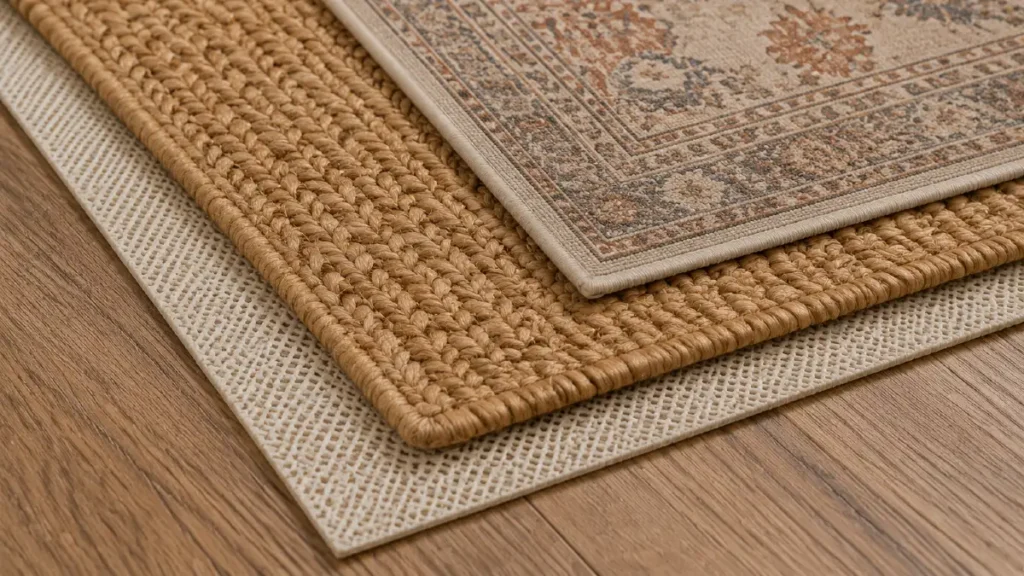
How do you keep layered rugs from slipping or bunching?
Keep layered rugs flat by placing a non slip rug pad under the base rug and using corner grips or rug tape between the two rug layers. Choose low pile rugs, keep edges away from walkways, and avoid layering rugs on stairs or tight traffic paths.
This part matters as much as style. A layered rug setup should feel secure every time you cross the room.
The CDC STEADI Check for Safety guide tells people to remove throw rugs or use double sided tape or a non slip backing so rugs do not slip. That advice fits layered rug safety too.
The CDC also published data showing that an estimated 37,991 adults age 65 or older were treated each year in U.S. emergency departments for falls linked to carpets and rugs. Most of those falls happened at home.
That does not mean you should avoid rugs. It means you should secure them well.
Use a rug pad for layered rugs under the base first. Then check the top layer. If the corners lift, use rug tape or corner grips between the layers.
Keep the top rug away from door swings. A door that rubs the edge will curl it over time. That curled edge makes the whole floor look messy.
Low pile rugs are easier to vacuum. They also sit flatter under coffee tables, beds, and chairs. Thick rugs can bunch where furniture legs press down.
Use this short safety check before you finish:
- Step on each corner.
- Walk across the rug from every direction.
- Check that no edge flips up.
- Open nearby doors fully.
- Vacuum once to test movement.
Secure rugs look cleaner and feel more finished.
Budget Rug Pairings That Look Designer Without Custom Prices
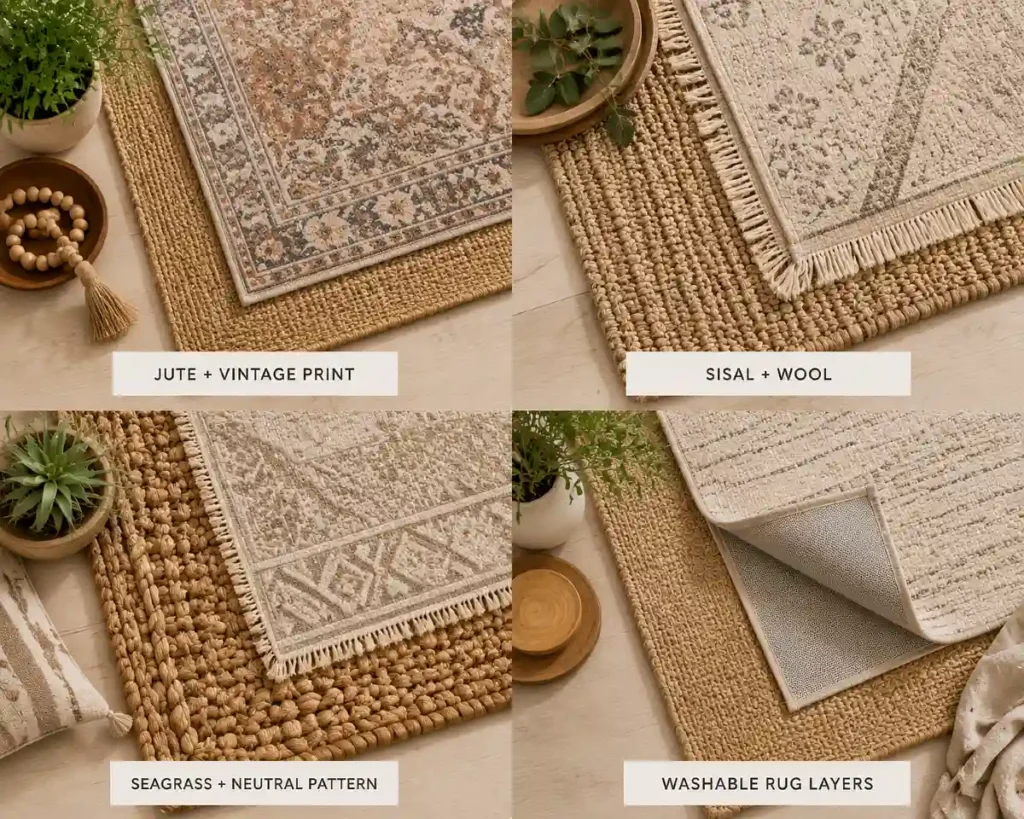
You do not need a custom rug budget to get a high end floor look. You need the right contrast between base rug and top rug.
The safest pairing is jute plus vintage style print. It works in living rooms, bedrooms, home offices, and small apartments. The jute gives warmth, while the printed rug brings the mood.
Sisal plus wool feels more polished. Try it when you want a clean room that still has texture. Sisal gives structure, and wool adds softness underfoot.
Seagrass with a bordered top rug can look crisp and classic. This works well when the furniture is simple and you want the floor to feel finished.
For busy homes, try a washable base look rug with a washable top rug. This makes sense near pets, kids, snacks, or daily foot traffic.
Loloi Layla is a useful top rug example. Home Depot lists the Loloi Layla 7 feet 6 inches by 9 feet 6 inches Distressed Oriental Printed Area Rug at $165 at the time of checking.
Nate Berkus x Rugs USA is another strong entity to know. ELLE Decor reported that the collection was designed for accessible prices and a layered look, with rugs that feel easy to design around.
This table shows practical rug material pairings that create a high end look without custom pricing.
| Base rug material | Top rug material | Look created | Best floor type | Avoid if |
| Jute | Vintage style print | Warm and collected | Wood or laminate | You dislike texture underfoot |
| Sisal | Wool | Clean and polished | Hardwood or tile | You want a soft base |
| Seagrass | Bordered low pile rug | Crisp and classic | Hard flooring | The room needs plush softness |
| Flatwoven synthetic | Washable patterned rug | Easy care and casual | Vinyl or low pile carpet | The top rug is too thick |
| Hemp blend | Muted Persian style rug | Earthy and relaxed | Wood or concrete | The room already feels dark |
Even good rugs can look wrong when the pairing breaks a few basic rules.
What Rug Layering Mistakes Make a Floor Look Cheap?
The fastest way to ruin rug layering is using rugs that are too small, too thick, or too similar. The floor should look calm and planned. It should not look like spare rugs were dropped in the room.
The first mistake is skipping scale. If the base rug is not large enough, it cannot anchor the furniture. The whole room still looks unfinished.
The second mistake is using two thick rugs together. This can make the top rug puff, slide, or curl at the edges. It also makes furniture sit unevenly.
The third mistake is picking patterns that fight. A busy stripe over a busy floral can work in bold rooms, but it takes skill. Most rooms look better with one quiet rug and one stronger rug.
Better Homes and Gardens shares designer advice to avoid clashing colors, conflicting patterns, and rugs that are too similar in material. That is the balance point.
The fourth mistake is layering rugs in tight walking paths. Do not put layered rugs on stairs. Do not use them where feet turn quickly around furniture.
The fifth mistake is skipping the rug pad. A rug pad protects the floor, helps the base stay flat, and makes the full setup feel more secure.
Once you avoid those mistakes, the trick becomes simple. Go large and calm on the bottom, smaller and more interesting on top.
Frequently Asked Questions
What is the cheap rug layering trick for making floors look expensive?
The cheap rug layering trick is using a large neutral base rug under a smaller decorative rug. A jute, sisal, seagrass, or flatwoven base makes the floor look larger and grounded, while the top rug adds the high end pattern, color, or vintage feel.
Can you layer a rug over carpet and still make it look high end?
Yes, you can layer a rug over low pile carpet if the top rug is thin, flat, and secured well. Avoid thick rugs over plush carpet because they can ripple, shift, and look bulky. A low pile vintage style rug usually works best.
What size rugs should I use for layered rugs on a budget?
A good budget formula is an 8×10 base rug with a 5×7 top rug, or a 9×12 base rug with a 6×9 top rug. The base rug should show around the top rug so the layering looks planned, not accidental.
Try the Cheap Rug Layering Trick in the Room That Feels Bare First
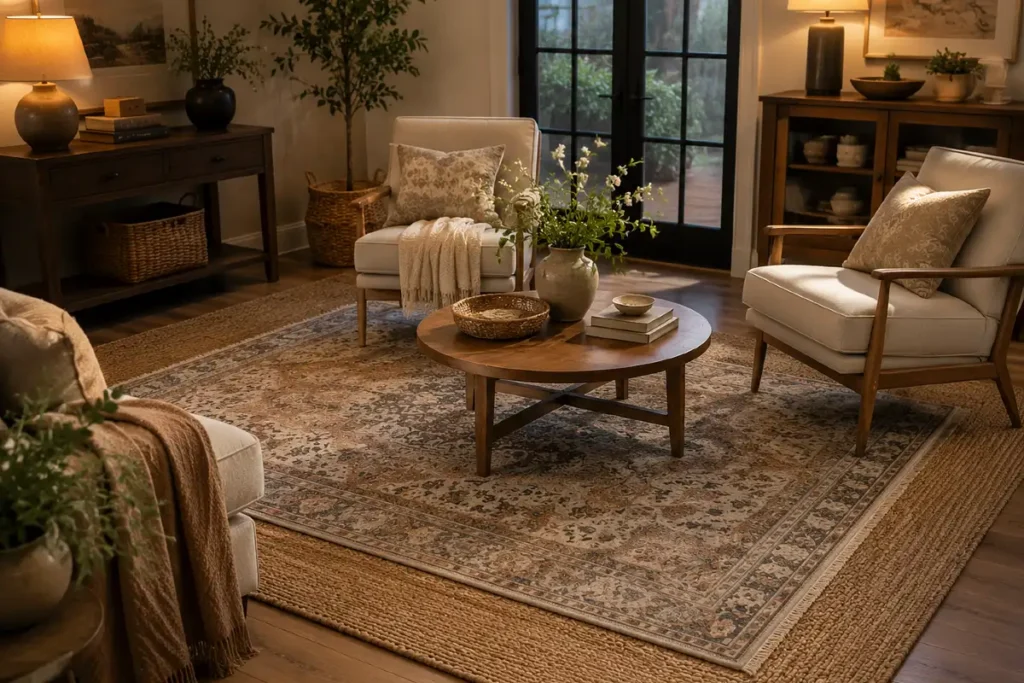
The cheap rug layering trick works because it solves three problems at once. A large neutral base rug gives the floor proper scale. A smaller top rug adds color, softness, and character. A rug pad keeps the setup flatter and safer.
Start with the room that feels cold or unfinished. Measure the floor, pick a calm base rug, then choose a top rug with one color that repeats in the room.
Keep the base visible. Secure the corners. Check the walking path before you call it done.
The cheap rug layering trick makes a plain floor look warmer, fuller, and more high end by pairing a large neutral base rug with a smaller decorative top rug.