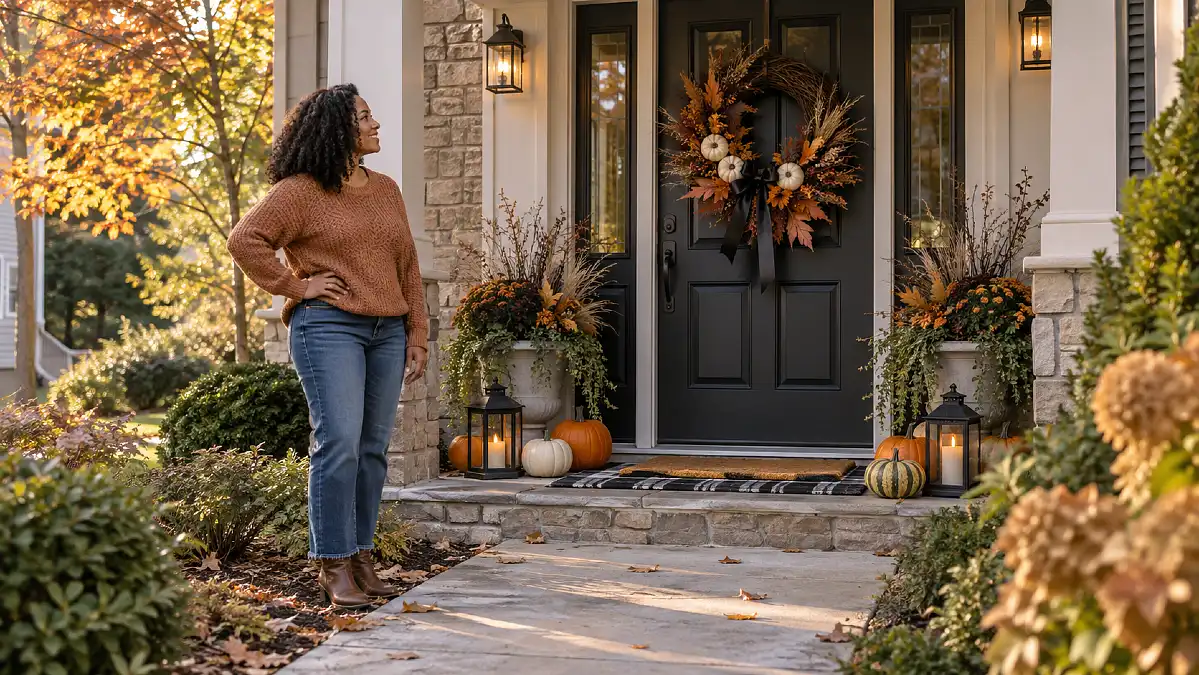
A Halloween wreath can look beautiful up close but disappear completely from the street because the colors, shape, and details do not create enough visual impact. Many homeowners struggle with wreaths that feel too small, too busy, or disconnected from the rest of their front door.
The challenge is finding the balance between spooky charm and clear design. A wreath needs strong contrast, good scale, and the right layers so visitors understand the mood before they even reach the porch.
These simple DIY home decor ideas will help you create a Halloween wreath that feels intentional, works with your existing exterior, and catches attention from the sidewalk without needing an expensive makeover.
Start With the Door, Not the Decorations
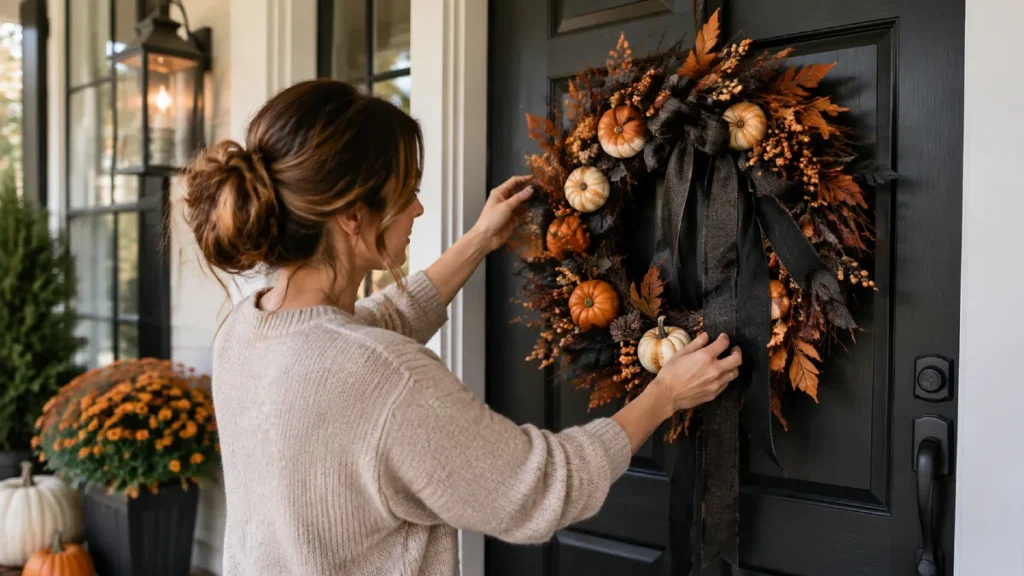
A common mistake with Halloween wreaths is choosing decorations first and trying to make them work afterward. The wreath may have fun details, but if the colors blend into the door or the size feels too small, the whole design loses its impact.
The first step is looking at the surface behind your wreath. A dark wreath on a dark door may disappear, while a bright orange or textured wreath can stand out beautifully against deeper colors.
Think about your front door like a room wall. The wreath is the statement piece, so it needs enough contrast to act as the focal point.
A successful design usually has three layers working together:
- A strong base shape that can be seen from a distance
- Texture that creates interest when someone walks closer
- Small details that reward people who stop and look
This same approach works in cozy home decor because good styling is rarely about adding more objects. It is about making each piece have a clear role.
| Door Background | Wreath Direction | Why It Works |
|---|---|---|
| Black or dark gray door | Cream, orange, copper, or natural textures | Creates contrast and prevents the wreath from disappearing |
| White door | Deep purple, black, charcoal, or rich autumn tones | Adds depth without looking flat |
| Wood door | Dried grasses, orange accents, rustic textures | Connects with natural warmth |
| Bright colored door | Neutral base with darker accents | Keeps the entrance balanced |
Build a Strong Silhouette With the Right Wreath Shape
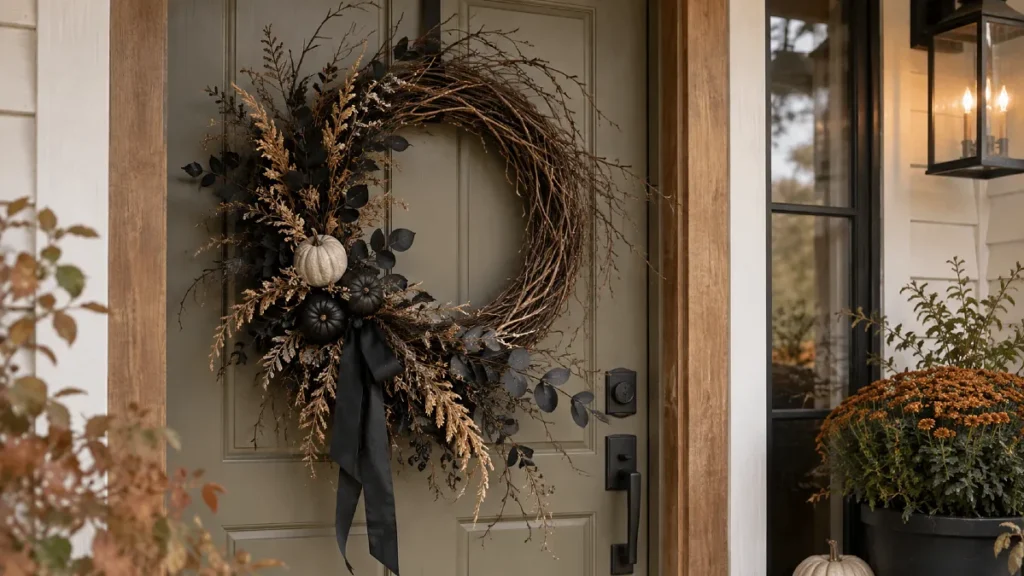
From the sidewalk, people do not notice tiny ribbons or miniature decorations first. They notice the overall outline.
That is why wreath shape matters more than many people expect. A wreath with uneven height, layered greenery, or a slightly oversized form creates movement that can be seen from farther away.
For a front door, proportion is important. A wreath that looks charming on a craft table may feel lost once it is hanging several feet away.
A good starting point is choosing a wreath size that feels connected to the door rather than floating in the middle of it.
Scale note: If your door feels large and empty, increasing the wreath size often creates more impact than adding extra decorations.
When building your shape, consider:
- A full grapevine base for a rustic Halloween look
- A foam wreath covered with fabric, ribbon, or faux foliage for a cleaner style
- An asymmetrical design where decorations gather on one side for a more designer-inspired look
The goal is not perfection. Slight movement often makes a wreath feel more natural and collected.
Choose Materials That Create Halloween Mood Without Looking Cluttered
Halloween decorating can quickly become visually crowded. Too many small plastic decorations compete for attention and make the wreath harder to read.
Instead, focus on materials that create texture. Texture helps the wreath feel rich even when the design uses only a few colors.
A layered mix of natural and decorative materials often works best.
| Material | What It Adds | Works Well With |
|---|---|---|
| Dried grasses | Movement and warmth | Rustic, farmhouse, natural styles |
| Black ribbon or velvet | Depth and drama | Modern or classic Halloween looks |
| Faux eucalyptus or leaves | Fullness and shape | Layered wreath designs |
| Wooden accents | Handmade character | Cottage and traditional homes |
| Matte ornaments | Subtle color without shine overload | Modern home decor styles |
A budget-friendly wreath does not need dozens of supplies. One strong texture, one main color, and one contrasting accent often create a more polished result than a crowded design.
Try this: choose one material that creates volume, such as greenery or fabric, then add smaller Halloween details afterward.
Use Color Contrast So Your Wreath Can Be Seen at a Distance
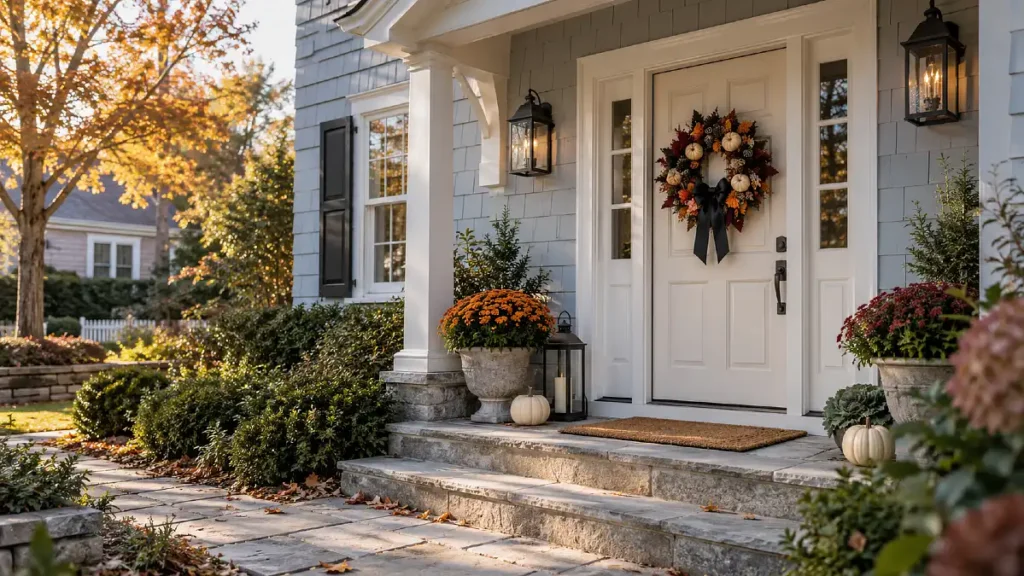
Color is one of the fastest ways to improve a front-door wreath. The right palette helps your decoration communicate its mood before anyone notices the details.
Traditional Halloween colors like orange, black, and purple can work well, but they do not have to be used together. Many stylish wreaths rely on softer combinations.
A few combinations that work well:
- Black with cream for a classic, slightly vintage feel
- Rust orange with brown and natural wood for an autumn look
- Deep plum with charcoal for a more elegant Halloween style
- White pumpkins with greenery for a subtle seasonal approach
The key is contrast. If every element has the same darkness or brightness, the wreath loses its shape.
Color note: Use your front door as part of the palette. The wreath should stand out from the door, not fight against it.
A small apartment entrance, rental door, or townhouse entry can use the same idea. You do not need a large porch to create a welcoming seasonal moment.
Add Details That Reward Close-Up Viewing
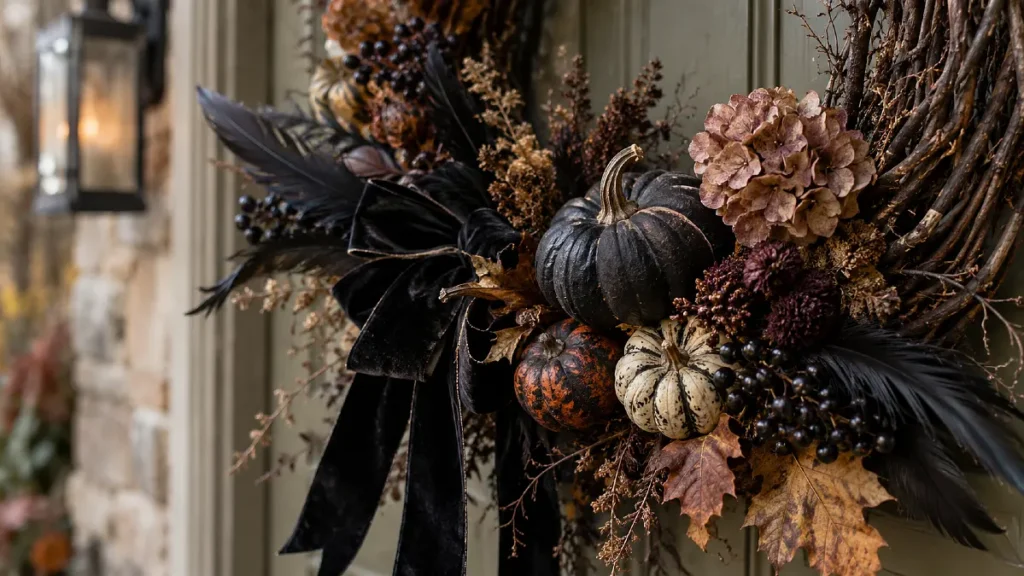
A sidewalk-friendly wreath needs a clear first impression, but the best designs also have small surprises when guests get closer.
This is where personal style comes in. The larger shape catches attention, while smaller details make it feel like your home.
Consider adding:
- A velvet bow instead of a shiny plastic ribbon
- Small faux pumpkins grouped in one area
- A wooden sign with a simple seasonal message
- Black feathers for texture
- Dried flowers for an autumn transition
The trick is placement. Spreading tiny decorations evenly around the entire wreath often makes it look busy.
Grouping details creates a stronger visual story. Designers often use this approach in rooms too, where a few intentional objects usually feel more curated than many random accessories.
Budget swap: Refresh an old wreath by changing only the ribbon, adding dried stems, or moving existing decorations instead of buying a completely new one.
Balance the Wreath With the Rest of the Front Entrance
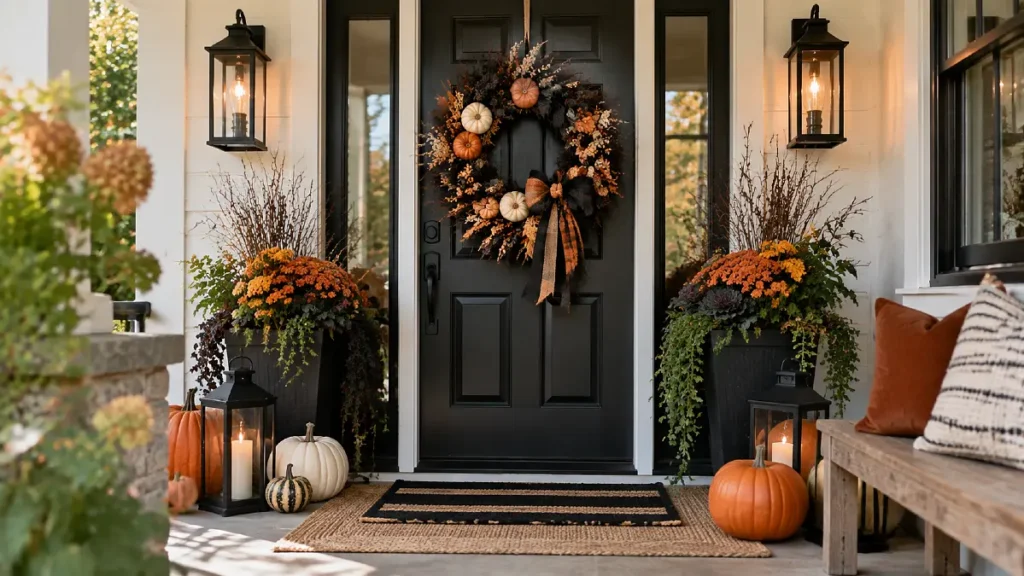
A Halloween wreath rarely works alone. The door, lighting, porch mat, planters, and surrounding space all affect how the wreath is seen from the sidewalk.
A beautifully made wreath can still feel disconnected if the rest of the entrance has no relationship to its colors or textures.
Think of your doorway like a small outdoor room. The wreath is the focal point, but the surrounding pieces help support the overall look.
For example, a wreath with dried grasses and warm orange tones may feel more intentional when paired with a natural fiber mat or a simple planter with autumn foliage. A black and cream wreath may look stronger beside simple lanterns or darker porch accents.
The goal is not to decorate every inch. A few connected details create more impact than a crowded entry.
| Front Door Element | Simple Addition | Why It Helps |
|---|---|---|
| Empty space below the wreath | Seasonal planter or tall branches | Creates vertical balance |
| Plain doormat area | Textured outdoor mat | Adds another layer near the ground |
| Dark entrance | Warm lighting | Helps colors and textures show at night |
| Busy porch | Simpler wreath design | Keeps the entrance from feeling crowded |
Make Small-Space and Rental-Friendly Wreath Choices
Not every home has a large porch or a dramatic front entrance. Many people are decorating apartment doors, rental homes, or smaller entryways where every detail needs to work harder.
The same styling principles still apply. A smaller door often benefits from a wreath with a clear shape instead of one overloaded with decorations.
For rental-friendly decor, focus on changes that are easy to remove:
- Use over-the-door hooks instead of permanent hardware
- Choose lightweight materials
- Avoid decorations that damage paint or finishes
- Store the wreath base and refresh accents each season
A simple wreath base can become part of your seasonal decorating system. Swap ribbon colors, add new stems, or change small accents instead of rebuilding everything each year.
This approach also works well for people decorating on a budget because it turns one purchase into several seasonal looks.
Avoid These Halloween Wreath Styling Mistakes
A wreath can have beautiful pieces and still feel unfinished when the overall design lacks balance. Small adjustments often make a bigger difference than adding more decorations.
| Instead of This | Try This |
|---|---|
| A wreath covered with many tiny decorations | One larger focal detail with supporting textures |
| Colors that blend into the front door | Stronger contrast between wreath and background |
| A very small wreath on a large door | A fuller shape that matches the door scale |
| Decorations spread evenly everywhere | Grouped details with open space around them |
A few common issues are easy to fix:
- If the wreath disappears from the street, increase contrast before adding more decorations.
- If it feels messy, remove a few small items and let the main textures stand out.
- If it feels too plain, add movement through ribbon, greenery, or layered materials.
- If it feels disconnected, repeat one wreath color somewhere else near the entrance.
Good decorating is often about editing. Removing one or two pieces can make the remaining details much stronger.
Create a Repeatable Halloween Wreath Styling Formula
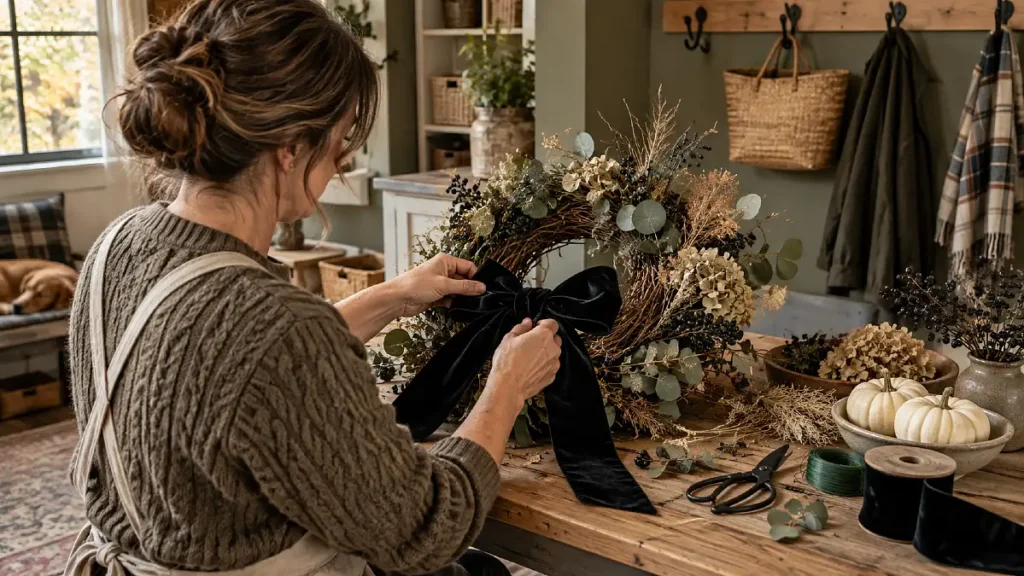
A reliable wreath formula makes seasonal decorating easier because you are not starting from zero every year.
Formula: Textured base + bold color contrast + one seasonal statement
This works because each part has a purpose. The textured base creates fullness, the contrasting color creates sidewalk visibility, and the statement piece gives the wreath personality.
For a traditional look, try a grapevine base with black ribbon and small pumpkins. For a softer autumn style, use dried grasses with cream accents and a natural wood detail.
The formula can change with your home style while keeping the same design structure.
| Style Direction | Base | Statement Detail | Overall Feel |
|---|---|---|---|
| Rustic Halloween | Grapevine and dried grasses | Wooden accent or fabric bow | Warm and handmade |
| Modern Halloween | Dark foliage | Matte ornaments or simple shapes | Clean and dramatic |
| Cottage Halloween | Natural greenery | Small pumpkins or flowers | Cozy and collected |
| Minimal Halloween | Neutral base | One bold black or orange accent | Calm and intentional |
Frequently Asked Questions
How large should a Halloween wreath be for a front door?
A wreath should feel connected to the size of the door instead of looking like a small decoration placed in the center. Larger doors often benefit from fuller wreaths, while smaller apartment doors may look better with a simpler design that keeps the shape clear.
What colors make a Halloween wreath stand out?
Strong contrast usually creates the best visibility. Black, cream, orange, deep purple, natural wood tones, and warm autumn colors can all work depending on your door color and exterior style.
Can I make a Halloween wreath look expensive on a budget?
Yes. A thoughtful mix of texture, shape, and color often matters more than the number of decorations. Updating an old wreath with new ribbon, dried stems, or a different focal piece can create a fresh look without buying everything again.
How do I keep a Halloween wreath from looking too busy?
Start with a simple base and choose one main feature instead of adding many competing details. Leaving some open space helps the wreath feel more curated and easier to see from a distance.
Can a Halloween wreath work with modern home decor?
A Halloween wreath can fit modern homes when the design uses cleaner shapes, fewer colors, and intentional materials. Matte finishes, simple greenery, and structured forms often create a more contemporary seasonal look.