

Choosing what size Christmas tree to buy is where a lot of holiday plans quietly go wrong. A tree that looked modest on the lot can scrape the ceiling at home, block the walkway or swallow half the living room.
It’s frustrating, because there’s no easy way to undo it. Trimming the top looks lopsided, and squeezing furniture around a giant tree makes the whole room feel cramped right when you want it to feel cozy.
The fix is a few quick measurements taken before you leave the house. Ceiling height, floor space and the path people walk through the room tell you almost everything.
This guide shows exactly what to measure, how to turn those numbers into a tree size, and how to adjust for small rooms, tall ceilings and tight corners.
Why Christmas Trees Look Smaller on the Lot Than in Your Living Room

Outdoors, a tree is surrounded by sky and other trees, so your eye has nothing to compare it to. A seven-foot fir can look average in a field of ten-foot trees.
Indoors, the walls, ceiling and sofa suddenly give it scale. The same tree now has a ceiling just inches above it and furniture right beside it, so it reads much bigger.
Width catches people out too. Trees are sold by height, but a full fir can spread wide at the base. That spread is what eats up floor space and blocks pathways, even when the height looks fine.
The Ceiling Height Rule for Choosing a Christmas Tree

Start with the ceiling, because height is the measurement you can’t fix later. Measure from the floor to the ceiling where the tree will actually stand, since ceilings and floors aren’t always level.
Then subtract room for the stand and the topper. A stand usually lifts the tree a few inches, and a star or angel adds more on top. A gap of about 6 to 12 inches between the topper and the ceiling keeps the tree looking balanced rather than squashed.
This table turns common ceiling heights into a comfortable tree height.
| Ceiling height | Tree height to look for | Why it works |
|---|---|---|
| 7 ft | 5 to 6 ft | Leaves room for the stand, a small topper and breathing space |
| 8 ft | 6 to 7 ft | The most common fit for standard living rooms |
| 9 ft | 7 to 8 ft | Fills the height without crowding the ceiling |
| 10 ft | 8 to 9 ft | Works well with a taller topper or a raised stand |
| 12 ft and up | 9 to 10 ft or more | Matches the room’s scale so the tree doesn’t look lost |
Scale note: if your topper is tall or wide, size down by about half a foot. It’s easier to add height with a topper than to remove it from a tree.
Measuring Floor Space and Tree Width So the Room Still Flows

Height gets the attention, but width decides how the room feels day to day. A full tree often spreads close to two thirds of its height at the bottom, so a seven-foot tree can be well over four feet wide.
Mark the spot on the floor with painter’s tape before you shop. Make a circle that matches the width you’re considering, then live with it for a day. If you keep stepping around it or it blocks a door, go narrower.
Try this: leave at least two to three feet of clear walkway around the tree in any path people use. That keeps the room easy to move through and protects the branches and ornaments from bumps.
Choosing a Christmas Tree Size for Small Spaces and Apartments

In a small living room or apartment, the right tree is often shorter and slimmer than you expect. That isn’t settling. It’s matching the tree to the room so both look good.
- Go slim: pencil and slim fir shapes give you full height with a much smaller footprint.
- Go up, not out: a tabletop tree on a sturdy side table or bench gives height without taking floor space.
- Use a corner: corners hide the back of the tree and keep the middle of the room open.
- Keep the base tidy: a basket or collar takes up less room than a wide tree skirt.
Rental-friendly swap: a smaller tree is also easier to carry up stairs, fit into an elevator and get out of the building in January.
Picking a Tree for High Ceilings and Open-Plan Living Rooms
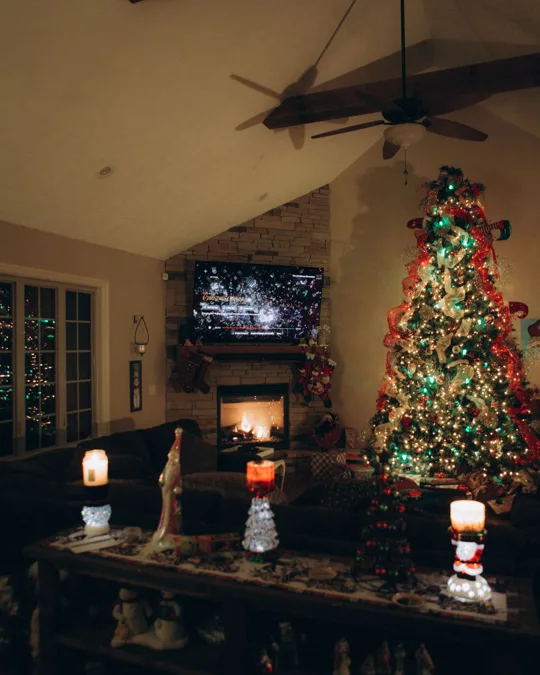
Tall ceilings bring the opposite problem. A standard six-foot tree can look tiny and lost under a vaulted or double-height ceiling, especially in an open-plan space.
Here, a taller and fuller tree helps the room feel balanced. If a very tall tree isn’t in the budget, a slightly shorter one on a low platform or wide crate gains a foot of height at little cost. A large topper also draws the eye upward.
Think about the whole wall too. A tall tree looks best with something nearby at a similar scale, such as a big mirror, tall curtains or a garland on the mantel. For ideas, see our Christmas living room decor.
How the Stand and Tree Topper Change the Height You Need
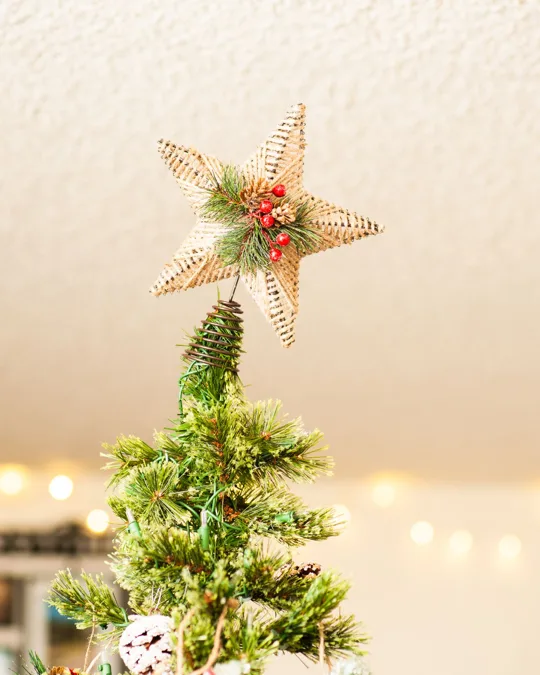
These two pieces are easy to forget when you’re standing on the lot, but together they can add a surprising amount of height.
Check your stand before you shop. Some hold the trunk low, while others raise it several inches. Then look at your topper. A slim star adds a little, while a large angel or bow can add close to a foot.
What to avoid: trimming the top leader to make a topper fit. It removes the tree’s natural point and often leaves a flat, bare top. Choosing a slightly shorter tree is the cleaner fix.
Christmas Tree Sizing Mistakes in the Living Room, Fixed
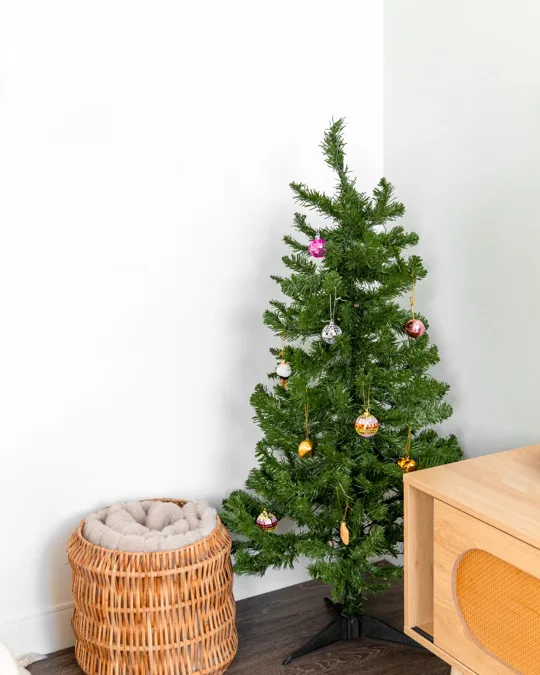
Most sizing problems are easy to avoid once you know them. This side-by-side shows the common slips and simple fixes.
| Do this | Not that |
|---|---|
| Measure ceiling height in the exact tree spot | Guess from a different part of the room |
| Tape the tree’s width on the floor first | Only think about height |
| Allow space for the stand and topper | Buy a tree as tall as the ceiling |
| Keep a clear path around the tree | Push furniture into the walkway to make it fit |
| Choose a slim tree for tight corners | Squeeze a full fir into a narrow spot |
If your current tree already feels too big, don’t worry. Moving it into a corner, trimming lower branches near the stand and turning its flatter side to the wall can recover a lot of space.
The Measure-First Formula for the Right Christmas Tree Size

Formula: ceiling height minus 1 to 2 feet + floor width taped out + a clear walkway around it.
It works because it covers the three ways a tree can go wrong: too tall, too wide or in the way. Once those three are right, the tree looks like it belongs in the room.
Use the formula for any room. A small apartment might land on a five-foot slim tree in a corner, while a tall family room might suit a nine-foot full fir. Once it’s home, our guide on how many lights a Christmas tree needs helps you light it to scale.
Bringing home a real tree? Our guide on how to keep a real Christmas tree alive keeps it fresh all month.
Frequently Asked Questions
What size Christmas tree should I get for an 8-foot ceiling?
A tree around 6 to 7 feet tall usually fits best. It leaves room for the stand and a topper while still filling the height.
How much space should be between a Christmas tree and the ceiling?
Aim for about 6 to 12 inches between the top of the topper and the ceiling. That gap keeps the tree looking balanced.
How wide is a 7-foot Christmas tree?
A full 7-foot tree can be around 4 to 5 feet wide at the base. Slim versions can be much narrower, which helps in small rooms.
Is it better to buy a smaller or bigger Christmas tree?
When in doubt, go slightly smaller. A smaller tree is easier to fit, carry and decorate, and you can add height with a stand or topper.
A Tree That Fits Makes the Whole Room Feel Right
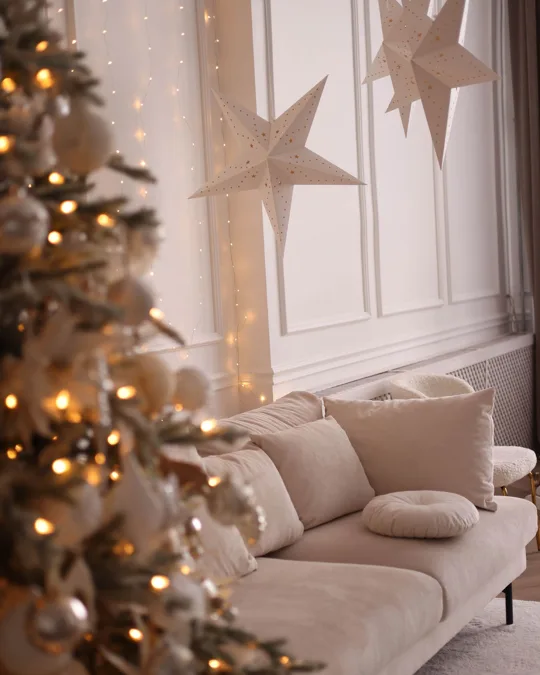
The right tree isn’t the biggest one on the lot. It’s the one that suits your ceiling, your floor space and the way you actually use the room.
Before your next trip to buy a tree, take five minutes to measure and tape out the spot. That small step saves a lot of stress later, and your living room will feel cozy and balanced all season long.


1 thought on “What Size Christmas Tree Fits Your Living Room (Measure This Before You Buy)”