
A room can start feeling out of step with the season long before you are ready to pack away everything that looks like summer. The bright pillows, airy surfaces, and lighter colors that felt fresh in July can suddenly seem a little thin once the days get shorter.
The frustrating part is feeling like fall requires another round of shopping. It does not. Most homes already have enough pieces to create warmer, cozier rooms if those pieces are moved, layered, and styled differently.
This is where budget home decor becomes more about using your eye than using your wallet. By shifting color balance, bringing out hidden texture, changing how objects are grouped, and softening the lighting, you can move a room toward fall without buying a single new pumpkin, pillow, or candle.
Start by Taking Away the Pieces That Make the Room Feel Most Summery
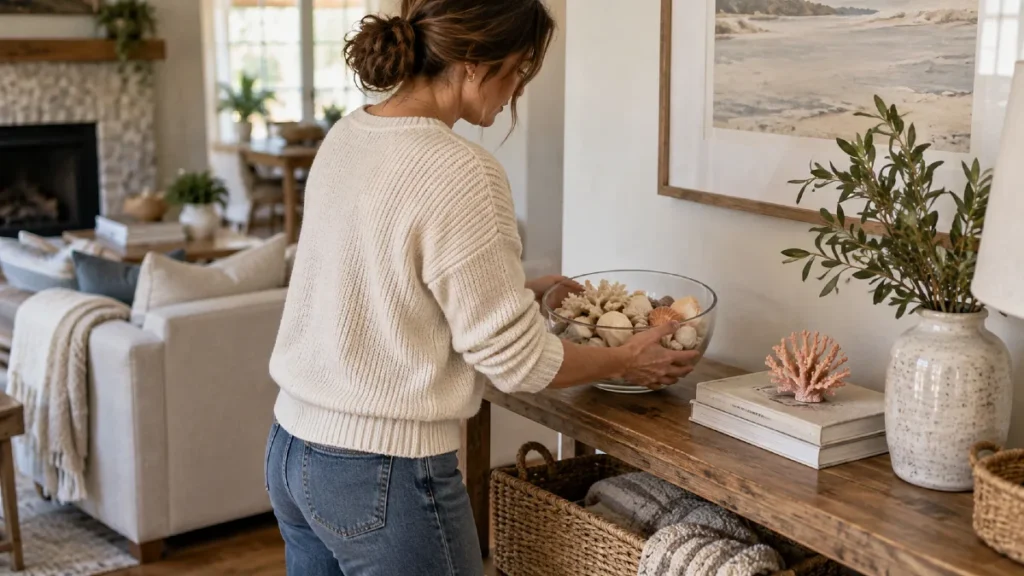
The easiest fall transition often starts with editing rather than adding. A room can feel warmer simply because the most obviously summery details are no longer pulling your eye in the opposite direction.
You do not need to remove every pale color or botanical print. Instead, look for pieces that create a strong summer message, such as a bowl of seashells, tropical prints, stacks of beach books, bright turquoise accessories, or several lightweight white accents grouped together.
Try putting those items away temporarily and leave some breathing room behind. Empty space can actually make the richer materials already in your home feel more noticeable.
A pale blue vase beside a dark wood table may feel much more autumnal once three other pastel accessories are removed. The object did not change, but the color balance around it did.
Use a Seasonal Edit Instead of a Seasonal Shopping List
Before moving anything new into a room, walk through it and look for three kinds of pieces:
- Decor that reads strongly as summer or beachy
- Very bright accents that dominate the color palette
- Small objects that are making surfaces feel busy
You do not have to get rid of them. A box, cabinet, spare closet shelf, or even an unused drawer can become a simple seasonal holding area.
Try this: Clear one coffee table, console, or dresser completely. Then put back only the pieces that still feel right for the coming season. Editing one surface often gives you a much clearer idea of what the whole room needs.
Pull Your Fall Color Palette From Things You Already Own
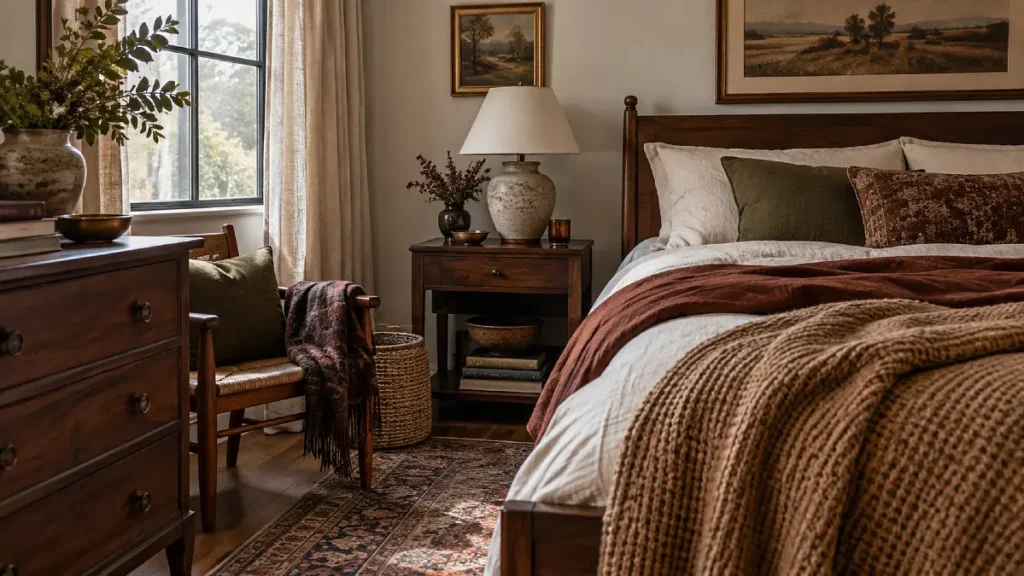
Fall decorating does not require orange, rust, and mustard in every room. A seasonal color shift can happen through deeper versions of colors that are already part of your home.
Look through blankets, books, artwork, dishes, baskets, towels, pillow covers, and even clothing storage for warmer shades. Olive green, tobacco brown, burgundy, charcoal, cream, navy, muted gold, and deep terracotta can all move a room toward fall.
The important part is repetition. One dark green object can look accidental, but green repeated through a book cover, blanket, plant, and piece of artwork starts to feel like part of a planned color palette.
Here is an easy way to rethink common summer pieces without replacing them.
| Summer Base Piece | Fall Shift Using What You Own | Why It Works |
|---|---|---|
| White sofa or bedding | Add a darker throw from another room | Stronger contrast makes pale fabric feel warmer |
| Light wood table | Style with brown books, pottery, or a woven basket | Earthier tones give light wood more visual weight |
| Blue accessories | Pair with cream, camel, navy, or dark wood | Blue becomes moodier when the surrounding colors deepen |
| Green plants | Group with wood, woven pieces, or darker books | Natural greens already work well in a fall palette |
| Clear glass decor | Place beside ceramics, books, or textured fabric | Mixed materials make glass feel less cool and bare |
Color note: You do not need to change the room’s main color. Usually, adding two or three deeper supporting tones is enough to change the mood.
This works especially well in rentals or rooms filled with hand-me-down furniture. Instead of trying to make every piece match, repeat a few colors across the room so the differences feel more intentional.
Move Soft Textures Into the Rooms Where You Spend the Most Time
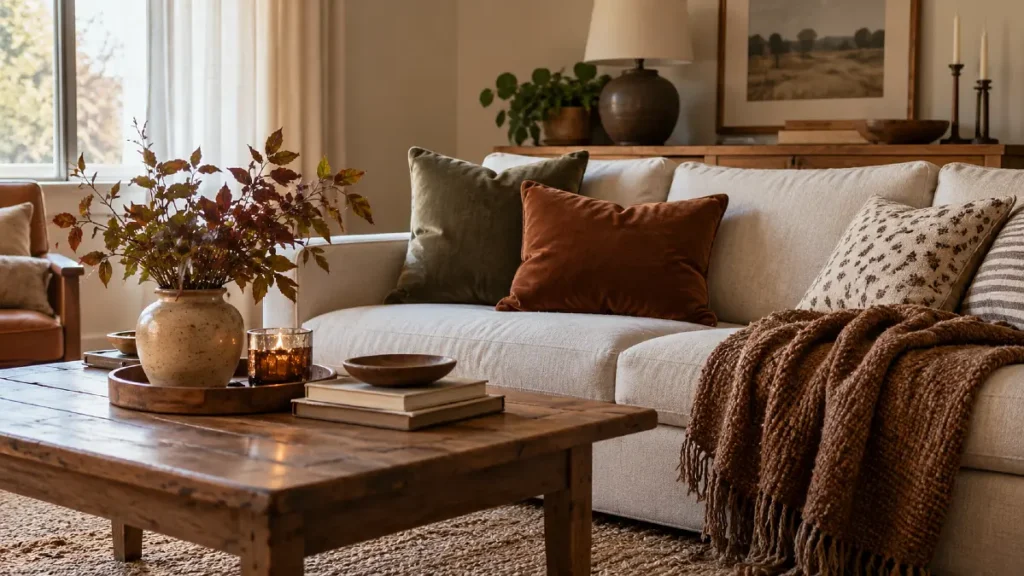
Texture is one of the quickest ways to make summer decor feel more like fall because it changes the visual weight of a room. Smooth cotton, clear glass, and open surfaces feel light, while wool, knit fabric, woven baskets, velvet, dark wood, and layered textiles feel heavier.
Start by shopping other rooms in your home. A throw folded at the foot of a guest bed may work better over the arm of the living room sofa once cooler evenings arrive.
A woven basket in a bedroom could hold blankets beside the sofa. A small rug from a hallway might soften a reading corner, while a heavier pillow from another room can replace a crisp summer cushion.
Do not layer everything at once. Too many thick fabrics can make a small room feel crowded instead of cozy.
Scale note: On a compact sofa, one folded throw and two or three pillows usually feel calmer than covering every inch with fabric. The goal is softness around the furniture, not hiding the shape of the furniture itself.
For cozy home decor, texture often matters more than seasonal symbols. A room with linen, wood, woven fibers, and a soft blanket can feel ready for fall without a single leaf or pumpkin in sight.
Restyle Tables and Shelves With Tighter, Heavier Groupings
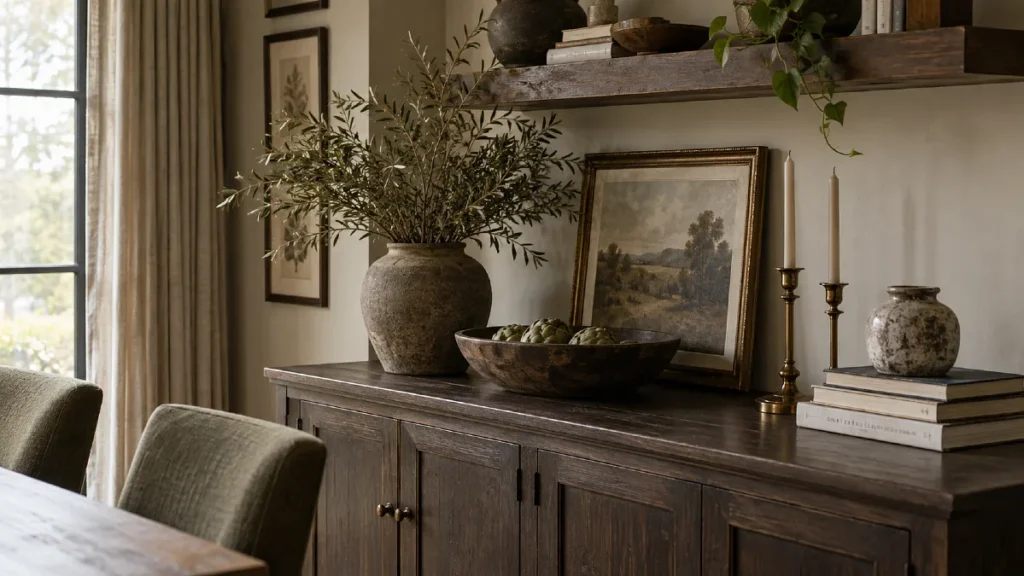
Summer styling often looks good when objects are spread out and surfaces feel open. Fall can handle slightly tighter arrangements because grouped objects create a sense of visual warmth.
Instead of buying new shelf decor, regroup pieces you already own. Place a ceramic vase beside two stacked books, lean a small framed picture behind them, and leave the rest of the shelf quieter.
The change comes from scale and proportion. A few connected pieces usually feel more curated than many small objects scattered evenly across a surface.
If a coffee table currently holds five separate accessories, try turning them into one main group. A tray, stack of books, bowl, or small basket can act as the base.
This table shows how small styling changes can create a stronger seasonal mood without changing the actual decor.
| If the Room Feels Like This | Try This Instead |
|---|---|
| Small objects are spread across every surface | Gather two or three pieces into one stronger group |
| Shelves look light but slightly random | Pair books with pottery, wood, or framed art |
| The coffee table feels busy | Keep one main grouping and leave some open space |
| Everything is the same height | Mix one taller piece with lower objects |
| Decor feels too bright for fall | Move the brightest object away and repeat darker tones nearby |
If styled shelves tend to overwhelm you, do not try to fill every gap. Leaving part of a shelf empty gives the objects beside it more presence.
A room often feels more pulled together when your eye has somewhere to rest.
Change the Lighting Before You Change the Decor
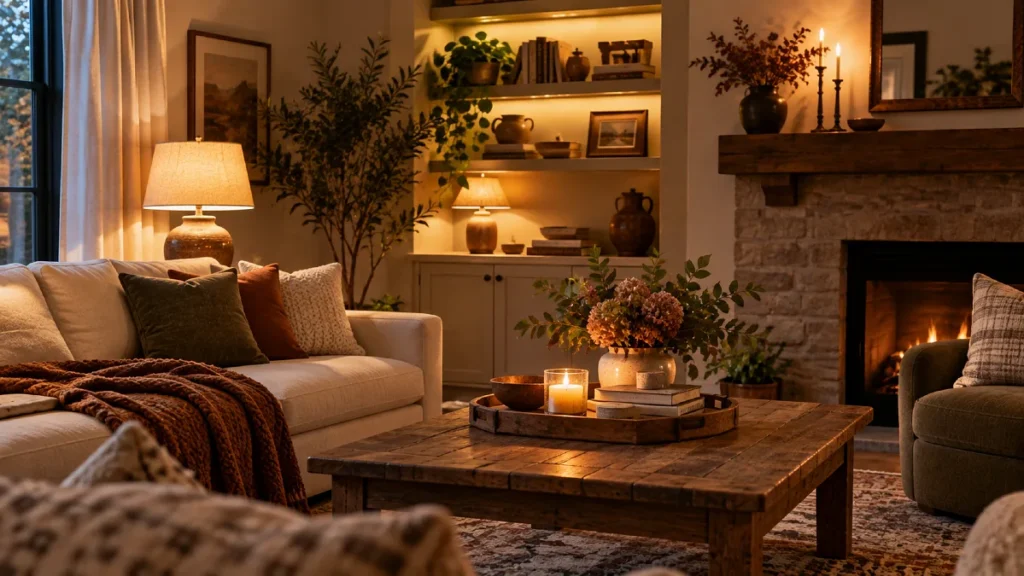
Lighting can make the exact same room feel like two different seasons. Strong overhead light tends to flatten texture and make pale surfaces look brighter, while several lower light sources create depth and shadow.
Before buying seasonal decor, turn off the main ceiling light in the evening and use the lamps you already have. A floor lamp near a chair, a table lamp beside the sofa, and a small lamp on a console can make wood, fabric, and artwork look richer.
You can also move lamps between rooms. A small lamp that spends summer on a desk might make more sense on a living room side table during fall.
If your room feels cold even after adding blankets, lighting may be the missing layer rather than more decor.
Lighting swap: Try placing one lamp lower than eye level when seated. Light at different heights makes a room feel softer because it creates small pools of brightness instead of one flat wash of light.
Candles can add another layer if you already own them, but they are not required. The bigger change comes from reducing harsh overhead lighting and spreading softer light across the room.
Let Everyday Objects Become Part of the Fall Styling
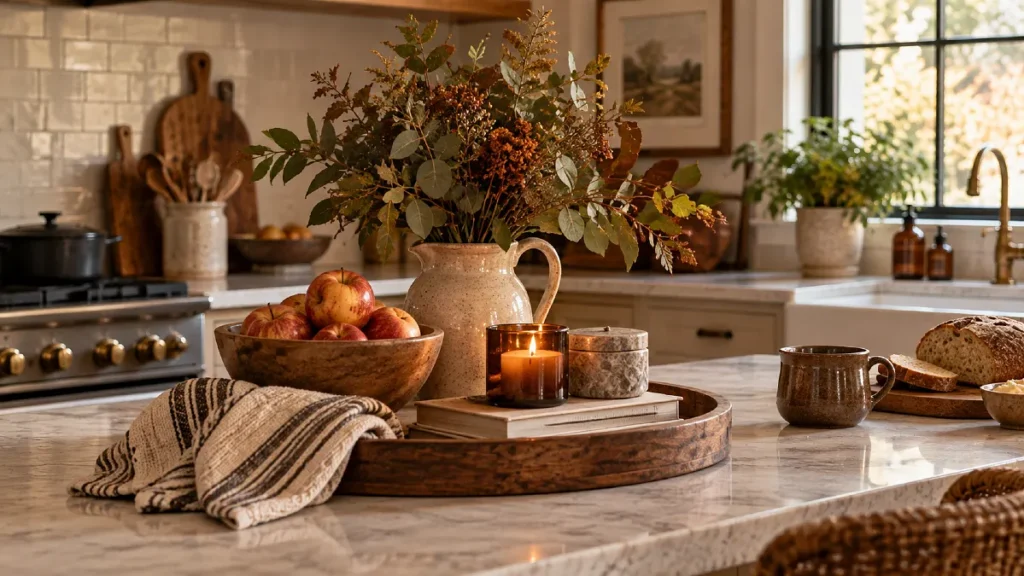
Useful objects can become some of the best seasonal decor because they make a room feel lived-in rather than staged. Books, mugs, baskets, wooden boards, blankets, pottery, framed photos, and serving pieces can all add warmth when they are placed with intention.
A wooden cutting board leaning against a kitchen backsplash can add more fall warmth than a new decorative sign. A stack of darker books beneath a lamp can bring color and height to a side table.
Even clothing can help. A textured scarf folded inside an open basket can add soft color, while a favorite neutral cardigan hanging on a wooden peg can make an entry feel ready for cooler days.
This kind of decorating on a budget works because the room starts telling a seasonal story through materials you actually use.
Natural wear can help too. Slightly aged wood, thrifted pottery, older books, and woven baskets often bring the kind of depth that very new matching accessories cannot.
Look for Materials Before Looking for Seasonal Motifs
When choosing what to bring forward, focus on materials such as:
- Dark or medium-toned wood
- Woven rattan, cane, or seagrass
- Cream or oatmeal textiles
- Ceramic and stoneware
- Aged brass or warm metal
- Darker book covers
- Knit, wool, linen, or heavier cotton
You do not need all of them. Two or three repeated materials can create enough texture for the room to feel warmer.
Avoid Making the Summer-to-Fall Change Too Sudden
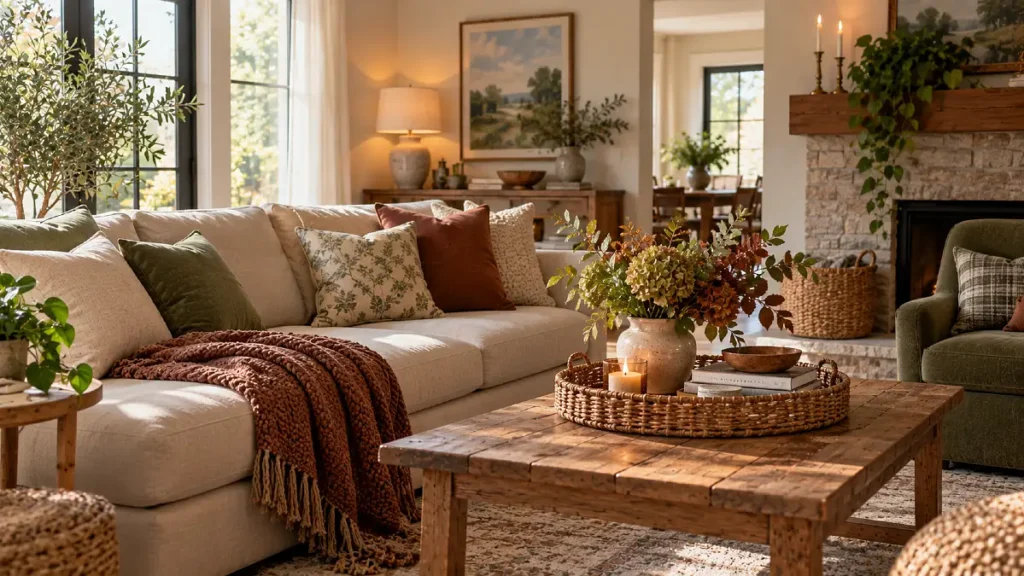
The most natural seasonal rooms usually keep part of the previous season. Early fall can still include green plants, white pottery, pale linen, and lighter woods.
Problems tend to appear when every bright object gets replaced at once by heavy brown, orange, or seasonal novelty decor. The room can start feeling themed rather than simply warmer.
A slower transition is easier to live with and easier on the budget.
Try keeping roughly two-thirds of your normal room intact and changing only the softer, smaller layers. That might mean moving one throw, editing a shelf, changing a table arrangement, and bringing another lamp into the room.
Your existing furniture stays the anchor. The seasonal feeling comes from what surrounds it.
If one room still feels slightly off, use these reframes rather than assuming you need more decor:
- If it feels too bright: reduce the number of strong colors instead of replacing everything with dark ones.
- If it feels bare: add one textile or grouped vignette before filling every surface.
- If it feels too themed: remove the most obvious seasonal object and let texture carry more of the mood.
- If it feels cluttered: take one layer away rather than buying storage just to hide it.
These small edits help keep budget home decor personal instead of making every season feel like a shopping deadline.
Use One No-Buy Fall Formula in Each Room
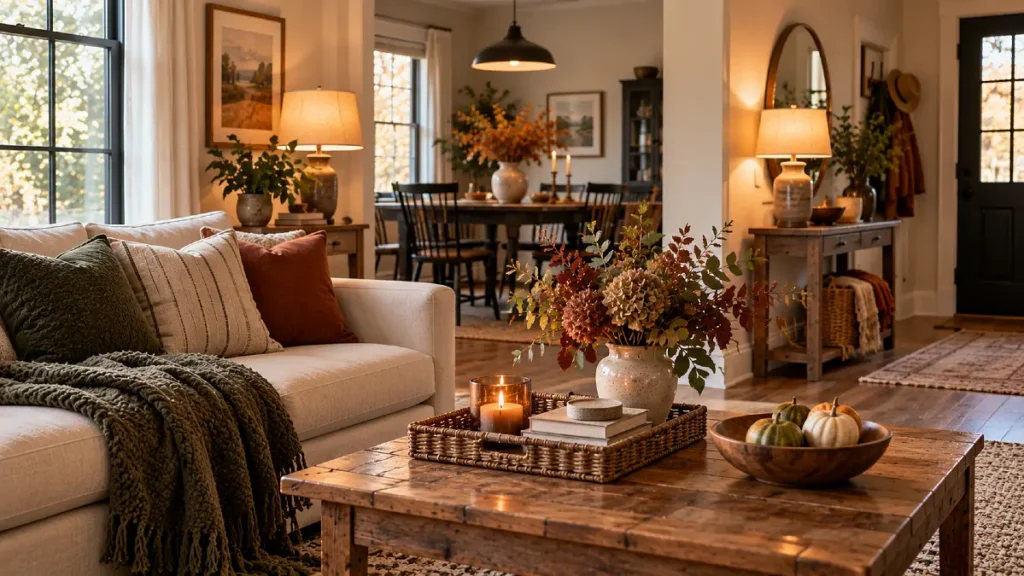
You do not need a separate decorating plan for every room. A simple three-layer formula makes the transition much easier.
Formula: deeper color + soft texture + warm light
The color gives the room seasonal depth, the textile makes hard surfaces feel softer, and the light helps both layers look richer. You can repeat the formula with completely different objects depending on what you already own.
Here are a few ways it can work around the home.
| Room | Deeper Color | Soft Texture | Warm Light |
|---|---|---|---|
| Living room | Dark books or artwork | Throw over sofa arm | Table or floor lamp |
| Bedroom | Darker pillow or folded blanket | Layered bedding | Bedside lamp |
| Entry | Wood frame or dark basket | Woven bag or scarf | Small console lamp |
| Dining area | Dark wood or pottery | Cloth napkins or runner | Lamp nearby or existing candles |
You can also reverse the formula if the room already feels dark. Keep the color palette lighter and focus more on texture and softer lighting.
The formula is useful because it gives you a stopping point. Once all three layers are present, the room often needs editing rather than another accessory.
Frequently Asked Questions
When should you start transitioning summer decor to fall?
There is no fixed date. Start when the light, weather, or way you use the room begins to change and your summer setup no longer feels comfortable.
You can make the transition gradually by bringing in one heavier textile or darker accent before changing the rest of the room.
How can I make my house feel like fall without pumpkins?
Focus on texture, deeper colors, natural materials, and softer lighting. Wood, knit fabric, pottery, darker books, baskets, and warm lamp light can create a fall feeling without obvious seasonal decorations.
This approach also keeps the room useful long after autumn ends.
What colors can I use for fall decor besides orange?
Navy, olive, burgundy, camel, chocolate brown, cream, charcoal, muted gold, and deep green can all work. Choose colors that already connect with your existing room rather than forcing a traditional fall palette.
Repeating the same deeper shade two or three times usually makes it feel intentional.
How do I decorate for fall in a small apartment?
Focus on swapping placement rather than adding more objects. Move a throw into the living room, gather small accessories into one vignette, and use lamps to change the mood without taking up much extra space.
These small space decor ideas keep surfaces useful and reduce seasonal clutter.
How can renters decorate for fall without making permanent changes?
Use textiles, movable lighting, books, baskets, framed art, and objects you already own. Rearranging furniture or moving accessories between rooms can make a rental feel different without paint, drilling, or permanent fixtures.
Damage-free decorating often works best when the seasonal shift happens through layers rather than major changes.