
A Christmas tree can look strangely dim even when you used every light strand in the storage bin. The problem is usually not the ornaments or ribbon. It is that the light count does not match the tree’s height, width, and branch depth.
That mismatch is frustrating because a tree can look bright while the lights are still on the floor, then lose much of its glow once the bulbs disappear into the branches. Adding random extra strands can also create hot spots instead of an even, cozy look.
A simple lights-per-foot starting point makes the job easier. These home styling tips will help you choose a count, adjust it for a slim or full tree, and create cozy home decor without buying more lights than your tree can use.
Tree Height Is Only the Starting Point for Your Light Count
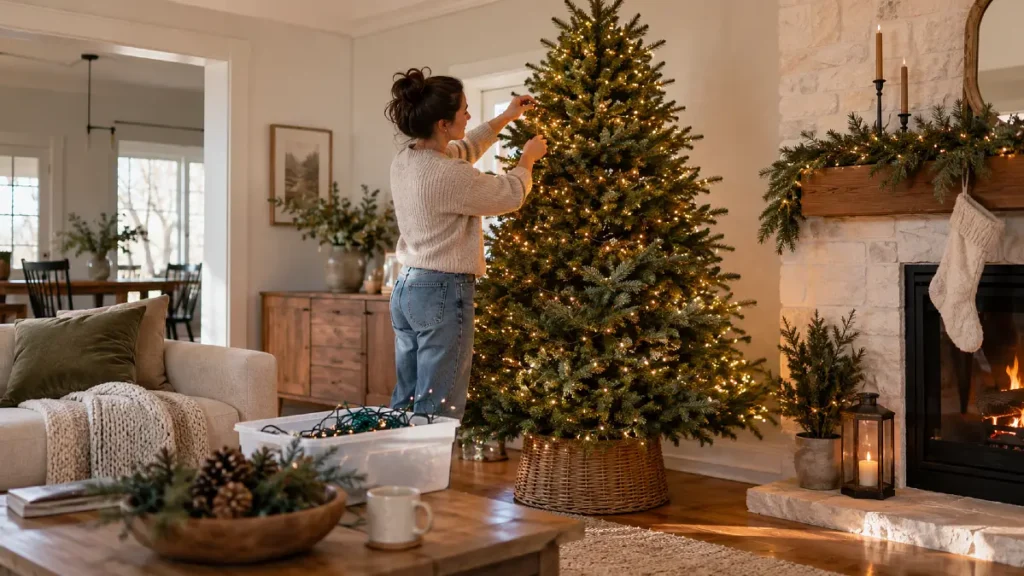
The simplest starting rule is about 100 lights for every foot of tree height. That gives most trees a balanced glow without making the lights compete with ornaments, ribbon, or greenery.
If you like a brighter, densely lit tree, you can move closer to 150 or even 200 lights per foot. A softer tree can stay near the lower end, especially when the branches are narrow or fairly open.
Height alone does not tell the whole story, though. A wide 7-foot fir has much more branch surface to cover than a narrow 7-foot pencil tree.
Scale note: think of tree height as your starting measurement and tree width as your adjustment.
Use This Christmas Tree Light Chart Before Buying More Strands
For standard mini lights, this chart gives you three useful starting points rather than one rigid number. The ranges follow the common guidance of roughly 100 to 200 lights per vertical foot, depending on how bright you want the tree.
| Tree Height | Balanced Glow | Brighter Glow | Very Full Glow |
|---|---|---|---|
| 5 feet | About 500 lights | About 750 lights | About 1,000 lights |
| 6 feet | About 600 lights | About 900 lights | About 1,200 lights |
| 7 feet | About 700 lights | About 1,050 lights | About 1,400 lights |
| 7.5 feet | About 750 to 800 lights | About 1,100 to 1,200 lights | About 1,500 lights |
| 8 feet | About 800 lights | About 1,200 lights | About 1,600 lights |
| 9 feet | About 900 lights | About 1,350 lights | About 1,800 lights |
You do not need to hit these numbers exactly. Light strings come in different lengths and bulb counts, so rounding to the nearest complete strand is usually more practical.
A 6-foot tree with 600 lights can feel warm and relaxed. The same tree with 1,200 lights will read much brighter and more dramatic, even before a single ornament goes on.
For a tabletop tree around 3 or 4 feet, the same logic works. Start near 300 to 400 mini lights, then decide if the shape actually needs more.
A Full Fir and a Pencil Tree Should Not Be Lit the Same Way
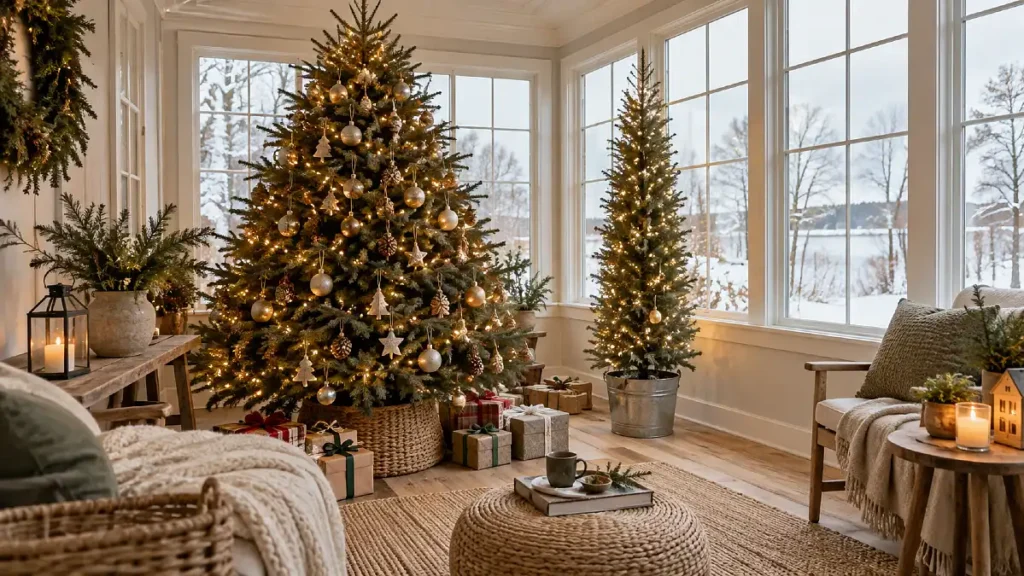
Tree width changes how far each strand has to travel. A full tree asks the lights to cover the front, sides, and deep interior branches, while a slim tree has far less surface area.
Home Depot’s guidance also adjusts light counts based on tree thickness and bulb type, which is why two trees of the same height can need very different amounts of lighting.
A narrow tree often looks finished with fewer lights because the bulbs sit closer together visually. Adding the same count used on a very full tree can make the center look crowded.
With a broad tree, the opposite happens. If every light sits only at the branch tips, you may have plenty of bulbs but still see large dark areas inside the tree.
Try this before buying another box of lights: turn the room lights down and look at the tree from six or eight feet away. Dark vertical bands usually mean spacing is the problem, while an evenly dim tree usually needs more overall light.
Weave Lights Into the Branches Instead of Decorating Only the Surface
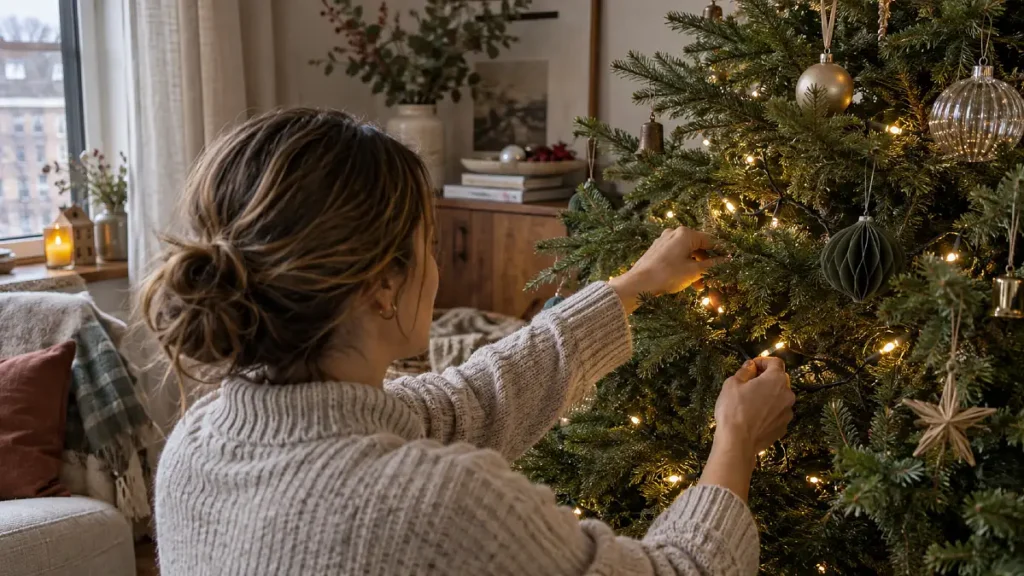
A tree looks more layered when some bulbs sit closer to the trunk and others sit near the branch tips. The darker greenery between those two levels creates depth.
If all the lights sit on the outside edge, the tree can look flat. It may also make you think you need hundreds of extra bulbs when the real problem is placement.
Start close to the trunk, move outward along a branch, then return inward before moving to the next area. You do not need to wrap every branch individually.
Working in loose vertical or zigzag sections can also make later adjustments easier. Balsam Hill similarly recommends weaving lights in and out of branches rather than simply draping them around the outer surface.
Lighting swap: if one section looks too bright, move a few bulbs deeper into the greenery before removing an entire strand.
That small adjustment often makes the tree feel softer and more layered while keeping the overall light count unchanged.
Bulb Size and Spacing Change How Many Lights You Really See
A count of 700 bulbs does not always produce the same visual result. Tiny mini lights create many small points of light, while larger bulbs create fewer, stronger focal points.
The distance between bulbs matters too. Two 100-light strands can look quite different if one places the bulbs closer together.
Use bulb style to decide how closely you should follow a lights-per-foot calculation.
| Light Style | Visual Effect | How to Adjust Your Count |
|---|---|---|
| Mini LED lights | Fine, even sparkle | Use the full lights-per-foot guideline |
| Larger C6-style bulbs | Stronger individual points | You may need fewer bulbs visually |
| Warm white lights | Soft, cozy glow | Add density if you want stronger contrast |
| Multicolor lights | More visual movement | Moderate density can still feel lively |
| Twinkle or flashing lights | High visual activity | Keep the base layout even before adding effects |
Larger bulb styles can need a different count from mini lights. Home Depot, for example, publishes different recommendations for mini, C6, C7, and C9 lighting rather than treating every bulb type the same.
Color note: try to keep the light color consistent unless mixing tones is part of the design. Two strands labeled “warm white” can still look noticeably different when their color temperatures do not match.
This is one place where using lights you already own from the same set can make the tree look more cohesive without spending more.
Fix Dark Spots Before Adding Another Entire Box of Lights
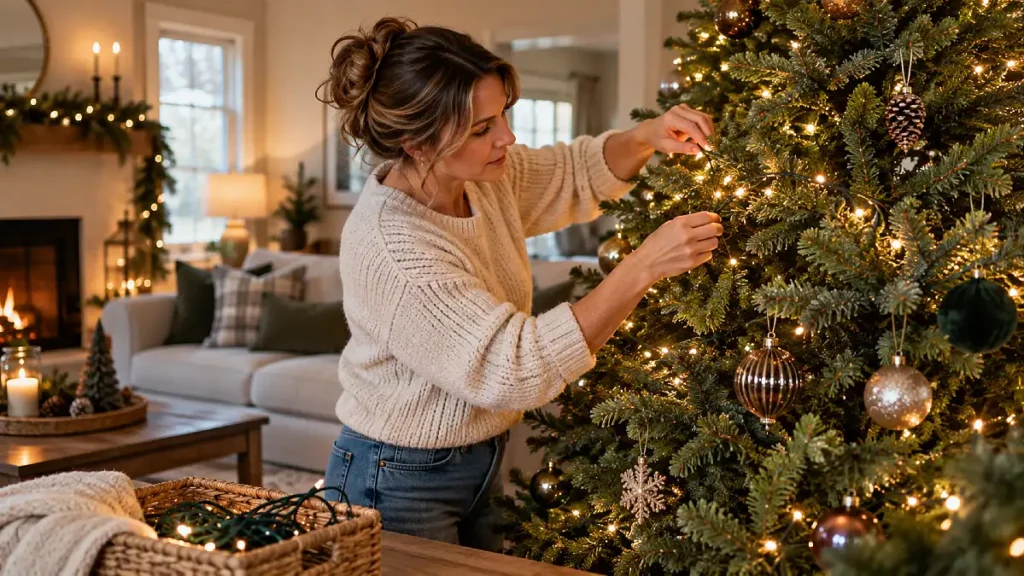
More bulbs are not always the answer. Sometimes the tree feels unfinished because the strands are sitting too far apart, too close to the tips, or bunched heavily in one area.
A few small corrections can usually tell you if you truly need more lights.
- If the bottom looks brighter than the top, tighten the spacing as you move upward.
- If the middle looks dark, pull a few bulbs farther inside rather than adding another outer ring.
- If one side disappears at night, step back and redistribute the nearest strand before opening a new one.
- If ornaments hide the glow, move some lights forward after the ornaments are in place.
These common lighting problems are easier to spot when the room is slightly dim. Look at the overall tree rather than focusing on individual branches.
Here is a quick way to separate a light-count problem from a placement problem.
| Instead of This | Try This |
|---|---|
| Adding another strand to one dark patch | Spread the neighboring strand wider first |
| Wrapping every light around the outer edge | Place some bulbs deeper near the trunk |
| Using the same count on slim and full trees | Adjust for width and branch density |
| Mixing random white light tones | Group matching strands together |
| Hiding every wire by bunching branches | Let the cord follow natural branch lines |
The goal is not to make every bulb perfectly spaced. Slight variation keeps the tree looking natural instead of overly mechanical.
Use One Repeatable Formula for Any Christmas Tree
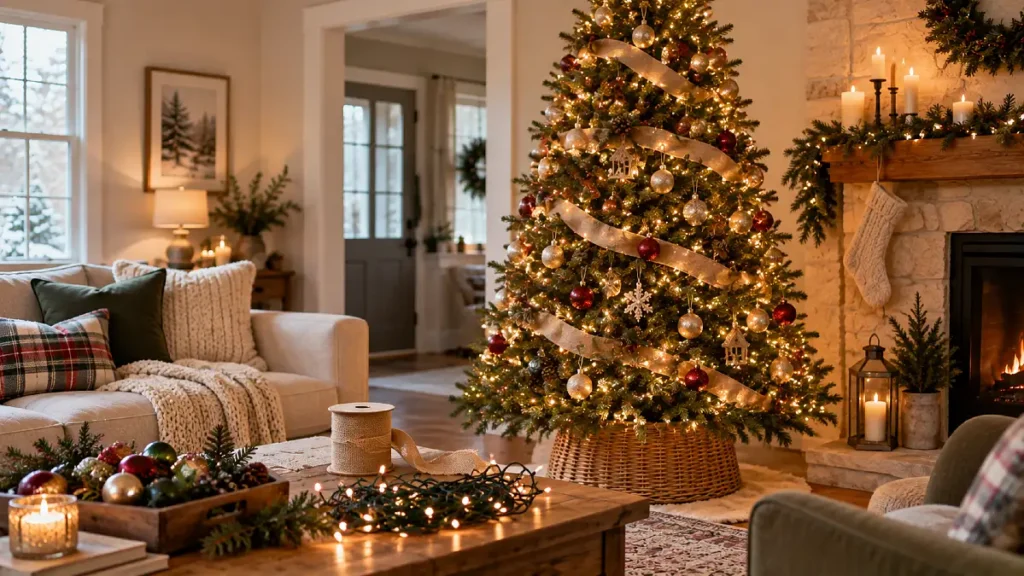
You do not need a new lighting rule every year.
Formula: 100 lights per foot + an adjustment for tree fullness + an inside-and-outside branch weave.
Start with the tree’s height to estimate your base count. Add more if the tree is especially wide, heavily flocked, or you prefer a brighter look.
Then focus on depth before adding another strand. A tree with 800 thoughtfully placed lights can feel more finished than a tree with 1,200 bulbs sitting only around the outside.
This approach also works well for decorating on a budget because you can test the lights you already own before deciding that your collection is too small.
For a fuller glow, move toward 150 to 200 lights per foot. For a slim tree or a quieter look, staying closer to 100 per foot may already be enough.
One practical safety step matters regardless of the final count. Check strands for damaged wires or plugs, follow the manufacturer’s limit for connecting strands, and turn the lights off when you leave home or go to bed.
Frequently Asked Questions
How many lights should I put on a 6-foot Christmas tree?
About 600 mini lights is a good starting point for a balanced 6-foot tree. If you want a brighter, more densely lit look, roughly 900 to 1,200 lights gives you more depth and sparkle.
Tree width still matters. A narrow 6-foot tree may need less than a broad, heavily branched tree.
How many lights does a 7-foot Christmas tree need?
Start around 700 lights for a classic glow. A fuller lighting style can use roughly 1,050 to 1,400 lights, depending on the tree’s shape and how deeply you weave the lights.
Do not judge the count until you have stepped back from the tree. Placement can make a large difference.
Is 500 lights enough for a Christmas tree?
It can be enough for a smaller or slimmer tree, especially if you prefer a soft glow. On a full 7- or 8-foot tree, 500 lights will usually look much more restrained than a typical 100-lights-per-foot arrangement.
Use the tree’s width and branch density as your second check rather than height alone.
Do real Christmas trees need more lights than artificial trees?
Not automatically. The more useful factors are height, width, branch spacing, and how deeply the bulbs sit inside the tree.
A very open natural tree may need fewer bulbs than a dense artificial fir of the same height. A wide, heavily branched real tree may need more.