

Maya stared at a closet stuffed with clothes. Many still had price tags attached. At the exact same time, she stressed over a massive credit card bill. Have you ever felt that way?
Making more money does not fix the problem. Your spending habits simply expand to eat up the extra cash. You work hard every single day. Yet you have nothing left at the end of the month.
Maya realized she needed a drastic change. She decided to try a minimalist budget. This approach focuses on intentional spending. It forces you to buy what you actually need.
You will learn the exact method Maya used. She stopped the bleeding. She kept an extra $14,000 in her bank account over 12 months. She did this without feeling totally deprived.
The Breaking Point: Why Maya Needed a Minimalist Budget
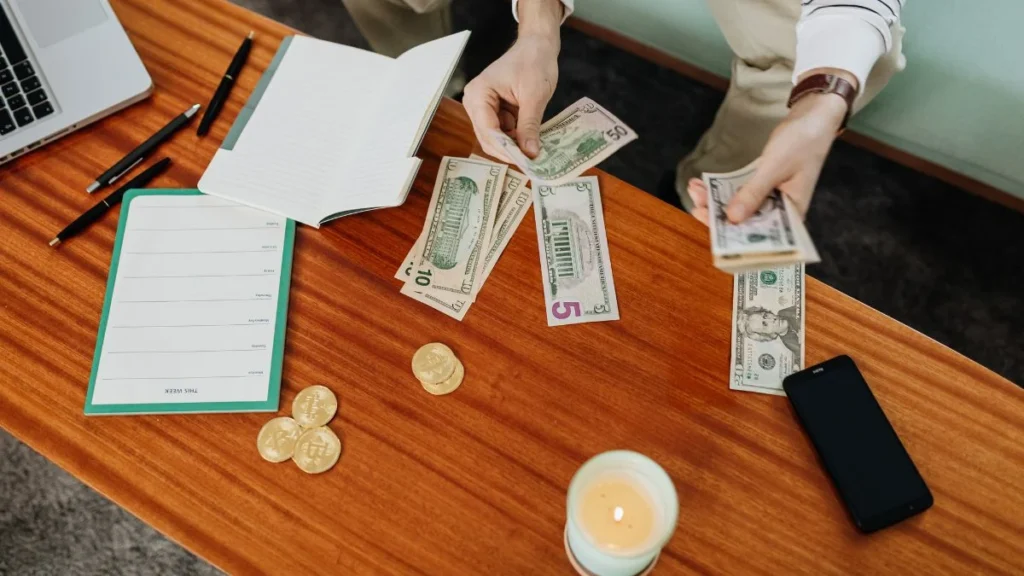
Maya felt constant financial stress. Her apartment was full of stuff. Yet her checking account was almost empty. The average American spends about $1,497 a month on non essential items. That totals nearly $18,000 a year.
Maya was right in that average. Saving $14,000 is simply capturing money that already exists in your cash flow. The money is there. It is just hiding in random purchases.
Minimalism is not about sitting in an empty white room. It is about choosing quality over quantity. Maya wanted to buy back her freedom. She set a massive goal. She wanted to save $14,000 in one year.
This meant she had to change her habits completely. She needed to prove that minimalism saved money. Her strategy started with a complete freeze on buying things. She had to face her habits. She had to look at every single dollar.
Step 1: The 30 Day Spending Reset

Maya started with a full spending freeze. This breaks the dopamine loop of online shopping. You stop impulse buying when you remove the option completely. You cannot fail if you do not play the game.
Here are the rules Maya followed for 30 days:
Survival Budget
The Bare Essentials Protocol
Core Infrastructure
Pay rent and utilities immediately to secure a safe, functioning living environment before considering any other expenses.
Sustenance Only
Buy basic groceries focused purely on cost-effective nutrition, strictly avoiding eating out or luxury food items.
Damage Control
Pay required debt minimums to protect your credit score, keep accounts current, and avoid costly late fees or penalties.
Absolute Lockdown
Spend exactly zero dollars on anything else. Lock down all discretionary spending until financial stability is restored.
The first week was incredibly hard. She wanted to buy coffee. She wanted to browse online sales. She felt bored and wanted to shop. But she stuck to intentional spending.
By the fourth week, it felt easy. The urge to shop simply faded away. Cutting out just $20 a day of random spending equals $600 a month. Think about your daily lunch out. Think about that extra coffee.
Maya saved over $800 in her very first month. This early win gave her the momentum to keep going. She proved she could survive without buying new things.
Step 2: Decluttering for Cash to Make $2,500
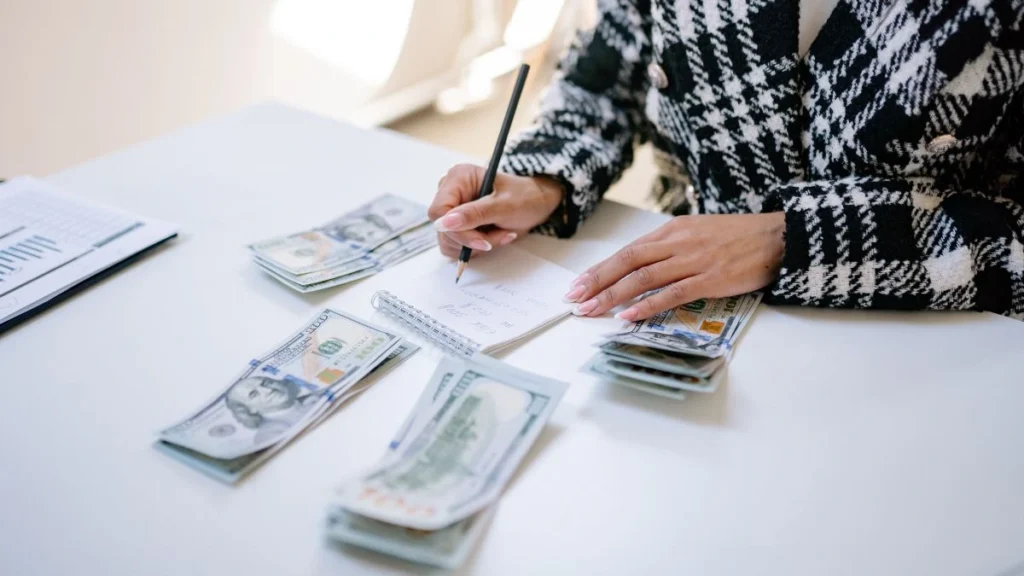
Next, Maya audited her possessions. She went through her apartment room by room. Her rule was simple. If she had not used an item in six months, she sold it.
This is how you declutter to save money. Adopting a minimalist lifestyle pays you back. It clears your space and fills your bank account.
Here is how Maya sold her items:
The Reseller’s Playbook
Turn Your Clutter Into Cash
1. Visual Appeal
Take bright, clear photos of the item from multiple angles in natural light to build buyer trust instantly.
2. Full Transparency
Write honest descriptions that clearly note any flaws and include exact measurements to reduce returns.
3. Tech & Collectibles
List electronics and compact high value items on eBay to reach a massive global audience of specific buyers.
4. Local Pickup
List heavy furniture or bulky items exclusively on Facebook Marketplace to avoid complicated, expensive shipping.
5. Fashion Finds
Sell your gently used name brand clothing on Poshmark, taking advantage of their engaged, fashion-focused community.
She priced things to sell fast. She did not want to hold onto inventory. The cash piled up quickly. She made $1,000 from old electronics. Unworn clothes brought in $800. Unused furniture and kitchen gadgets added $700.
Maya put this $2,500 directly into a separate savings account. This ensured she did not accidentally spend it. Seeing that cash grow gave her a huge mental boost.
Step 3: Implementing the 48 Hour Rule
The 30 day freeze eventually ended. Maya faced the temptation to buy things again. She needed a long term defense mechanism. She created the 48 hour rule.
If she wanted a new item, she had to wait 48 hours before checking out. This creates friction between the urge to buy and the actual purchase. This simple delay eliminates 90 percent of bad purchases.
It forces intentional spending. It is the core of a minimalist budget. The pause breaks the spell of marketing.
One Tuesday, Maya wanted a trendy jacket. She put it in her online cart. Then she closed the laptop. Two days later, she realized she had three similar jackets in her closet. She did not buy it.
Minimalist experts like Joshua Becker talk about the “Cost per Use” rule. Spending $100 on an item you use 100 times is smart. That is $1 per use. Spending $20 on a cheap shirt you wear once is a bad move.
Three $20 fast fashion shirts cost $60 a year. One high quality $40 shirt lasts years. Waiting 48 hours helps you make these smart choices.
The Exact $14,000 Breakdown: Where the Money Went
Maya tracked every single penny. She needed to know exactly how small daily choices added up. It is easy to think $5 here and $10 there does not matter.
It absolutely does matter. Small leaks sink big ships. Here is the exact proof that minimalism saved money.
| Expense Category | Action Taken | Money Saved |
| Dining Out | Cooked meals at home | $4,000 |
| Clothing | Used the 48 hour rule | $3,000 |
| Household Clutter | Sold unused items online | $2,500 |
| Random Online Shopping | Canceled Amazon Prime | $4,500 |
| Total Cash Saved | One Year Results | $14,000 |
Maya saved money from skipped purchases. She canceled random subscriptions. She ate out much less frequently. Plus, she had the cash from selling her clutter. She saw her bank account grow every single month.
What to Do With the Cash: 3 Ways to Build Wealth

Maya did not just leave this cash in a checking account. A true minimalist budget gives you options. You can use simple budgeting methods like the 50 30 20 rule. This means 50 percent for needs, 30 percent for wants, and 20 percent for savings.
Maya automated her savings. The money left her checking account before she could spend it. First, she paid off a credit card. Then she funded an emergency account.
Finally, she started investing. Investing $14,000 into a High Yield Savings Account is smart. Buying an index fund like VOO builds wealth.
VOO averages a 7 to 10 percent return over time. This turns a single year of saving into massive long term security. The money now works for her.
Conclusion
Minimalism is a tool to buy back your freedom. It is definitely not a punishment. Maya changed her financial life in just 12 months. She stopped buying useless items. She cleared out her physical space. She built a massive financial safety net.
You can do the exact same thing. Start small today. Identify one subscription you can cancel right now. Find one item you can list for sale this afternoon. Take control of your money with a minimalist budget. Your future self will thank you.