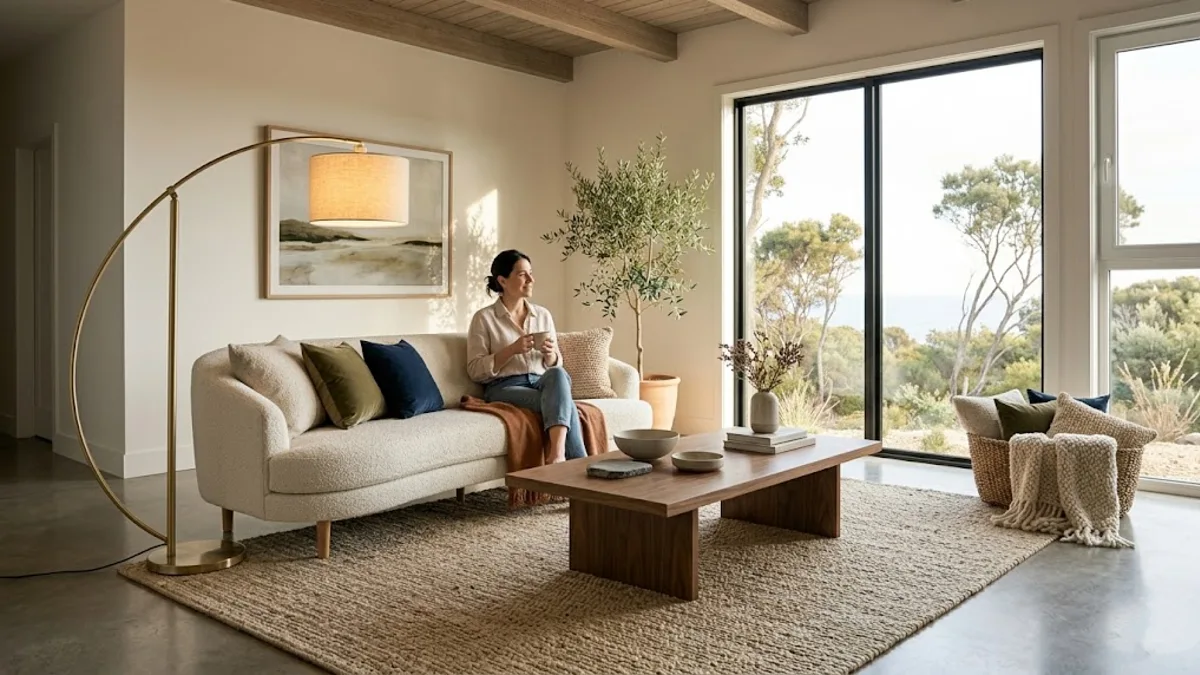
Staring at a blank living room is intimidating. It is an empty box waiting for an expensive mistake. If you shop without a plan, you buy random pieces that clash.
Your main social hub ends up looking like a generic furniture showroom waiting room instead of a real home. You waste money on items that simply do not fit together.
You need a foolproof framework to fix this. This guide gives you a proven blueprint. You will learn to plan layouts, pick color palettes, and buy core pieces with confidence.
Mastering living room decorating for beginners is entirely possible. If you want to know how to decorate a living room, start right here.
The 2026 Blueprint Engine
Adjust the parameters to master spatial planning and atmospheric layering.
1. Define Your Core Aesthetic Before You Buy Anything

Determining your core aesthetic first stops disjointed buying. You need a specific direction before you spend a single dollar.
For absolute beginners, structured styles work best. Look into Scandinavian, Minimalist, Coastal Modern, or Industrial designs. These styles rely on clean lines and clear function.
They are much easier to pull off than chaotic, heavily layered looks. Coastal Modern and Scandinavian styles are incredibly forgiving for first timers.
Their emphasis on natural light, pure utility, and uncluttered surfaces makes them easy to manage. They give you a clear roadmap for every purchase.
Right now, people are rejecting copycat catalog rooms. A huge 2026 Pinterest trend is “My Room, My Rules.” People want personal spaces that fit their actual lives.
They do not want a room that looks like a sterile hotel lobby. In fact, searches for “My room my rules” are up 415% this year. This proves a massive shift to personalized, curated retreats.
You should look for living room design ideas 2026 that reflect your daily habits. If you have pets, pick durable fabrics. If you love reading, prioritize a cozy corner.
2. Map Out Your Traffic and Focal Point
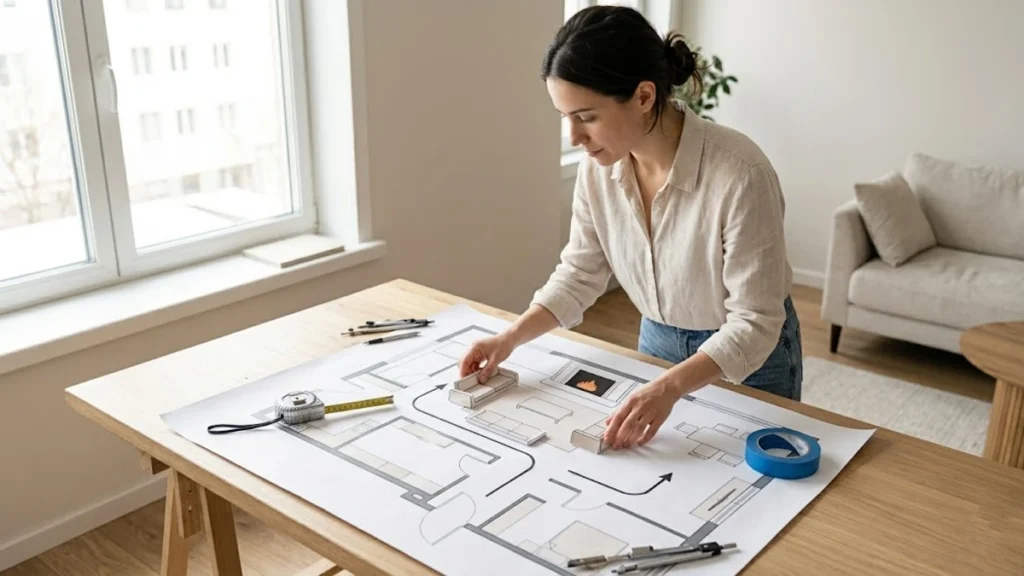
Shoving all your furniture against the walls is a classic rookie error. It makes the room feel like an awkward dance floor.
First, identify the natural focal point of the room. This could be a fireplace, a large window, or a TV wall. Orient your main seating to face this specific feature. This creates instant purpose in the room.
Next, establish clear traffic lanes. People should not have to awkwardly squeeze past your furniture to get to the kitchen. You want a smooth flow from one door to the next.
Use free 3D floor planners like Homestyler, Roomstyler, or SketchUp to test your ideas digitally. Then, use the Painter’s Tape Trick.
Put tape on the floor to outline furniture dimensions before you buy anything. This helps you visualize the space perfectly in real life.
Follow exact layout rules for the best results. You need to leave at least 18 inches between a coffee table and a sofa. You also need to establish 30 to 36 inches for major walkways.
These strict measurements are the best living room layout tips you can follow to ensure your space is functional.
Do not rush this part of the process. A bad layout will make expensive furniture look terrible. A good layout makes budget furniture look highly intentional.
3. Invest in the Two Foundation Pieces First
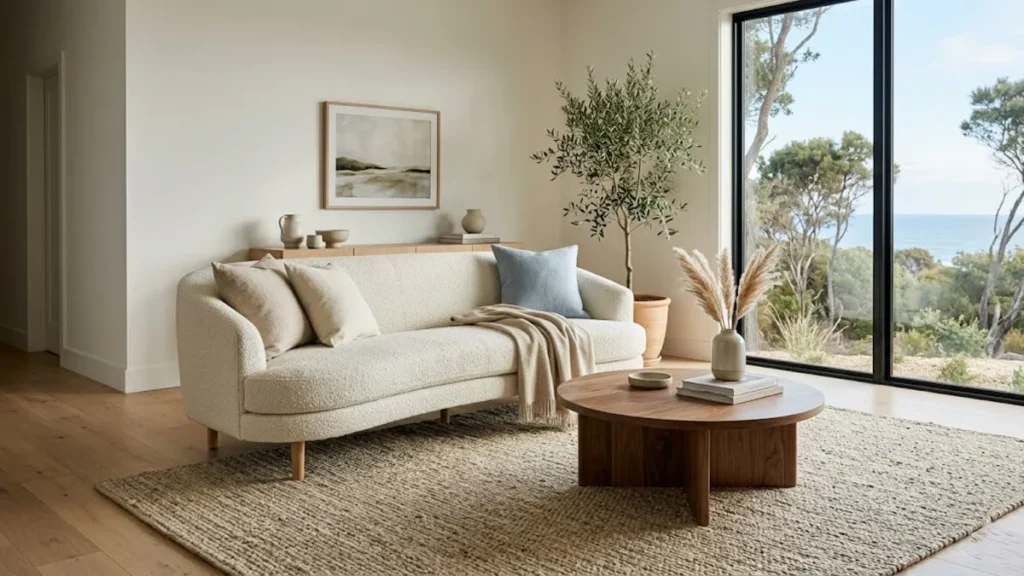
Buying small decor items first is a huge waste of time. The sofa and the rug are your absolute anchors.
Everything else in the room is just the supporting cast. If you get these two pieces right, the rest of the room comes together easily.
For seating this year, skip the overly slouchy cloud couches. Current trends favor comfortable seating with organic, rounded silhouettes. They look much neater and provide better back support.
Organic, rounded silhouettes soften a boxy room. They invite people to sit down and relax. Structured comfort is the goal this year.
Next, you need to tackle rug sizing. The biggest beginner mistake is buying a tiny rug that looks like a postage stamp in the middle of the room. A tiny rug makes the whole room feel cheap and disjointed. It ruins the scale of your furniture.
You must enforce the front legs rule. At a minimum, the front legs of all major seating must rest directly on the rug. The rug should also extend at least 8 to 10 inches beyond the sides of your sofa.
This anchors the seating arrangement and makes the room look larger. If you want to know exactly how to decorate a living room, getting the rug size right is your most important task. Invest your money here first.
4. Build a Grounded Color Palette
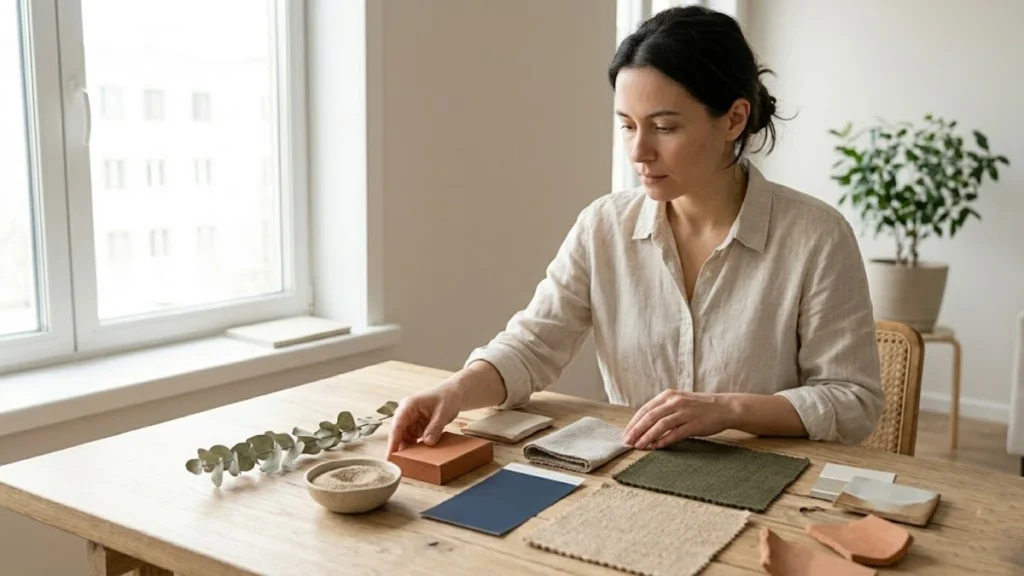
Staring at a massive wall of paint chips will only give you a headache. You need a simple mathematical formula. Introduce the 60/30/10 rule to your space.
You use 60% dominant color, 30% secondary color, and 10% accent color. The dominant color goes on your walls and large rugs. The secondary color goes on your main furniture and curtains.
The accent color goes on your throw pillows and small artwork. This ratio guarantees a balanced look every single time.
The all white, sterile room is officially out in 2026. Industry outlooks report a major shift away from cold spaces. You should encourage earthy, grounding palettes instead.
Think about using warm sand, soft terracotta, organic greens, or moody blues. Pinterest trend reports show huge search volume increases for moody blue tones. These colors provide visual calm and warmth to your home.
A major rising trend is Color Drenching. This means painting the walls, trim, and ceiling the exact same color. It creates a cohesive, cocooning atmosphere.
It also makes small rooms feel much larger because there are no harsh visual breaks. Learning this paint technique is a major part of successful living room decorating for beginners.
5. Layer Lighting, Textures, and Authentic Materials
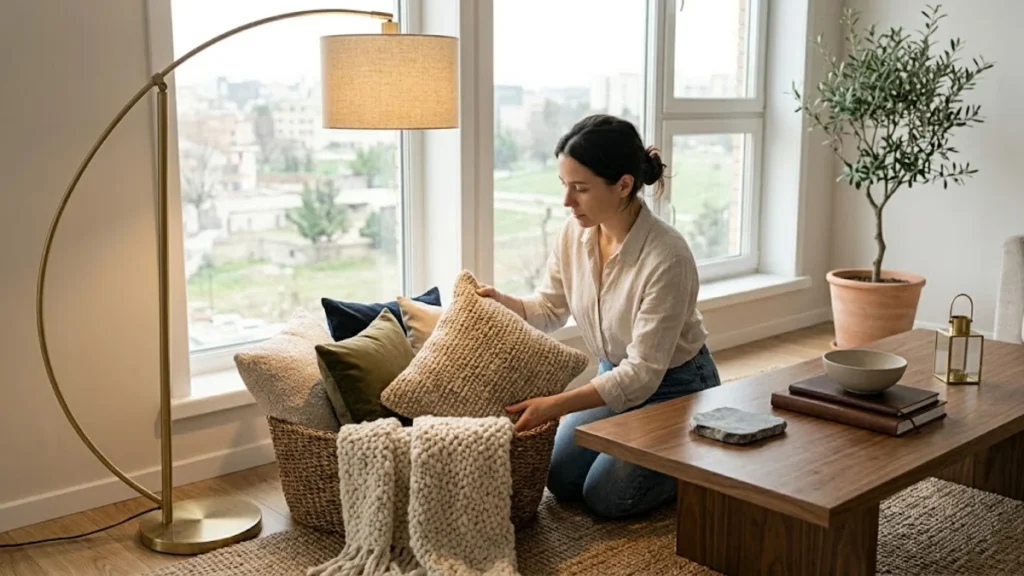
Relying on one harsh light source ruins a beautiful space. You must ban the big overhead light. Instead, you need to build three distinct layers of lighting:
The Layers of Light
Interior Illumination
Ambient Illumination
Implement ambient lighting to provide a foundational layer of general room brightness and comfort.
Task Focus
Utilize highly directed task lighting specifically engineered for reading, cooking, or focused working.
Accent Drama
Deploy dynamic accent lighting to strategically highlight architectural features, art, or dark corners.
You also need to ditch matching, generic furniture sets. Buying a matching sofa and loveseat set makes your house look like a cheap catalog. It lacks personality.
You want your room to look curated over several years. This happens when you blend different textures together. A room with only smooth, shiny surfaces feels extremely cold.
A room with mixed natural textures feels welcoming and expensive. You need to mix materials to add true depth and character to your room:
- Solid wood like walnut or white oak.
- Natural stone and matte ceramics.
- Tactile fabrics like pure linen or soft boucle.
Interior design experts from Gira and Apartment Therapy emphasize conscious reduction. They recommend sustainable materials and note a complete rejection of matching furniture sets.
Current trends prioritize textural authenticity. A walnut wood coffee table paired with a linen sofa is far more engaging than a uniform 3 piece living room set. This approach offers the most valuable living room design ideas 2026 has to offer. It proves you have real style.
Conclusion
A great room is built layer by layer. You cannot finish it in a single weekend trip to a big box store. You must plan the layout first. Then you need to nail the rug and sofa sizing.
Finally, bring in personal textures and lighting over time. This patient approach guarantees a beautiful space that actually works for your life.
What is the first step you are tackling this weekend? Let me know your target interior style in the comments below!
Mastering living room decorating for beginners does not require a design degree. It just takes a solid blueprint. Take it one step at a time, and you will create a room you truly love.